
Vandaag of morgen in huis

Kwaliteit gegarandeerd

Welkomstaanbiedingen ontgrendelen: GRATIS bezorging | Tot 80% korting | Gratis 30 dagen JoyPlus-proefperiode
Download de app
A kitchen rack can quickly create extra space, but not every model suits every kitchen. A serving stand for snacks needs different features from a dish rack beside the sink. Even an attractive plate rack can prove impractical if it doesn’t have enough room for mugs, cutlery or large plates.
So don’t focus on colour and shape alone. Check the dimensions, load capacity, cleaning instructions and how you plan to use the rack.
A 2-tier kitchen rack can look compact in photos, but even a few centimetres can make a difference on a narrow worktop. Measure these areas beforehand:
For example, a rack measuring 44 × 24 × 38 cm clearly needs more room than a compact model around 30 cm wide and deep.
Having lots of compartments doesn’t automatically mean you can safely combine heavy plates, glasses and pans. Check whether the manufacturer specifies a maximum load. For example, the stated maximum load for the 5five dish rack is 1.3 kg. Distribute your dishes evenly and place heavier items at the bottom.
Wood, plastic, metal and slate each need different care. A wooden serving stand isn’t always dishwasher-safe. A drip tray or drain is also important for a dish rack, to prevent puddles on the worktop.
The product information for various models recommends hand washing. This is a product specification, not a general guarantee of a longer lifespan. Always follow the manufacturer’s care instructions.
Choose a layout based on how you use it every day:
Pay attention to the shape of the shelves. Round shelves work well for displays, while rectangular tiers often fit more efficiently on a worktop or in a cupboard.
Plastic is usually lightweight and easy to clean with warm water and a mild detergent. Check whether the material is heat-resistant and whether the rack might warp under a heavy load.
Metal provides a sturdy frame, but check the finish and dry the rack thoroughly if it regularly comes into contact with water. Various dish racks combine chrome-plated steel, powder coating and polypropylene.
Bamboo and wood add a natural look. They’re suitable for serving and storage, but according to the product information, they aren’t always dishwasher-safe or suitable for prolonged immersion in water.
Slate and stone-like materials are suitable for displays, but can be heavy. The 3-tier model from Excellent Houseware weighs around 1.75 kg and has shelves with diameters of 12.5, 22 and 30 cm.
A kitchen rack should stand on a flat, stable surface. Check whether it has non-slip feet, a drip tray or a drainage plug. This matters more for a dish rack than for a purely decorative dessert stand.
Also check whether assembly is required. Some models arrive assembled, while others need to be put together using the supplied kit. A click-together connection can be handy for storage, but check that all the connections are secure after assembly.
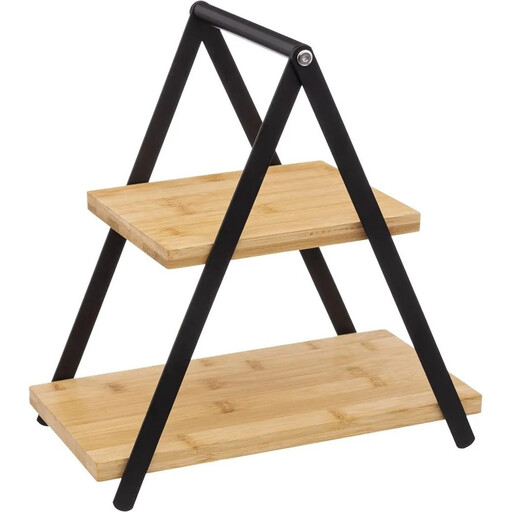
Why it suits this buyer: This compact 2-tier serving stand is designed for snacks and takes up relatively little space at 28 × 15.6 × 29.3 cm. The foldable metal stand is handy when you want to put the rack away temporarily.
The dimensions are clearly stated, so you can check in advance whether the rack will fit on your worktop. It isn’t dishwasher-safe and needs to be washed by hand.
Bamboo shelves, two tiers and a foldable frame. Suitable for snacks and casual serving.
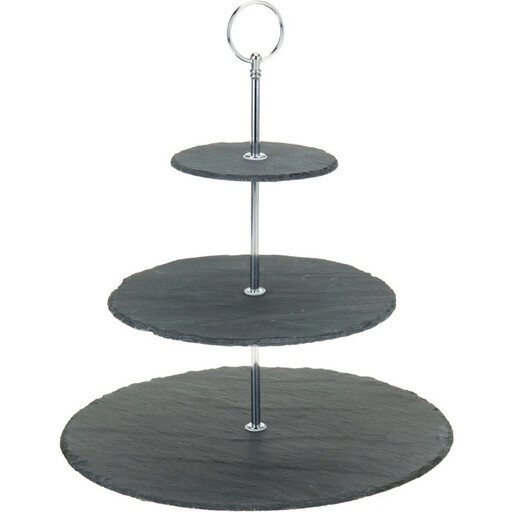
Why it suits this buyer: This 3-tier dessert stand is designed for displaying snacks, cakes and pastries. The combination of slate and chrome complements a stylish table setting.
The dimensions of the different shelves are specified. Non-slip pads under the bottom shelf help keep the stand stable, but you should still place it on a flat surface.
Three tiers, shelf diameters of 12.5, 22 and 30 cm, and a height of around 34 cm.
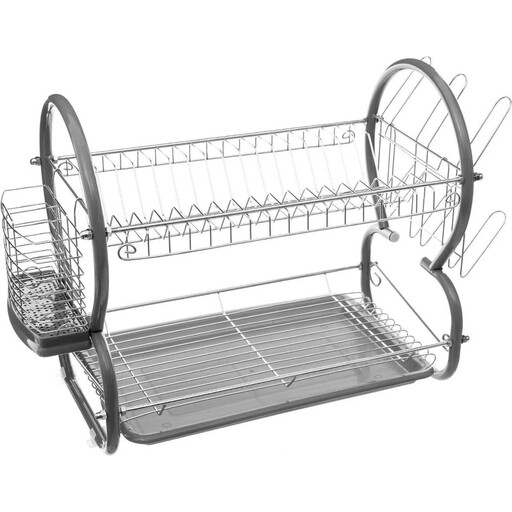
Why it suits this buyer: This 2-tier draining rack is designed for everyday use and has separate holders for cutlery and glasses. Its stated capacity includes space for up to 17 plates, bowls, mugs, glasses and pieces of cutlery.
The dimensions, materials and maximum load of 1.3 kg are specified. This helps you match the available space and load to your dishes.
Chrome-plated steel, a polypropylene drip tray, a separate cutlery basket and glass holders. Assembly required.
We’ve put together a complete, up-to-date list of products that meet these strict selection criteria and the applicable European safety regulations.
First, measure the available depth and height. A compact serving stand around 28 to 30 cm wide could work well for snacks or herbs and spices. For dishwashing, a drip tray or drain is just as important as the dimensions. A narrow rack without water collection can still be impractical beside the sink.
Follow the manufacturer’s care instructions. Plastic can usually be cleaned with warm water and a mild detergent. Wipe metal with a damp cloth and dry it thoroughly. Bamboo and wood often need to be washed by hand and shouldn’t be left submerged for long periods. Only put a rack in the dishwasher if this is explicitly stated.
Its lifespan depends on the material, load, moisture and care. Overloading, standing water and harsh cleaning products can cause the product to deteriorate more quickly. Check regularly for cracks, loose connections, rust or warping. Products sold in the European Union are also covered by the legal guarantee of conformity; any additional rights may vary depending on the circumstances and national legislation.
