
Vandaag of morgen in huis

Kwaliteit gegarandeerd

Welkomstaanbiedingen ontgrendelen: GRATIS bezorging | Tot 80% korting | Gratis 30 dagen JoyPlus-proefperiode
Download de app
A cluttered kitchen is often not caused by a lack of space, but by an impractical layout. Pans pile up in a deep cupboard, spices disappear behind one another and cutlery ends up jumbled together in a drawer that is too small. With the right kitchen organisers, you can keep your kitchen tidy without having to renovate.
However, not every kitchen organiser is suitable for every space. A rack that looks compact in a product photo may actually be too deep. And an organiser with lots of compartments is not automatically convenient if your drawer does not open fully. Pay particular attention to dimensions, materials, weight capacity and how you intend to use the product.
A pantry organiser with four or five tiers may seem efficient, but also check the height between the levels. Tall storage jars, bottles or appliances may not fit beneath every shelf. With a pan rack, the distance between the supports is also important for wide frying pans and lids.
Do not just measure the width of a cupboard or drawer. Also check:
For example, a cutlery tray that expands to 39 cm wide will not automatically fit every drawer. Measure the narrowest internal width before ordering.
A metal pan rack may be suitable for heavy cookware, but only if its weight capacity is clearly stated and the weight is distributed evenly. Some kitchen organisers do not specify their maximum load. Use such a rack with care and do not place heavy cast-iron pans on it without further information.
The material also matters. Bamboo and MDF generally require dry or lightly damp cleaning. Plastic is often easier to clean. Stainless steel and coated carbon steel are practical options for damp environments, but always check the product instructions.
First, decide what you want to organise:
A cutlery tray made from plastic is practical when regular cleaning is important. The 5five Cutlery Drainer, for example, is made from ABS plastic, has three compartments and is described as dishwasher-safe in the product information. Bamboo, by contrast, should not be submerged or placed in the dishwasher, as moisture can cause the material to warp.
Check whether assembly is required and whether fixing materials are included. The 5five Bamboo Shelf Unit requires assembly and is supplied without fixing materials. Place it on a flat, stable surface and keep the rack away from naked flames.
For a trolley, lockable wheels are useful if you move the organiser frequently. Distribute the weight evenly and never use a mobile rack as a step. These basic checks help you look beyond marketing claims and focus on verifiable features.
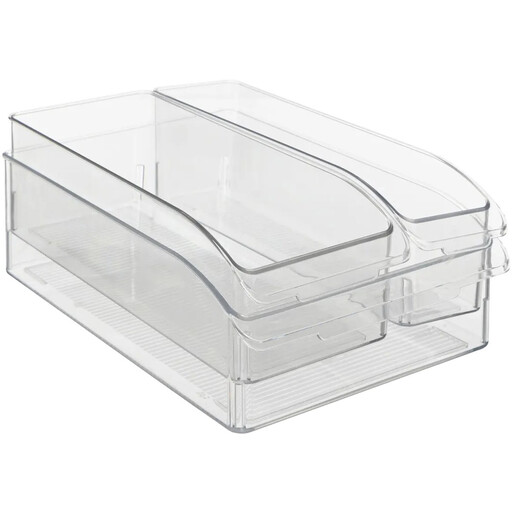
Why it suits this profile: These transparent bins offer a simple way to start organising fridge contents. The handles make them easy to pull out, and the set contains three bins.
The dimensions are clearly stated: 30,5 × 21 × 9 cm. This means you can check in advance whether they will fit in your fridge.
Transparent PET, three bins per set and described as BPA-free in the product information. Not stackable; place them side by side.
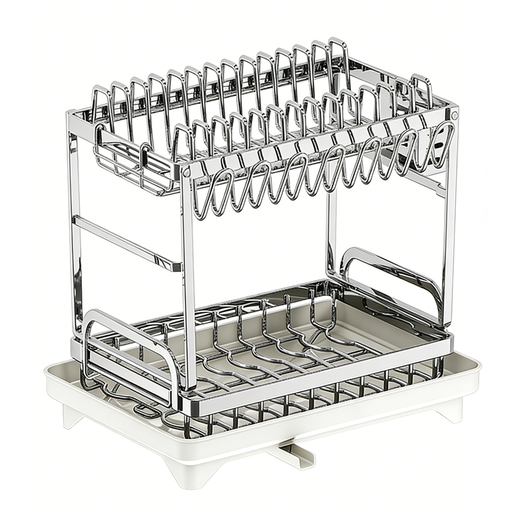
Why it suits this profile: This dish drainer is designed for households that want to keep crockery separate and use vertical space on the worktop.
The drainage tube directs water towards the sink. Make sure the rack is level and check that the drainage outlet is positioned correctly.
Two tiers, dimensions of 42 × 32 × 30 cm and a combination of stainless steel and PP.
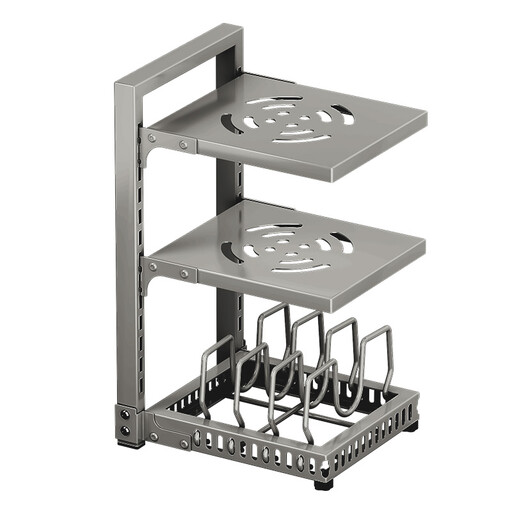
Why it suits this profile: A practical choice for anyone who wants to keep pans and lids separate in a kitchen cupboard or deep drawer instead of stacking them.
The design has three tiers and adjustable components. Before assembly, check that your cupboard measures approximately 23 × 28 × 43 cm.
Powder-coated carbon steel, adjustable supports and use in a cupboard or deep drawer. Assembly and secure fixing are required.
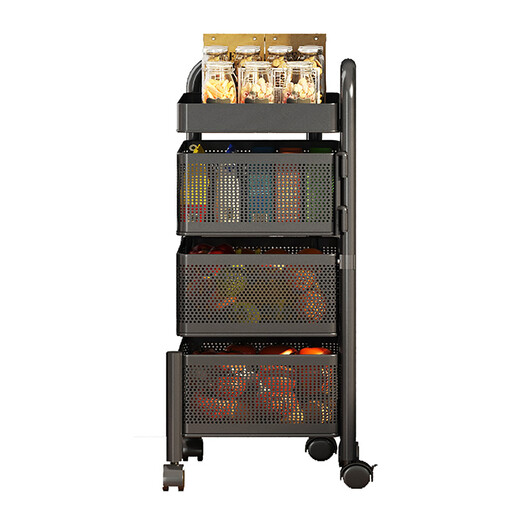
Why it suits this profile: This kitchen trolley makes use of narrow vertical space and can be moved when you want to reorganise a corner, kitchen island or pantry.
The product information states that it has four tiers, rotates through 360° and features castors. Distribute heavy items evenly and use the brakes, if fitted, when the rack is stationary.
Carbon steel with a rust-resistant coating, four open tiers and access from all sides thanks to the rotating mechanism.
We have compiled a complete, up-to-date list of products that fully meet these strict selection criteria and the applicable European safety regulations.
Start with the areas you use every day. Keep cutlery and cooking utensils close to your main work area. Use a spice rack at eye level and keep reserve supplies in a pantry organiser. Store heavy pans low down and use a pan rack to reduce lifting and stacking. In a small kitchen, a narrow trolley can provide extra storage without taking up a permanent cupboard.
For drawers, drawer organisers in different sizes are useful for measuring spoons, peelers and small accessories. According to the product information, a 5five adjustable bamboo cutlery tray extends from 25 to 39 cm and has six sorting compartments. The Curver cutlery tray can be expanded from five to seven compartments. Compare the dimensions with your own drawer before making a choice.
Measure the internal width at its narrowest point, as well as the depth and height. Take rails, hinges and any sloping base into account. Choose an organiser that is slightly smaller than the measured space so that it can be placed and removed smoothly.
Lifespan depends on the material, load, moisture and maintenance. Clean products according to the instructions, dry metal parts thoroughly and do not overload shelves. For moving parts such as wheels or pull-out sections, it is sensible to check regularly that everything is still securely and stably attached.
An ordinary kitchen organiser, dish rack, cutlery tray or kitchen storage rack does not use electricity. A trolley with wheels does not either. Only organisers with built-in lighting, cooling or other electrical functions may consume energy; if so, check the stated power rating.
