
Vandaag of morgen in huis

Kwaliteit gegarandeerd

Welkomstaanbiedingen ontgrendelen: GRATIS bezorging | Tot 80% korting | Gratis 30 dagen JoyPlus-proefperiode
Download de app
A full kitchen does not automatically mean you need more cupboards. Space is often wasted because pans, lids, plates and kitchen utensils are stored without a proper system. The right kitchen organiser can help, but only if its size, construction and intended use suit your kitchen.
Pay particular attention to these three common pitfalls:
By checking everything in advance, you can choose a kitchen storage rack that genuinely suits your available space and cooking habits.
Kitchen organiser is a collective term for a range of storage solutions. The best choice depends on what you want to organise:
Vertical and adjustable models are often practical for a flat or small kitchen. However, check that the height does not interfere with wall cupboards, the extractor hood or other appliances.
Do not just measure the spot where the kitchen organiser will stand. Also check:
For example, an extendable model has a more flexible width, but it must still fit securely at its smallest setting. According to the product description, the adjustable width of the Maxcook microwave rack ranges from 39 to 62 cm. Measure the width of your microwave and worktop carefully.
The material determines how a kitchen rack performs in practice and how easy it is to keep clean.
According to the product description, the Maxcook stainless steel draining rack has a removable PP drip tray. This makes emptying and cleaning easier. With a plastic draining rack, such as the Curver model, it is important to empty the collection tray regularly and allow it to dry thoroughly.
Weight capacity is not always stated in the same way. Sometimes the maximum weight per shelf is given, while in other cases only the total weight is specified. Compare this information with what you want to store.
A few points to consider:
Also consider adjustability. An adjustable kitchen rack is useful for different pan sizes, but loose parts must be securely fixed before you put any weight on the rack.
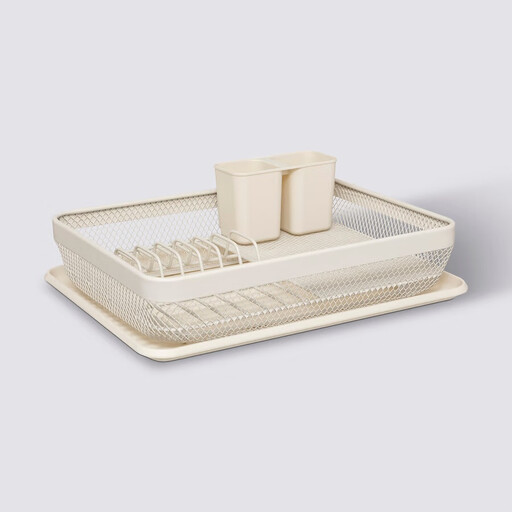
Why it suits this profile: This compact dish rack is suitable for anyone looking for a simple setup beside the sink, without multiple levels or complicated assembly. Its dimensions are approximately 43 × 31,3 × 12,8 cm.
The clearly stated external dimensions make it easier to measure your worktop beforehand. However, check that the stated capacity is suitable for the amount of crockery you use every day.
Metal draining rack with a separate cutlery holder; suitable for indoor use and everyday drying.

Why it suits this profile: A logical choice for households wanting an organised drying area beside the sink, with compartments for plates, bowls, glasses and cutlery.
The separate PP drip tray can be removed to help prevent water collecting. Position the drain correctly and clean the component regularly.
Stainless steel construction, dimensions of approximately 42 × 29 × 12,7 cm and no assembly required according to the product information.
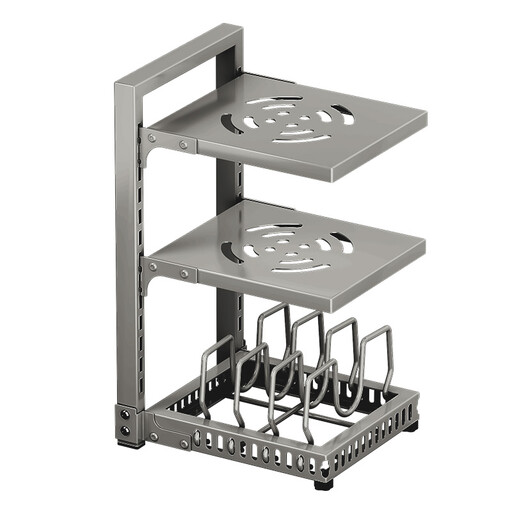
Why it suits this profile: This pan rack is designed for anyone who wants to store pans, lids and cookware separately in a cupboard or deep drawer.
The three-tier layout and adjustable components prevent cookware from simply being stacked on top of one another. Make sure you assemble or position the rack on a level, suitable surface.
Powder-coated carbon steel, three tiers and adjustable holders for pans and lids; the stated dimensions are approximately 23 × 28 × 43 cm.
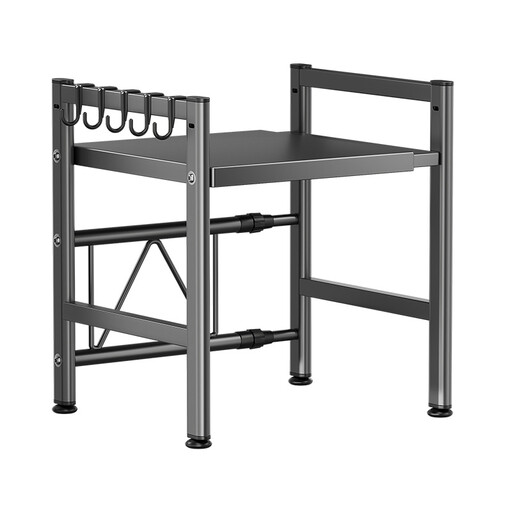
Why it suits this profile: This microwave rack makes use of the space above an appliance for additional kitchen storage and has five hooks for smaller kitchen utensils or mugs.
The width is adjustable, so you are not restricted to a single fixed size. Check the stability and the available space above your microwave.
Two tiers, adjustable width of 39–62 cm and five integrated hooks; the frame is made from powder-coated carbon steel.
We have put together a complete, up-to-date list of products that fully meet these strict selection criteria and the applicable European safety regulations.
Place heavy items at the bottom or on the lowest shelf. Stand plates upright in a dish rack and keep knives and other sharp utensils separate from loose cutlery. A draining rack works best positioned right beside the sink, provided that water can run into the tray or drain.
Clean metal and plastic components with a damp cloth and mild cleaning solution. Wipe surfaces dry afterwards. With bamboo or wood, avoid prolonged exposure to water. For adjustable models, regularly check that screws, hooks and non-slip feet are still securely fastened.
Measure the inside of the cupboard at its narrowest point. With an extendable kitchen rack, allow sufficient clearance so that the model does not jam. Also check the height of the cupboard shelf and the space needed to remove pans or plates.
Stainless steel and plastic are common options. Stainless steel feels sturdy, while plastic is often lightweight and easy to clean. More important than the material alone are an easily accessible drip tray, a stable base and sufficient ventilation around wet crockery.
Its lifespan depends on the load, moisture, assembly and maintenance. Use the rack within its stated weight capacity, do not leave water standing for long periods and check the construction regularly. A product with a statutory guarantee also remains covered by the applicable consumer regulations.
