
Vandaag of morgen in huis

Kwaliteit gegarandeerd

Welkomstaanbiedingen ontgrendelen: GRATIS bezorging | Tot 80% korting | Gratis 30 dagen JoyPlus-proefperiode
Download de app
A new kitchen mixer and mixing bowl may seem like a quick choice. However, a bowl that is too small, unclear motor specifications or accessories that are difficult to clean can significantly limit how you use it. Especially when shopping online, it is important to compare marketing claims with verifiable product specifications.
In this buying guide from the Joybuy Product Recommendation Officer, you’ll discover what to look for in a stand mixer, food processor, electric mixer and various types of mixing bowls. This will help you choose a product suited to your recipes, kitchen space and cleaning routine.
A product title may mention a high peak power output, while the stated rated power is lower. This difference matters if you regularly want to knead heavy dough. So don’t just look at wattage, but also check:
For example, the Monsga SM100 lists 1000 watts peak power, with 600 watts rated power. The recommended bowl capacity is 5 litres, while the total capacity is stated as 6 litres. This information helps you assess the machine more realistically.
A 5- or 6-litre bowl sounds spacious, but a bowl that is too large can be awkward when making small quantities of whipped cream or batter. Check the recommended working capacity and make sure the accessories can properly reach the bottom.
For a household that mainly makes cakes, pancake batter and whipped cream, an electric mixer with a 3-litre bowl may be sufficient. If you regularly make bread dough or larger quantities of biscuit dough, a stand mixer with a larger stainless-steel bowl will be more suitable.
When kitchen accessories are described as dishwasher-safe, this usually applies to the removable parts, not the motor housing. The motor unit should be cleaned with a slightly damp cloth. Also check whether an anti-slip base, silicone ring or coating may be placed in the dishwasher according to the instructions.
Also pay attention to accessories that are not supplied as standard with every model. A dough hook, whisk, flat beater and splash guard are useful for different preparations, but always check the exact contents of the box.
Choose the bowl according to your usual portions:
A kitchen mixer with a bowl is convenient when you want to keep both hands free. A hand mixer with an automatically rotating bowl takes up less space and may be appealing for occasional use.
Stainless-steel mixing bowls are durable, generally do not absorb odours and are suitable for many cold and lukewarm preparations. A bowl made from 304 stainless steel is often described in product listings as suitable for food contact. However, always check the specific care instructions and never use metal bowls in a microwave.
Plastic bowls are often lighter and may feature useful handles or pouring spouts. For products intended for food contact, it is worth checking whether the manufacturer states that the material is BPA-free. A glass bowl may be suitable for certain applications, but it is heavier and requires greater care to avoid knocks and sudden temperature changes.
A mixer should stand securely on a flat surface. Anti-slip feet or suction cups can help prevent movement while mixing. A tilting head makes it easier to change the bowl and accessories.
For kneading dough, you will generally use a low to medium speed. Higher speeds are useful for whipped cream or egg whites. A pulse setting can help with short mixing bursts, but it does not replace precise speed control.

Why it suits this profile: This hand mixer with an automatically rotating bowl is designed for everyday preparations such as cake batter, whipped cream and light doughs.
The product information states 450 watts, 6 speeds and a 3-litre bowl. This makes the capacity and functions clear in advance.
Automatically rotating bowl, 6 speeds, two beaters and two dough hooks.
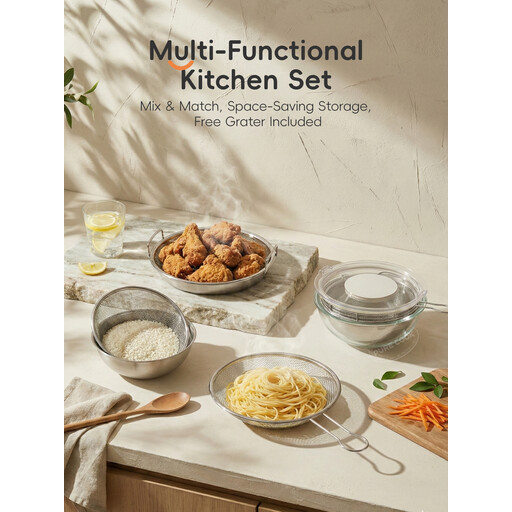
Why it suits this profile: Ideal for home bakers and keen cooks who need several bowls and accessories for preparation, baking and storage.
The set contents list several bowls, a sieve, grater and airtight lid. You therefore know exactly which items are included.
304 stainless steel, stackable design, dishwasher-safe parts and multiple uses.
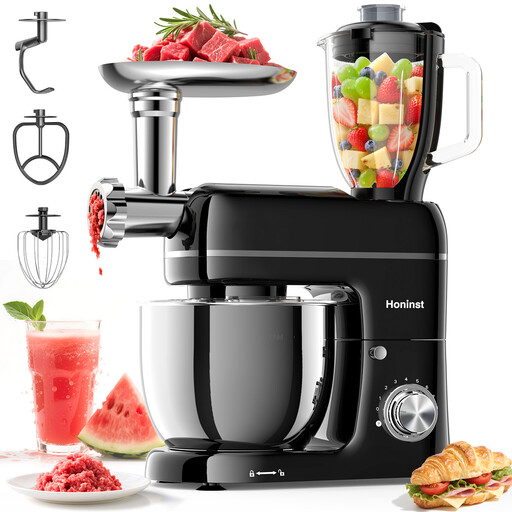
Why it suits this profile: This stand mixer is designed for larger preparations, such as bread, biscuits, cake batter and whipped cream.
The product description distinguishes between 1000 watts peak power and 600 watts rated power, and states a recommended capacity of 5 litres.
8 speeds, tilting head, 5-litre recommended capacity, splash guard, and included whisk, beater and dough hook.
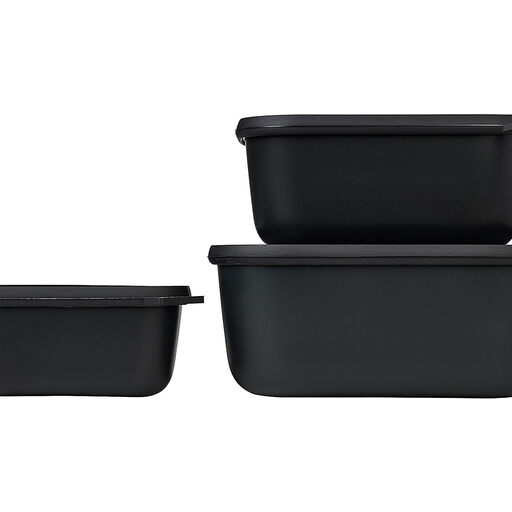
Why it suits this profile: Convenient for leftovers, packed lunches and meal prep in the fridge or freezer.
The product details list three sizes of 750, 1500 and 3000 millilitres, and separately state that the lid must be removed before use in the microwave.
Airtight lids, suitable for the fridge, freezer and dishwasher, and for microwave use without the lid.
We’ve put together a complete, up-to-date list of products that fully meet these strict selection criteria and the applicable European safety regulations.
Before ordering, check the mixer’s dimensions and the available space beneath your kitchen cupboards. A tilting head needs extra room to move. Also consider the noise level if you live in an open-plan kitchen; according to the product information, the Monsga SM100 has a stated noise level below 75 decibels.
Only use accessories intended for the appliance. Switch off the mixer and unplug it before changing the beaters, dough hooks or bowls. When preparing heavy mixtures, it is advisable not to exceed the maximum quantity stated in the manual.
For kneading dough, a sturdy bowl with enough free space is important. A stand mixer with a recommended capacity of around 5 litres may be suitable for larger household portions. Always check the maximum dough capacity in the manual; the bowl’s total capacity is not the same as the amount of dough you can process safely.
Many stainless-steel mixing bowls can be placed in the dishwasher, but check this for each product. Do not use steel wool or harsh abrasive cleaners, as these can damage the surface. Metal bowls must not be used in a microwave.
The lifespan depends on how often it is used, the workload, maintenance and storage. Allow the motor to cool down when instructed by the manual, use appropriate speeds and remove dough residue after use. A product with overload protection can provide additional protection, but it will not prevent wear caused by incorrect or excessively heavy use.
