
Vandaag of morgen in huis

Kwaliteit gegarandeerd

Welkomstaanbiedingen ontgrendelen: GRATIS bezorging | Tot 80% korting | Gratis 30 dagen JoyPlus-proefperiode
Download de app
A kitchen mixer can take much of the effort out of making cake batter, whipped cream, pizza dough and bread dough. However, a high wattage rating or a large mixing bowl does not automatically make a mixer a good fit for your kitchen. The key differences often lie in the combination of motor, accessories, maximum dough capacity and stability.
A higher wattage sounds appealing, but it does not tell you everything about performance. Manufacturers and retailers may also show different figures, such as rated power and peak power. Therefore, check:
For example, the Bosch MUMS2AW00 product information lists 700W, while the product title states a different figure. This is precisely why you should check the product specifications and manual before buying.
A 5 or 6-litre mixing bowl does not mean that you can fill it completely. With yeast dough, the maximum quantity is often lower than with batter. An overfilled bowl can cause splashing, uneven mixing or put excessive strain on the motor.
Therefore, look for separate figures for:
For example, the Kenwood Go KZM35 has a 4-litre bowl and, according to the product information, is suitable for a maximum of 1.4 kg of dough, with a maximum of 800 grams of flour.
A kitchen mixer with a whisk, beater and dough hook is versatile, but each accessory has its own purpose:
Also check whether the parts are dishwasher-safe. With some models, only the bowl and certain accessories can go in the dishwasher. The motor housing should always be cleaned with a damp cloth and never immersed in water.
For a mixer for baking, multiple speeds are more useful than simply having a high maximum speed. A low setting helps prevent splashing when mixing flour and liquids. Higher settings are suitable for whisking light mixtures. A pulse function can be useful for short, powerful mixing movements.
An electric mixer with stable motor control is particularly important when working with heavy dough. Allow the appliance to cool down whenever the manual instructs you to do so. For example, the AUCMA ASM1559 specifies a maximum operating time of six minutes without a break.
A kitchen mixer with a stainless-steel bowl is practical for regular use, as stainless steel is sturdy, easy to maintain and non-porous. A plastic bowl may be lighter and suit a compact model, but check the maximum capacity and how securely the bowl is attached.
Measure the available space before buying, too. Do not just consider the width, but also:
A mixer for bread dough can move while kneading. Non-slip feet, suction cups and a heavy base help keep the appliance in place. A tilting head makes changing accessories easier, but it must be fully locked before use.
Only use approved accessories, do not exceed the maximum quantities, and unplug the appliance before removing the whisk, beater, dough hook or bowl. Products with a CE marking must meet the applicable European requirements, but this does not replace reading the safety instructions.

Why it suits this profile: This compact model is designed for everyday mixing and baking, with a 3.8-litre bowl, three basic accessories and non-slip feet.
The stated capacity is specific: a maximum of 1.7 kg of dough and 2.4 kg of batter. However, check the stated motor power, as the available product information shows different figures.
3D planetary mixing technology, whisk, beater and dough hook included; according to the product information, the accessories are dishwasher-safe.
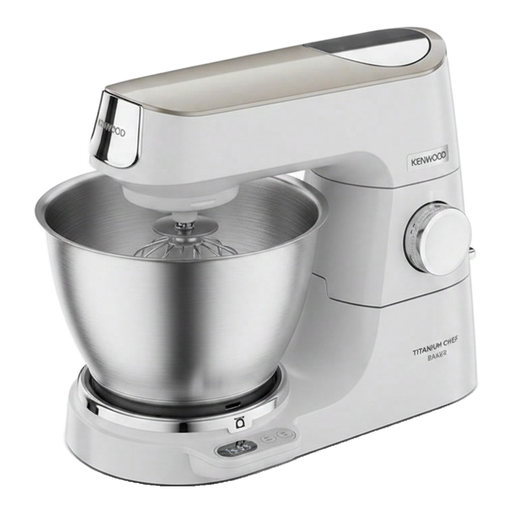
Why it suits this profile: The built-in scales and digitally controlled motor are ideal for home bakers who work accurately and methodically.
The product specifications list 1200W, a 5-litre stainless-steel bowl and variable speed with a pulse function. This means you do not have to rely solely on marketing terms.
Built-in scales, LightLift head, dough hook, whisk and K-beater; weight of 12.68 kg.

Why it suits this profile: The 7-litre bowl and 1200W power are designed for larger households and users who regularly prepare bigger batches.
The capacity is clearly greater than that of compact models. Before buying, however, check whether 37 × 22,5 × 40 cm will fit on your worktop.
Stainless-steel housing, automatic speed control, built-in scales and a bowl capacity of 7 litres.
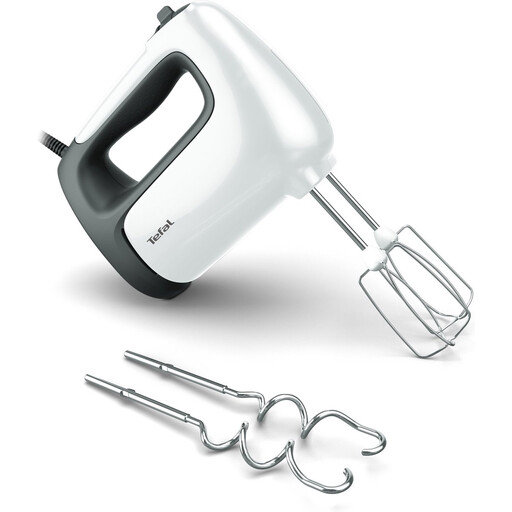
Why it suits this profile: A hand mixer takes up very little space and is suitable for cake batter, whipped cream and smaller quantities of dough.
You do not pay for a large bowl or a fixed base if you do not need one. Use the dough hooks for limited quantities of bread or pizza dough, and take breaks when mixing heavy mixtures.
500W, five speeds with turbo function, whisk and dough hooks; according to the product information, the accessories are dishwasher-safe.
We have put together a complete, up-to-date list of products that fully meet these strict selection criteria and the applicable European safety regulations.
Yes, provided the model has a dough hook and sufficient maximum dough capacity. Use a low to medium speed and follow the maximum operating time stated in the manual. A large bowl alone does not mean that the motor can handle heavy dough indefinitely.
For cake batter, whipped cream and egg whites, a hand mixer or kitchen mixer of around 400 to 700W is often sufficient, depending on the construction and speed control. For heavy bread dough, the permitted quantities, motor control and overheat protection are more important than the wattage printed on the packaging.
Power consumption depends on the wattage and operating time. A 500W appliance running for ten minutes theoretically uses around 0.083 kWh. In practice, a kitchen mixer often does not run continuously at maximum power. So focus mainly on how often you will use it and do not choose a larger model than you need.
