
Vandaag of morgen in huis

Kwaliteit gegarandeerd

Welkomstaanbiedingen ontgrendelen: GRATIS bezorging | Tot 80% korting | Gratis 30 dagen JoyPlus-proefperiode
Download de app
A kitchen mixer can take much of the hard work out of baking and cooking. However, it can be difficult to compare hand mixers, stand mixers, food processors and hand blenders fairly. A high wattage, for example, does not tell you everything about performance, while a large mixing bowl is not automatically suitable for every quantity of dough.
As a Joybuy Product Recommendation Officer, I filter product information based on practical considerations. This helps you quickly identify which specifications matter and which marketing claims you should check before buying.
A powerful kitchen mixer with a high wattage sounds appealing, but wattage does not fully indicate how well an appliance handles heavy dough. The motor type, overheating protection, drive system and permitted operating time also matter.
Pay attention to the difference between rated power and peak power. The Monsga SM100, for example, is advertised with a peak power of 1000 watts, while its stated rated power is 600 watts. These two figures do not describe the same thing.
A 5- or 6-litre bowl may seem spacious, but you cannot always fill it completely. The Monsga SM100 has a maximum capacity of 6 litres and a recommended working capacity of 5 litres. So do not just check the bowl size; also check the maximum amount of flour, batter or dough specified in the manual.
An overfilled bowl can cause splashing and put extra strain on the motor. For a small household, a large stand mixer may also take up more space than necessary.
A mixer with a dough hook, whisk and beater may seem versatile, but check whether these parts are included as standard. A hand mixer is useful for whipped cream and cake batter, while a dough mixer with a sturdy dough hook is better suited to regularly making bread or pizza dough.
Also consider cleaning. “Dishwasher-safe” often applies only to certain removable parts. The motor housing must not be immersed, and metal attachments may need to be washed by hand according to the manual.
For light batter, whipped cream and egg whites, a hand mixer with around 200 to 450 watts is often sufficient according to the stated product specifications. The Philips 5000 Series Hand Mixer HR3745/00 has a power rating of 450 watts, six speeds and a 3-litre automatically rotating bowl.
For heavy yeast dough, power is not the only important factor. Also check:
The AUCMA models, for example, specify a recommended maximum operating time and are described as having overheating protection.
A kitchen mixer with multiple speeds gives you greater control for different recipes. A low setting is suitable for gently mixing flour into batter, while a higher setting can help when whipping cream or egg whites.
However, more settings are not automatically necessary. A hand blender with one or two speeds may be enough for soup, smoothies, sauces and baby food. For fine control when making batter, a model with 5, 8, 10 or 20 settings may be more practical.
Also consider the controls. A rotary dial, turbo function or soft-start function can help reduce splashing. According to the product description, the Philips HR3781/10 has a Soft Start function, five speeds, a turbo setting and a blender attachment.
A mixer with a bowl is useful when you want to keep both hands free. A stand mixer with a tilt-head design usually makes it easier to fit the bowl and attachments. Do check the dimensions, though: an appliance around 40 centimetres high or wide will not fit in every kitchen cupboard.
The most useful basic set consists of:
A hand blender is more suitable when you want to purée ingredients directly in a pan or tall beaker. Always check the manufacturer’s instructions when working with hot soup. For the Russell Hobbs Desire, for example, the instructions state that hot liquids must first be allowed to cool to below 80 °C.

Why it suits this profile: This hand mixer is practical for cake batter, whipped cream and light doughs. The included bowl rotates automatically, so you do not need to guide it constantly yourself.
The specifications list six speeds, a 3-litre bowl and 450 watts. This means you can compare the model using concrete details rather than relying solely on marketing claims.
450 watts, six speeds, an automatically rotating bowl, and included beaters and dough hooks.

Why it suits this profile: The large stainless steel bowl and three basic attachments are well suited to families and home bakers who regularly make bread, pizza, cakes or pastries.
The product information specifies a 6-litre bowl, tilt-head design, splash guard, suction feet and overheating protection. For heavy dough, however, check the maximum quantity in the manual.
6-litre stainless steel bowl, 450-watt motor, whisk, beater, dough hook and pulse function.

Why it suits this profile: This model is designed for users who frequently knead, whisk and mix and want a generous bowl with multiple speeds.
The description distinguishes between 1000 watts of peak power and 600 watts of rated power. It also specifies a recommended bowl capacity of 5 litres, compared with a maximum capacity of 6 litres.
8 speeds, stainless steel bowl, tilt-head design, splash guard and dough hook with a heat-resistant non-stick coating according to the product information.
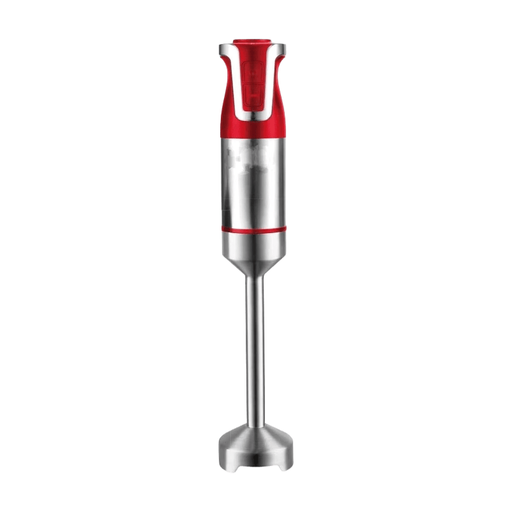
Why it suits this profile: This hand blender takes up very little space and is suitable for smoothies, sauces, purées, soup and light preparations where you do not need a fixed bowl.
The product description lists 800 watts, 20 speeds, a turbo setting and removable parts. Check which accessories and components are actually included with the version you choose.
20 speeds plus turbo, stainless steel blade and dishwasher-safe attachment according to the product information.
We have put together a complete, up-to-date list of products that fully meet these strict selection criteria and the applicable European safety requirements.
Choose a hand mixer if you mainly make cake batter, whipped cream and simple doughs and want to put the appliance away after use. A stand mixer is better suited to larger quantities and regular kneading. However, its fixed bowl takes up more worktop space.
A hand blender or blender is the practical choice for puréeing soup and making smoothies, sauces and small portions. Some sets include a whisk and chopper, but they should not automatically be considered a full replacement for a food processor when handling heavy dough.
For light baking, 200 to 450 watts may be sufficient. For heavy dough, look beyond wattage and consider the motor type, dough hook, overheating protection and maximum operating time. Always compare rated values with rated values.
The lifespan depends on usage, maintenance, workload and following the manual. Allow the motor to cool down when instructed, do not exceed the maximum quantity and only remove attachments when the plug has been disconnected from the socket.
Consumption is determined by the power rating and operating time. A 450-watt mixer running for ten minutes theoretically uses around 0.075 kWh. In practice, consumption varies depending on the speed and load. So do not use the mixer for longer than necessary, and choose a model suited to the quantities you usually prepare.
