
Vandaag of morgen in huis

Kwaliteit gegarandeerd

Welkomstaanbiedingen ontgrendelen: GRATIS bezorging | Tot 80% korting | Gratis 30 dagen JoyPlus-proefperiode
Download de app
A kitchen mixer can make preparing dough, batter, sauces and smoothies easier. However, comparing models fairly can be difficult. For example, a high wattage does not automatically mean that a mixer is suitable for heavy bread dough. A large bowl may also be less useful in practice when the recommended filling quantity is much lower.
This buying guide helps home bakers, keen cooks and families translate marketing claims into verifiable product specifications.
Some manufacturers state peak power, while another brand shows rated power. This can make a model appear more powerful than it needs to be in everyday use. For example, the Monsga SM100 lists 1000W peak power, alongside 600W rated power. When comparing models, you should therefore check which type of power is being stated.
For a hand mixer used for cake batter, a lower power rating is often sufficient. For a dough mixer, motor torque, the dough hook, maximum mixing time and permitted quantity are at least as important.
A 6-litre bowl does not mean that you can fill it completely with dough. The Monsga models list a maximum capacity of 6 litres, with a recommended usable capacity of 5 litres. This difference matters when preparing bread dough, whipped cream and batters that increase in volume while mixing.
So check:
A 5-in-1 or 7-in-1 food mixer sounds versatile, but extra parts take up space and need to be cleaned. For many bakers, a stand mixer with a dough hook, whisk and flat beater is sufficient. If you mainly make smoothies, soups and sauces, a blender or hand blender may be more useful.
Also check whether the accessories are original, dishwasher-safe and easy to attach. The motor unit itself must not be immersed in water when using electric mixers and blenders.
A hand mixer is light, compact and suitable for eggs, cream, cake batter and smaller quantities. According to the product information, the Russell Hobbs 24672-56 has 185W power, 350W peak power, five speeds and a pulse function. The Philips 5000 Series HR3745/00 lists 450W, six speeds and a 3-litre automatically rotating bowl.
A stand mixer or kitchen machine stands independently on the worktop. This keeps your hands free and makes it more practical for larger quantities. In addition to wattage, look out for:
A pulse function is useful for short, powerful bursts, but it does not replace good speed control.
Stainless steel is commonly used for mixing bowls and can withstand everyday use. Check whether the material is food-safe, such as SUS304 or 18/0 stainless steel, when this is stated in the product specifications.
A mixer should remain firmly in place. Suction cups, non-slip feet and a stable, wide base can help. For example, the AUCMA ASM1559 lists four suction cups, a vibration-absorbing design and a noise level of up to 72 dB according to the product information. A stated noise level still depends on the speed, surface and type of preparation.
Three attachments are generally most relevant for baking:
A mixer with bowl is useful if you bake regularly. For sauces and soup, a hand blender is more practical. For smoothies, iced drinks and larger quantities, a smoothie blender with a jug is usually more suitable. According to the product information, the Philips HR3020/20 has a 2-litre jug, a 1.5-litre working capacity, three speeds and a pulse function.
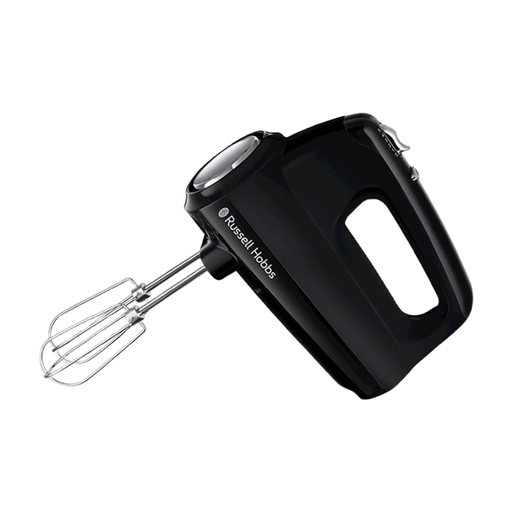
Why it suits this profile: Compact hand mixer for cake batter, mashed potato and smaller baking sessions. It is easier to store than a stand mixer.
The specifications list 185W power and 350W peak power separately, so these figures cannot simply be confused. The five speeds and pulse function provide control when working with light mixtures.
Five speeds, pulse function, compact dimensions and removable parts that, according to the product information, are dishwasher-safe.

Why it suits this profile: Designed for households that bake regularly and value a larger bowl and the option to add further attachments.
The 6.7-litre bowl capacity is clearly stated. A K-beater, whisk and dough hook are also included, so you are not paying solely for separate accessories.
6.7-litre capacity, metal housing, stainless-steel bowl and, according to the product information, more than 20 optional accessories.
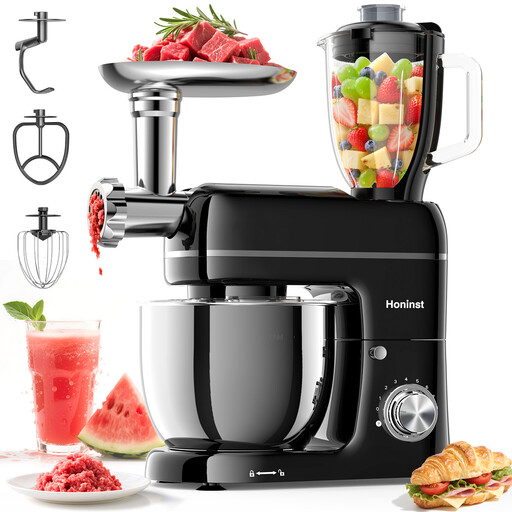
Why it suits this profile: Suitable for users who want to use a meat grinder and blender function as well as mixing and kneading.
The functions are linked to specific components: a 6-quart bowl, eight speeds, a dough hook, whisk, beater, meat grinder and blender jug.
1300W maximum motor power according to the product information, eight speeds and multiple functions for everyday household use.

Why it suits this profile: A sensible choice for families who mainly prepare smoothies, soups and sauces rather than kneading bread dough.
The product information distinguishes between the jug capacity and the working capacity: 2 litres in total and 1.5 litres usable. This makes planning family-sized portions easier.
1000W motor, three speeds plus pulse, removable blades and dishwasher-safe removable parts according to the product information.
We have put together a complete, up-to-date list of products that fully meet these strict selection criteria and the applicable European safety regulations.
Choose a kitchen machine with a bowl if you bake often, prepare large quantities or want to make dough without having to hold the appliance continuously. A hand mixer takes up less space and is suitable for smaller portions. A blender is the more logical choice for liquid preparations such as smoothies, soups and sauces. A hand blender works directly in a pan or measuring jug, making it practical for small quantities.
Before buying, always check the plug and voltage for use in the Netherlands, the included manual, the cleaning instructions and the statutory guarantee. Under EU consumer rules, many new products come with a minimum statutory guarantee of two years; additional manufacturer warranties may vary by brand.
For cake batter and whipped cream, a hand mixer with a few hundred watts may be sufficient. For heavy dough, wattage is not the only important factor; the dough hook, motor power, bowl capacity and maximum operating time matter too. Compare rated values with rated values and peak power with peak power.
No. Check the maximum dough quantity and recommended speed in the manual. When kneading, generally use a low or medium setting and allow the appliance to rest when instructed by the manufacturer. A hand mixer may be suitable for light dough mixtures, but a stand mixer is usually more practical for making heavy dough regularly.
Consumption depends on the power rating and operating time. A 1000W appliance running for ten minutes theoretically uses around 0.167 kWh, excluding differences between rated power and actual power consumption. Short operating times, an appropriate bowl capacity and the correct speed help to limit unnecessary electricity use.
