
Vandaag of morgen in huis

Kwaliteit gegarandeerd

Welkomstaanbiedingen ontgrendelen: GRATIS bezorging | Tot 80% korting | Gratis 30 dagen JoyPlus-proefperiode
Download de app
A kitchen mixer can mix batter, whip cream and knead dough without you having to stir constantly. However, a high wattage or large bowl is not automatically enough. If you only look at the product photo or an impressive wattage, you could end up with a mixer that takes up too much space, is unstable or is difficult to clean.
In this buying guide, the Joybuy Product Recommendation Officer outlines the key points to consider. This allows you to compare a food processor, stand mixer, hand mixer and stick blender based on verifiable features rather than marketing language.
An electric mixer with 1,000 or 1,200 watts may appear more powerful than a model with 400 or 450 watts. However, wattage does not tell you everything about performance. The motor, drive system, overload protection and accessory design all help determine how suitable an appliance is for heavy dough.
So also check:
A 6-litre kitchen mixer has a spacious bowl, but you cannot always fill it completely. For example, the Monsga SM100 specifies a maximum capacity of 6 litres, while also stating a recommended usable capacity of 5 litres. Ingredients can also rise up the bowl while being whipped.
A 5-litre kitchen mixer is often a better fit for an average kitchen and is suitable for many household recipes. For larger families or several loaves in succession, a 6-litre kitchen mixer may be more practical. As well as checking the capacity, look at the dimensions, because a stand mixer usually remains permanently on the worktop.
A kitchen machine with only a whisk is less versatile for bread and pizza dough. For regular baking, a whisk, beater and dough hook are useful basic accessories. A splash guard also helps prevent flour and batter from flying out of the bowl.
Before buying, check:
A kitchen mixer with multiple speeds gives you greater control for different preparations. A low setting is suitable for gently mixing flour into batter, while higher settings are more suitable for whipped cream or egg whites. A pulse function can be useful for short, powerful bursts.
Be aware that product listings sometimes show different values, such as peak power and rated power. For example, the Monsga SM100 is listed with 1,000 watts peak power and 600 watts rated power. Therefore, do not compare wattages without checking how they were measured.
A stainless-steel bowl is sturdy, suitable for contact with food and generally easy to clean. Check whether the bowl has a handle and whether there is enough space around the mixer to tilt the head.
A model with a tilt-head design makes it easier to fit the bowl and change accessories. Suction feet or other anti-slip features can help limit movement while mixing. This is particularly relevant when working with heavy dough.
Always check the operating time stated in the manual. Some models specify a maximum continuous operating time. Allow the motor to cool down afterwards.

Why it suits this profile: This kitchen machine offers a 5-litre stainless-steel bowl, 10 speeds and three basic accessories for everyday baking.
As well as 400 watts, the product description specifies 10 speeds, a pulse function, overheating protection and anti-slip suction feet.
5-litre bowl, 10 speeds, whisk, dough hook and beater.

Why it suits this profile: This model is designed for users looking for a spacious kitchen mixer with a metal housing and built-in scales.
The listed specifications include 1,200 watts, a 7-litre bowl, automatic speed control and integrated scales.
7-litre bowl, 1,200 watts, stainless-steel construction and built-in scales.

Why it suits this profile: This dough mixer focuses on automatic kneading and resting programmes for households that regularly prepare bread dough.
The specifications state a maximum dough capacity of 2.5 kg and advise against exceeding this limit.
5-litre family capacity, touch controls, automatic kneading and a stated dough capacity of 2.5 kg.
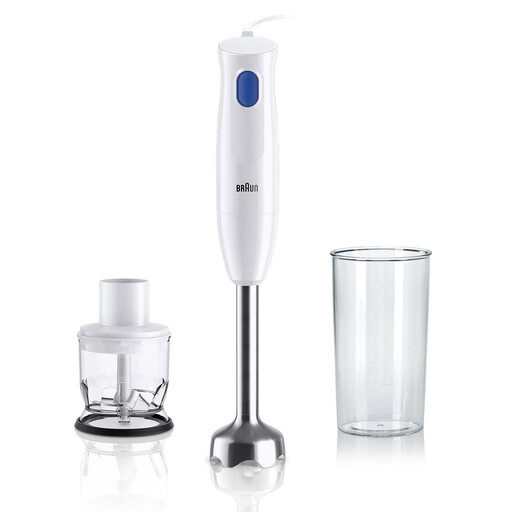
Why it suits this profile: A stick blender is more compact than a stand mixer and is suitable for smoothies, sauces, soups and small quantities.
The product details specify 450 watts, one speed, a 600 ml measuring beaker and a 350 ml chopper.
Compact size, 450 watts, 600 ml measuring beaker and EasyTwist system, according to the product description.
We have compiled a complete, up-to-date list of products that fully meet these strict selection criteria and the applicable European safety regulations.
Always place a kitchen mixer on a flat, dry surface. Only fit the whisk, beater or dough hook when the plug has been removed from the socket. Keep fingers, hair and kitchen utensils away from moving parts.
Do not immerse the motor unit in water. Clean removable parts according to the instructions and check whether they are dishwasher-safe. Take extra care with the sharp blades on a hand mixer or stick blender. In the EU, consumers are entitled to at least the statutory guarantee of conformity; many of the models mentioned also list a 2-year manufacturer’s warranty.
Yes, a stand mixer with a dough hook may be suitable for this. Always check the maximum dough quantity and the recommended operating time. An ordinary hand mixer is mainly intended for batter, cream and lighter mixtures.
For a small household, 4 to 5 litres is often practical. A 5-litre kitchen mixer provides space for many everyday recipes without being unnecessarily large. If you regularly prepare large quantities, you may want to consider a model holding 6 litres or more. The recommended usable capacity may be lower than the bowl’s total capacity.
Energy consumption depends on the power and how long the mixer is used. An appliance rated at 1,000 watts running for a few minutes does not automatically use more energy than a lower-powered model that has to run for longer. Use the lowest suitable speed and do not leave the mixer running unnecessarily.
