
Vandaag of morgen in huis

Kwaliteit gegarandeerd

Welkomstaanbiedingen ontgrendelen: GRATIS bezorging | Tot 80% korting | Gratis 30 dagen JoyPlus-proefperiode
Download de app
A good kitchen mixer can be the difference between a fluffy cake and a flat disaster, or between a smooth bread dough and a sore arm. But the market is flooded with models vying for your attention with high wattages and endless lists of accessories. How do you avoid buyer's remorse? As a Product Recommendation Officer at Joybuy, I'll cut through the noise and give you practical advice to make the right choice.
We'll focus on the pitfalls many consumers fall into and the specifications that truly matter.
Before you pull out your wallet, watch out for these common marketing traps that lead to countertop disappointment.
Focus on the specifications that determine your mixer's performance and lifespan. These are the three most important points to check.
Don't be blinded by wattage. Instead, look at the type of motor. An electric mixer with a DC (direct current) motor is often quieter, more energy-efficient, and delivers more consistent torque (rotational force) than an AC (alternating current) motor with a similar or even higher wattage. This means an 800W DC motor can sometimes handle a heavy dough better than a 1200W AC motor. For a hand mixer, 300-500W is typically sufficient for light tasks like batter and whipped cream. For a stand mixer that will regularly knead dough, a model with at least 800W and a high-quality motor is a wise choice.
The size of the stand mixer determines the quantities you can process. A 4-5 litre bowl is suitable for most home bakers and can typically handle a dough of about 1 to 1.5 kg. If you bake for a large family or often make large batches, consider a bowl of 6 litres or more. Also, pay attention to the material (stainless steel is the standard) and the weight of the machine itself. A heavier base, often made of metal, and non-slip feet ensure the mixer remains stable, even on the highest setting.
The included accessories determine your mixer's versatility. The two indispensable attachments are the whisks (for whipping) and the dough hooks (for kneading). Check if these are made of solid stainless steel. Coated aluminium hooks are lighter, but the coating can get damaged, especially in the dishwasher. Stainless steel is more durable, hygienic, and almost always dishwasher-safe. A good flat beater (or 'K-beater') is a valuable addition for mixing cake batter or cookie dough.
Below is a selection of mixers, matched to specific user profiles. We'll show how these models avoid the pitfalls mentioned earlier.
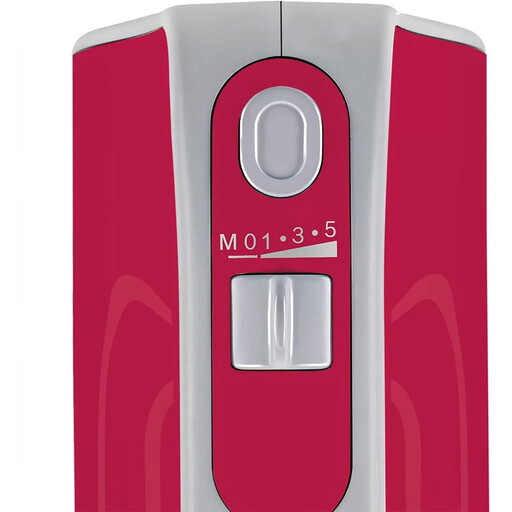
Why This Fits Their Persona: Ideal for those who occasionally bake a cake, whip cream, or make pancake batter. This hand mixer is compact, easy to store, and does exactly what it needs to do without unnecessary complexity.
This model focuses on core tasks with two high-quality stainless steel whisks and two stainless steel dough hooks. No superfluous plastic attachments, just solid materials for basic tasks.
The 450W motor is powerful for a hand mixer and can also handle lighter doughs. Its ergonomic design and light weight make it comfortable to use.
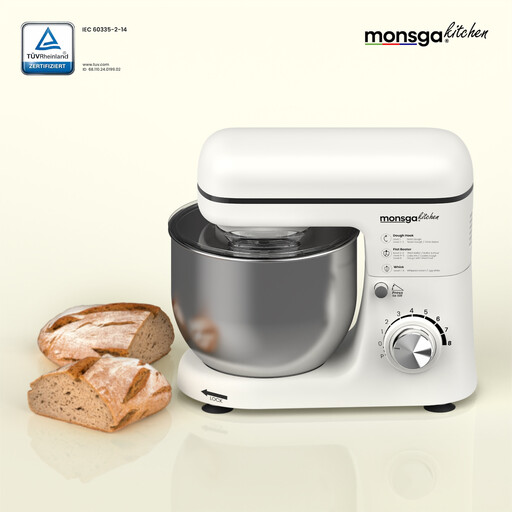
Why This Fits Their Persona: For the home cook who bakes bread or pizza weekly. The powerful motor and spacious 5-litre bowl are designed for heavy-duty work: kneading firm dough without effort.
This model tackles the stability problem with four silicone suction cups that keep the machine firmly on the countertop. The 1000W motor is designed for efficient kneading, not just for a high number on the box.
The planetary mixing action ensures all ingredients in the bowl are thoroughly incorporated. According to the manufacturer, the noise level is relatively low (under 75 dB).
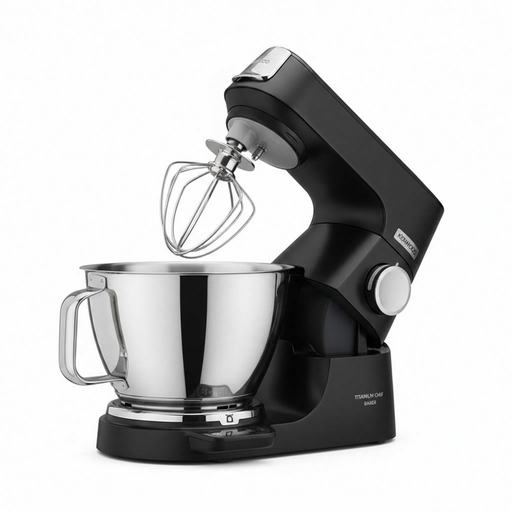
Why This Fits Their Persona: For the baking enthusiast who seeks precision, convenience, and style. This machine is more than a mixer; it's a complete kitchen assistant that simplifies and enhances the baking process.
This mixer combines a powerful 1200W motor with smart features. The power is intelligently adjusted to the task, which is more efficient than pure brute force. The accessories are made of durable stainless steel.
The built-in scale lets you weigh ingredients directly in the bowl, saving time and washing up. The included DuoBowl (5L and 3.5L) makes it easy to switch between tasks.
We have compiled a complete, up-to-date list of products that fully meet these strict selection criteria and Dutch safety regulations.
Here are answers to some questions that often come up when purchasing a new kitchen mixer.
It depends on the use case. For a hand mixer for light tasks like whipped cream and cake batter, 300-500 watts is more than enough. For a stand mixer that will regularly knead heavy dough, a power rating of 800 watts or more is recommended. But remember that the quality and type of motor (DC is often more efficient) are just as important as the wattage itself.
Yes, most hand mixers come with dough hooks and can handle light doughs in small quantities. However, for regular bread baking, a stand mixer is a better investment. A hand mixer's motor can overheat during prolonged kneading of heavy dough, which significantly shortens the appliance's lifespan.
A kitchen mixer (or stand mixer) specialises in mixing, whipping, and kneading. It is the designated appliance for the serious home baker. A food processor is more versatile and can also chop, slice, grate, and purée. Although some food processors can also knead, they are often less powerful and efficient at it than a specialised kitchen mixer. The choice depends on what you plan to use the appliance for most.
