
Vandaag of morgen in huis

Kwaliteit gegarandeerd

Welkomstaanbiedingen ontgrendelen: GRATIS bezorging | Tot 80% korting | Gratis 30 dagen JoyPlus-proefperiode
Download de app
A kitchen mixer can take a lot of the work out of baking and cooking. But it is not always clear which appliance is right for you. A stand mixer with a bowl is handy for dough and batter, while a hand mixer takes up less space. A hand blender, on the other hand, is designed for puréeing, sauces and soups.
When buying a mixer, don’t just look at the highest wattage or the longest list of accessories. Capacity, ease of use and how well it suits your recipes are just as important.
A high wattage sounds appealing, but it doesn’t tell you everything about how well a mixer performs. It’s also important to consider the type of motor, speed settings, maximum dough capacity and how the accessories move. Check whether the stated power is the rated or peak power, too. For example, the MONSGA SM100 is listed as having 1000 watts of peak power, while its stated rated power is 600 watts.
A 5 or 7-litre bowl may seem practical, but it takes up more space and isn’t necessarily better for small quantities. A larger bowl can be useful if you regularly make bread dough for your household. For cake batter, whipped cream and small portions, a more compact model is often enough.
So, check the usable capacity, not just the total volume. The Bosch MUMS2AW00 has a 3.8-litre bowl and a stated capacity of up to 1.7 kg of dough or 2.4 kg of batter.
A whisk, beater and dough hook each have a different purpose:
A hand mixer with dough hooks is suitable for lighter doughs, but a stand mixer may be more stable for regularly making heavy bread dough.
A powerful mixer is especially useful if you often prepare thick mixtures or dough. For whipped cream and cake batter, good speed control matters more than wattage alone. A low starting speed helps prevent splashing; use higher speeds once the ingredients are combined.
Also check the maximum operating time and the manufacturer’s instructions. A motor can heat up during prolonged kneading, especially with large quantities of heavy dough.
Measure the space on your worktop or in a kitchen cupboard beforehand. Check:
A mixer with a bowl is handy when you want to keep both hands free. A hand mixer is more compact and often easier to store.
Stainless steel is a practical choice for a mixing bowl that gets used often. If you’re considering a plastic bowl, check that it’s sturdy and whether the product information says it’s dishwasher-safe. The same goes for accessories: check what’s included and read the cleaning instructions.
In the EU, the legal guarantee is generally at least two years for a product that doesn’t conform to the contract. Keep your proof of purchase and check the seller’s terms and conditions.

Why it suits this profile: The 3.8-litre bowl and included baking set make this a straightforward choice for cake batter, pastries and lighter doughs.
The product information clearly states the 700-watt power, 3.8-litre capacity and maximum quantities. This lets you compare useful specifications rather than relying on marketing claims alone.
3D planetary mixing action, whisk, beater and dough hook; accessories are stated to be dishwasher-safe according to the product information.
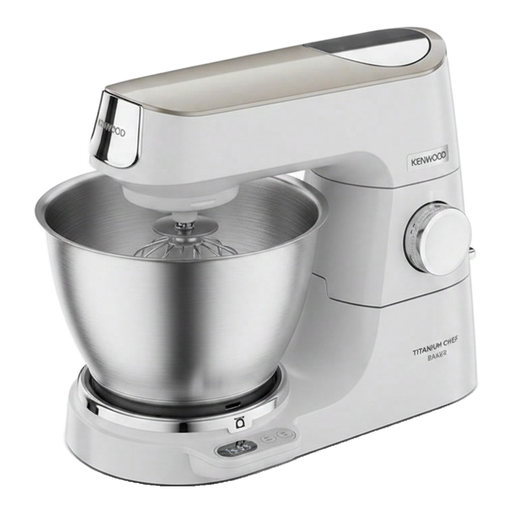
Why it suits this profile: This model is a good fit for home bakers who often weigh several ingredients and prepare a variety of recipes.
The built-in scales let you weigh ingredients directly into the bowl. The product information also lists variable speed and a pulse setting.
1200 watts, a 5-litre stainless steel bowl, dough hook, whisk and K-beater; LightLift head for adding ingredients.
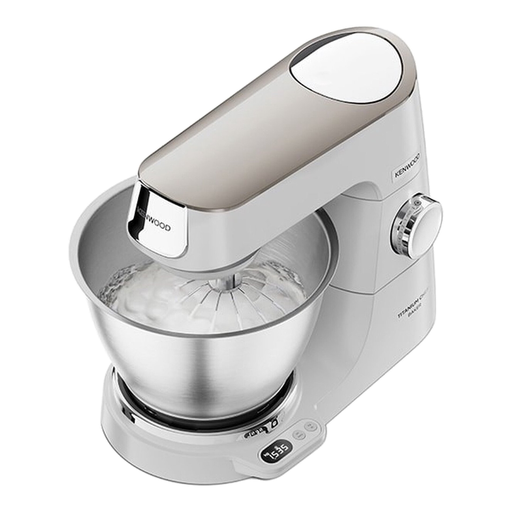
Why it suits this profile: The XL version is designed for users who make larger quantities of batter or dough and have plenty of worktop space.
The capacity, dimensions and weight are clearly listed. That means you can check in advance whether a 7-litre bowl and a height of around 40 cm will suit your kitchen.
1200 watts, 7-litre capacity, automatic speed control and built-in scales according to the product information.
A hand mixer is a good choice if you mainly make cake batter, whipped cream and lighter doughs. For example, the Braun MultiMix 5 HM5107 has a 750-watt motor and nine speed settings, according to the product specifications. The Philips 5000 Series HR3745/00 combines a 450-watt motor with a 3-litre bowl that rotates automatically.
A hand blender is a different type of appliance. It’s mainly used for soup, smoothies, sauces and puréed vegetables. The Braun MultiQuick 7 MQ7000WH has a power rating of 1000 watts and comes with a double whisk. According to the product description, its speed can be controlled using a pressure-sensitive button. For larger quantities or prolonged kneading, a stand mixer with a bowl is still the more sensible choice.
We’ve put together a complete, up-to-date list of products that meet these strict selection criteria and the applicable European safety regulations.
That depends on the stated capacity, the dough hook and the operating instructions. Always check the maximum dough quantity. For heavy dough, use a low to medium speed and let the motor cool down between batches if the manual advises you to.
Its lifespan depends on how it’s used, cared for and loaded. A mixer that’s regularly used beyond its maximum capacity may wear out sooner. Clean the accessories straight after use, keep moisture away from the motor unit and store the cord without sharp bends.
Electricity use depends on the power rating and how long the mixer is used. A 1000-watt appliance running for ten minutes uses around 0.17 kWh in theory. In practice, a kitchen mixer often won’t run continuously at full power. The exact cost depends on your energy tariff and the programme you choose.
