
Vandaag of morgen in huis

Kwaliteit gegarandeerd

Welkomstaanbiedingen ontgrendelen: GRATIS bezorging | Tot 80% korting | Gratis 30 dagen JoyPlus-proefperiode
Download de app
A kitchen machine can knead bread dough, mix cake batter and whip cream while you prepare other ingredients. However, a high wattage rating or large bowl does not automatically mean it is the right choice. Some machines take up a lot of space, while others have a limited maximum dough capacity or accessories that are not dishwasher-safe.
As a Joybuy Product Recommendation Officer, I filter the most important product specifications for you. This allows you to compare a kitchen mixer, stand mixer or dough mixer based on practical features rather than marketing copy alone.
A manufacturer may list peak power and rated power differently. A higher figure therefore does not automatically mean that the machine can handle more dough for longer. Also check the maximum dough capacity, recommended operating time and whether overheating protection is included.
A sturdy drive is important for heavy bread or pizza dough. Also, do not run the machine for longer than stated in the manual. Honinst, for example, states that heavy yeast dough should not be kneaded for more than 10 minutes at a time, followed by a cooling period.
A 6-litre or 6.5-quart mixing bowl may sound spacious, but you cannot fill it to the brim while mixing. Ingredients may splash out, and dough needs room to be processed properly. Always check the maximum amount of dough or batter instead.
A kitchen machine with a large mixing bowl is particularly suitable for families and larger baking sessions. For a small kitchen or occasional use, a compact model with a 4- to 5-litre bowl may be more practical.
A kitchen machine with accessories is only versatile if the supplied attachments suit your recipes. The three basic accessories are:
Additional blender or mincer attachments can be useful, but they take up space and may make cleaning more complicated. Also check whether the parts are dishwasher-safe. With some models, metal or coated components must be washed by hand.
Do not just measure the space on your worktop. Also allow for the room needed to lift the head. A tilting head makes it easier to change the bowl and accessories. Non-slip feet or suction cups help keep the mixer in place, particularly at higher speeds.
A stainless steel bowl is hard-wearing and suitable for everyday use. With plastic bowls, pay particular attention to the maximum capacity and cleaning instructions.
Multiple speed settings give you control over different preparations. Always start at a low speed when combining flour and liquid to reduce splashing. A pulse function is suitable for short, powerful bursts, but it does not replace normal speed control.
With a planetary mixer, the attachment moves around the bowl while the bowl or mixing system moves in the opposite direction. This can help mix ingredients more evenly. However, the final performance also depends on the shape of the bowl, the attachment and the quantity of ingredients.
An electric mixer will always make some noise, particularly when kneading. Some product descriptions specify a noise level, but only compare measurements when the testing conditions are the same. Aucma, for example, states 68–72 dB within one metre, while Honinst states less than 60 dB. These are manufacturer figures and do not universally guarantee how loud the mixer will seem in your kitchen.
Also check for overload and overheating protection, a lock for the tilting head and clear instructions on cooling breaks.

Why it suits this profile: This model offers a 5-litre stainless steel bowl, 10 speeds and three basic attachments for cakes, bread and whipped cream.
The product specification states both a maximum bowl capacity and overload and overheating protection. Check the exact dough limit in the manual.
5 litres, 10 speeds, pulse function, dough hook, whisk and beater.
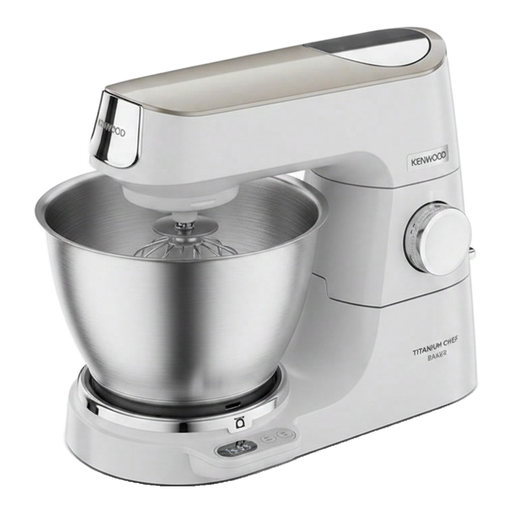
Why it suits this profile: The 5-litre bowl, variable speed and built-in scales are practical for anyone who bakes regularly and values precision.
The built-in scales reduce the need for separate tools and allow you to weigh ingredients directly into the bowl.
1200 W, stainless steel bowl, pulse function, plus dough hook, whisk and K-beater included.
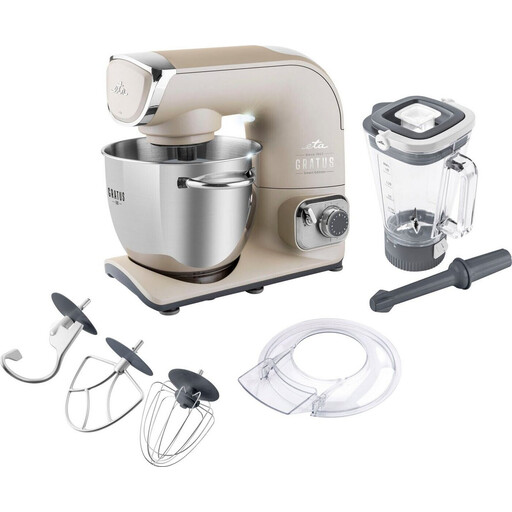
Why it suits this profile: The specifications include a metal housing, planetary mixing, a 5.5-litre bowl and a maximum dough capacity of 2.5 kg.
The stated dough capacity gives you a clearer idea of how much you can actually knead than the motor power alone.
1500 W, 5.5 litres, pulse function, thermal fuse and non-slip base.
We have put together a complete, up-to-date list of products that fully meet these strict selection criteria and the applicable European safety regulations.
For one-person households and small quantities, 4 to 5 litres is often sufficient. Families or users who regularly make bread and pizza may want to consider 5.5 to 6.5 litres. The usable capacity is always lower than the bowl's maximum capacity.
No. Check the stated maximum dough capacity, recommended operating time and safety instructions. A machine with a high wattage can still be unsuitable for prolonged or very heavy kneading.
Power consumption depends on the wattage, speed and operating time. A 1200 W model theoretically uses 1.2 kWh when running continuously for one hour, but in practice a kitchen machine usually runs for less time and not constantly at full power. It is therefore best to consider how often you use it and how long each preparation takes.
