
Vandaag of morgen in huis

Kwaliteit gegarandeerd

Welkomstaanbiedingen ontgrendelen: GRATIS bezorging | Tot 80% korting | Gratis 30 dagen JoyPlus-proefperiode
Download de app
A good kitchen knife should suit your cooking style, hand and cutting tasks. Yet many people choose a knife based solely on its appearance, a striking material or the claim that it is “extra sharp”. This can result in a knife that is awkward to use, a blade that becomes blunt quickly or a product that cannot withstand everyday use.
In this buying guide, you’ll learn what to look for when choosing kitchen knives. We’ll cover the difference between a bread knife, chef’s knife, santoku knife and cleaver, explain materials in practical terms and match several models to clear user profiles.
A manufacturer may describe a knife as “extra sharp” or “professional”. That does not automatically mean it will stay sharp for a long time or suit your cutting technique. According to Wüsthof’s own product information, some models are finished with a specific angle and hardness, for example. These details are more useful than a general marketing term.
Pay attention to:
A stainless-steel kitchen knife is more resistant to corrosion than many types of carbon steel, but cleaning and drying are still important. Salt, acids and prolonged exposure to moisture can damage the surface. With Damascus kitchen knives, hand washing is often the safest option, even when a product page highlights ease of maintenance.
A dishwasher can also cause the edge to knock against other objects. Always check the care instructions. A knife described as dishwasher-safe in the product information may still stay in better condition for longer if washed by hand and dried immediately.
A long blade provides more room when working with large ingredients, but it also requires greater control. A 32 or 33 cm bread knife is comfortable to use with large loaves, while a 17 cm santoku knife is more manoeuvrable for vegetables and smaller portions. Consider your chopping board, storage space and hand size before buying a longer version.
The right blade depends on the task:
A kitchen knife for meat and vegetables does not therefore have to be the same model. If you bake bread every day, you’ll get more use from a good bread knife than from an extra-large chef’s knife.
Look at the difference between:
A full tang, where the steel continues into the handle, can provide stability. Also check whether the handle is smooth, securely attached and comfortable to hold.
Use a suitable wooden or plastic chopping board and avoid glass, stone and ceramic surfaces. Do not cut frozen products unless the knife is explicitly designed for this. A blunt knife requires more pressure and may therefore behave less predictably.
Preferably wash sharp kitchen knives separately, dry them immediately and store them in a knife block, protective sheath or magnetic holder. A honing steel can realign the edge on some knives, while a sharpening stone removes material and reshapes the edge. Check which method is suitable for the steel and sharpening angle.
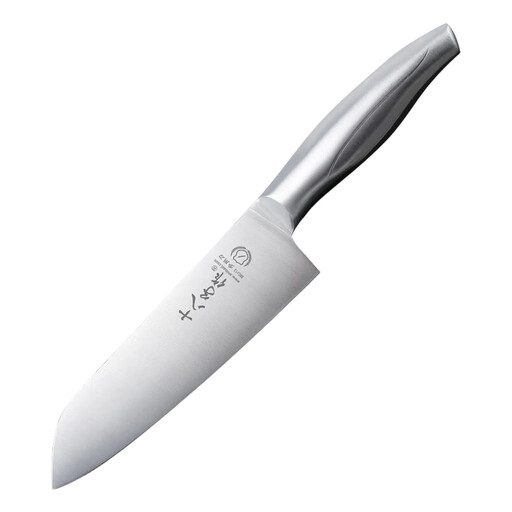
Why it suits this profile: A simple multifunctional model for everyday cutting of meat, vegetables and other ingredients. The product information states that it is made from stainless steel and has a single handle.
The specification states the material and intended use, so you do not immediately have to buy an extensive knife set.
Stainless-steel construction; multifunctional design for everyday food preparation.
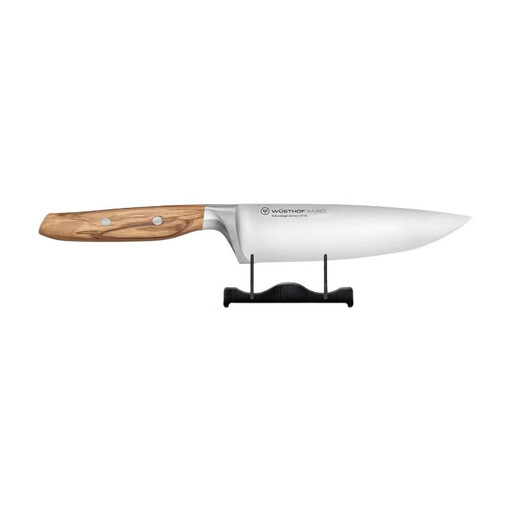
Why it suits this profile: According to the product information, this chef’s knife is forged from X50CrMoV15 stainless steel and has a 20 cm blade for a wide range of cutting tasks.
The product details state the type of steel, blade length, sharpening angle and hardness. This gives you more to go on than a sharpness claim alone.
20 cm blade; suitable for vegetables, meat, herbs and larger ingredients; olive-wood handle according to the product information.
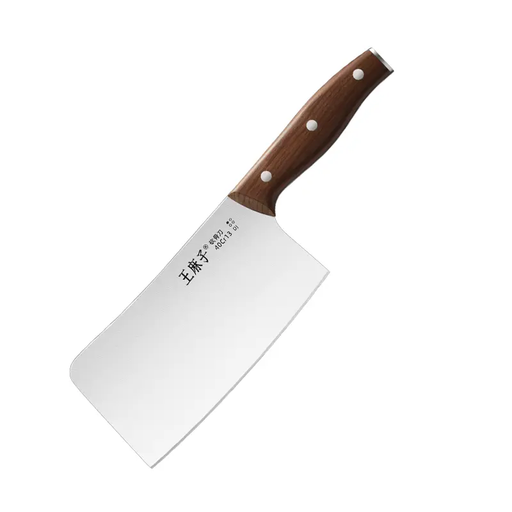
Why it suits this profile: A cleaver for users who regularly prepare chicken, ribs or other robust cuts. Use it only for the stated purpose and with a suitable chopping board.
It is clearly intended for heavier chopping tasks. This helps prevent you from using a standard chef’s knife on bones or hard joints.
According to the product description: forged construction, carbon steel and an ergonomic non-slip handle.
For keen bakers, the WMF Grand Gourmet Bread Knife, Serrated 32cm and the Wüsthof Classic Bread Knife - 20 cm are logical options to compare. According to the product information, the WMF has serrations on both sides and is designed for different types of bread. The Wüsthof model has a 20 cm blade and, according to the product information, is made from X50CrMoV15 stainless steel.
If you’re looking for a santoku knife, take a look at the Wüsthof Classic Ikon Santoku Knife - 17 cm. The product information states that it is made from high-carbon stainless steel, has a 17 cm blade and should be maintained by hand washing. If you want a Damascus kitchen knife, the Wüsthof Performer Santoku Knife - 17 cm is an alternative; according to the product page, this model is not dishwasher-safe.
We’ve compiled a complete, up-to-date list of products that fully meet these strict selection criteria and the applicable European safety regulations.
For most everyday tasks, a chef’s knife of around 20 cm is a practical starting point. You can use it to cut vegetables, meat, herbs and fruit. A 17 cm santoku knife is an alternative if you prefer a shorter, lighter blade. For bread, you’ll need a separate bread knife, as a smooth edge can squash the crust.
Use a suitable chopping board, wash the knife carefully by hand and dry it immediately. A honing steel is intended to realign an existing edge; for genuinely blunt kitchen knives, a sharpening stone or professional sharpening service is more suitable. Follow the manufacturer’s care instructions, especially with Damascus steel and hard knives.
This varies from model to model. Some product pages state that a knife is dishwasher-safe, while others specify or recommend hand washing. Always check the product specifications. Even with a dishwasher-safe knife, hand washing can help keep the handle, edge and finish in good condition for longer.
