
Vandaag of morgen in huis

Kwaliteit gegarandeerd

Welkomstaanbiedingen ontgrendelen: GRATIS bezorging | Tot 80% korting | Gratis 30 dagen JoyPlus-proefperiode
Download de app
A good kitchen knife makes everyday cooking more straightforward. However, buying kitchen knives is about more than simply looking for a sharp tip or an attractive black handle. Product pages use terms such as professional, razor-sharp and durable, while important information about care, dimensions and intended use can sometimes be less prominently displayed.
As a Joybuy Product Recommendation Officer, I filter the relevant product information down to practical details. This allows you to compare kitchen knives based on verifiable specifications, rather than just appearance or brand name.
A large kitchen knife set may seem appealing, but it can sometimes include several knives designed for similar tasks. For many households, a chef’s knife, paring knife and bread knife are already sufficient. If you mainly chop vegetables, you may get more use from one well-suited chef’s knife than from an extensive knife block.
So pay attention to:
A knife may be supplied sharp according to the product description, but how long it remains easy to use also depends on the chopping board, care and storage method. Glass, stone and metal can damage an edge more quickly. Storing knives loose in a cutlery drawer also increases the risk of them becoming blunt or damaged.
A knife block, drawer insert or individual blade guard helps keep the edge protected. Also check whether hand washing is recommended, even when a product is officially dishwasher-safe.
Stainless steel knives are practical because they resist staining and corrosion, but the type of steel alone does not determine how comfortable a knife is to use. The shape, hardness, balance and handle also play a part. A heavier knife may feel stable, while a lighter model may be more comfortable for extended chopping.
The right length depends on your chopping board, hand size and the tasks you carry out:
A longer blade provides more cutting surface, but it also requires greater control. For a smaller kitchen or compact chopping board, a 16 cm chef’s knife may be more convenient than a 20 cm model.
Look for specific material information. The Wüsthof knives in this selection use, among other materials, X50CrMoV15 steel or Wüsthof steel. This tells you more than a general term such as ‘professional steel’, but it still does not guarantee that every knife will suit every user.
A DLC coating, as used on certain Performer models, is described in the product information as a hard coating with a smooth surface. The manufacturer lists properties such as wear resistance and reduced sticking. Treat this as the brand’s product information, not as a universal promise. With coated knives, hand washing is often sensible to help preserve the finish.
An ergonomic handle should above all feel stable and comfortable. Check whether the handle is made from plastic, wood or fibre-reinforced material. Wooden handles generally require more care when cleaning and drying.
Also check the dishwasher information:
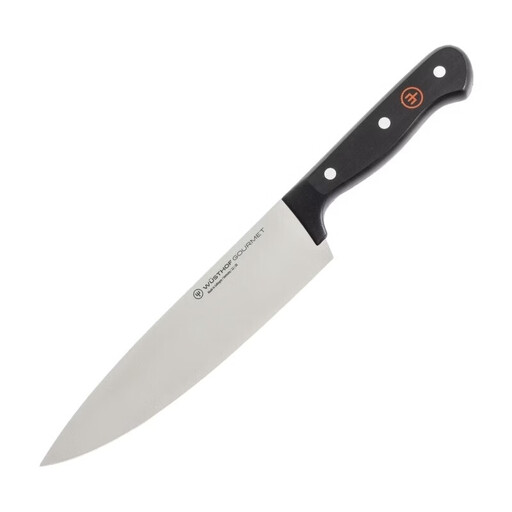
Why it suits this profile: This individual chef’s knife provides a versatile basis for slicing, chopping and dicing, without having to buy a complete knife set straight away.
You pay for one clearly specified 20 cm knife rather than unused components. The product description states that it has a plastic handle and stainless steel blade.
20 cm blade; suitable for slicing, chopping and finely cutting; hand washing is recommended for a longer service life.
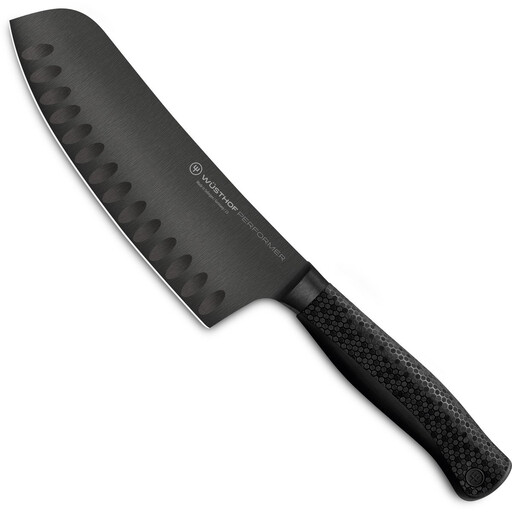
Why it suits this profile: A suitable choice for anyone who values a modern black design, a 17.8 cm blade and a secure grip for regular cooking.
The specifications state the blade material, DLC coating and handle material. This allows you to assess the finish without relying solely on the term ‘professional’.
DLC-coated Wüsthof steel according to the product information; fibre-reinforced handle; suitable for soft vegetables and firmer ingredients.
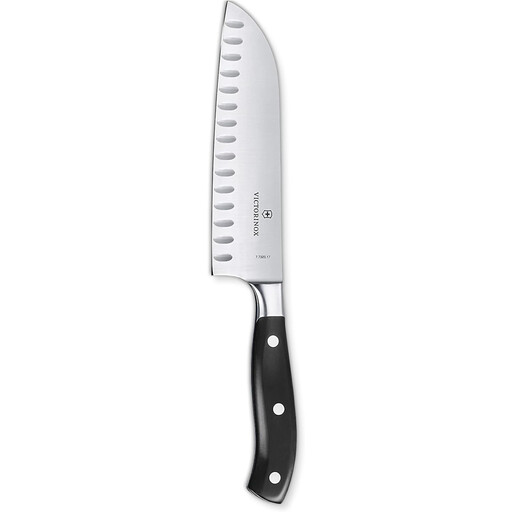
Why it suits this profile: This 17 cm santoku knife is ideal for cooks who regularly prepare vegetables, fish and meat and are looking for a compact alternative to a classic chef’s knife.
The fixed length and clearly defined knife shape make its intended use clear. The product description also mentions the dimples in the blade and an ergonomic plastic handle.
17 cm stainless steel blade; dimples according to the product description; suitable for everyday use by left- and right-handed cooks.
An individual knife is a practical choice when you already own a few knives and want to add specific pieces. Consider a bread knife, paring knife or additional chef’s knife. A knife set makes more sense if you are starting from scratch and want to cover several cutting tasks at once. According to the product specifications, the Wüsthof Classic 3-piece set contains a 20 cm chef’s knife, a 16 cm carving knife and a 9 cm paring knife.
When buying sets, always check that the handles, care instructions and blade lengths work well together. A set with wooden handles, for example, may require more maintenance than one made entirely from plastic.
We have compiled a complete, up-to-date list of products that fully meet these strict selection criteria and the applicable European safety regulations.
For everyday cooking, a chef’s knife, paring knife and bread knife are often sufficient. Add a santoku knife if you prefer that shape, or steak knives if you regularly serve meat at the table.
That depends on the steel, use, chopping board and care. Do not use a glass or stone board, do not cut through bones with a standard chef’s knife, and store knives separately. Regular honing or sharpening may be necessary, but follow the manufacturer’s care instructions.
Some models are dishwasher-safe according to the product description. However, hand washing can help extend the life of the blade, coating and handle. With wooden handles and black coated kitchen knives, hand washing is usually the safest option.
