
Vandaag of morgen in huis

Kwaliteit gegarandeerd

Welkomstaanbiedingen ontgrendelen: GRATIS bezorging | Tot 80% korting | Gratis 30 dagen JoyPlus-proefperiode
Download de app
A good kitchen knife does not automatically have to be expensive. It does, however, need to suit what you cut every day, how you maintain it and how comfortable it feels in your hand. If you focus only on terms such as “extra sharp”, “professional” or “Damascus”, you risk paying for features that make little practical difference.
The main pitfalls when choosing kitchen knives are:
The length determines how much control and cutting space you have. A 16 cm chef’s knife is often manoeuvrable in smaller kitchens and for everyday portions. A 20 cm chef’s knife offers more cutting surface for large vegetables, meat or cabbage, but also requires more space and technique.
Choose the shape based on the task:
A large set containing lots of knives is not always practical. For many households, a chef’s knife, bread knife and paring knife are sufficient. A kitchen knife set is particularly appealing if you want to cover these three uses from the outset.
Many stainless steel knives are highly resistant to moisture and everyday use, but stainless steel does not mean you can leave them wet for long periods. Dry the knife after washing and avoid prolonged soaking.
With forged kitchen knives, the blade is formed from a single piece of steel, according to the product description. This can provide a sturdy construction and a well-balanced feel. One example is the Wüsthof Classic Chef’s Knife, made from X50CrMoV15 steel. According to the product specification, this knife has a hardness of 58 HRC and a sharpening angle of 14 degrees per side. Such details are easier to verify than a general claim of “professional sharpness”.
Pay attention to coatings too. According to the product description, Wüsthof Performer models have a DLC coating. The manufacturer describes it as wear-resistant and offering non-stick properties. This is a brand claim, not a guarantee that cut food will never stick. Hand washing is recommended to help preserve the coating.
A comfortable handle makes prolonged cutting easier. Check whether the handle is synthetic, plastic or wooden, and whether the connection between the blade and handle is secure. A full tang, where the steel extends through the handle, can contribute to a stable balance.
Care has a direct impact on the knife’s service life:
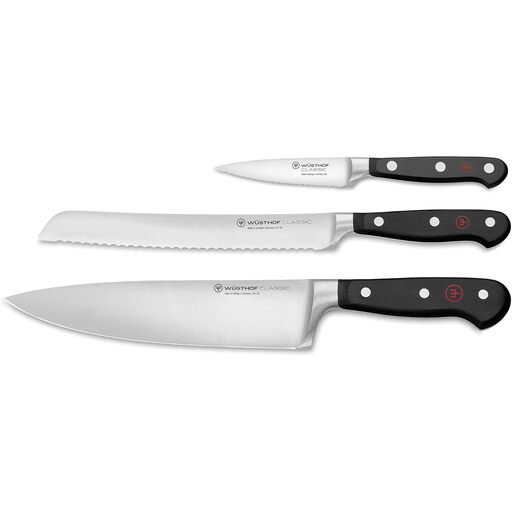
Why it suits this profile: The set contains a chef’s knife, bread knife and paring knife, covering many everyday tasks without having to combine individual knives.
The intended uses are clearly described. According to the product information, this set is dishwasher-safe, but drying the knives after cleaning is still sensible to protect the edge.
Three useful knives; plastic handles; suitable as a starter set for a household.
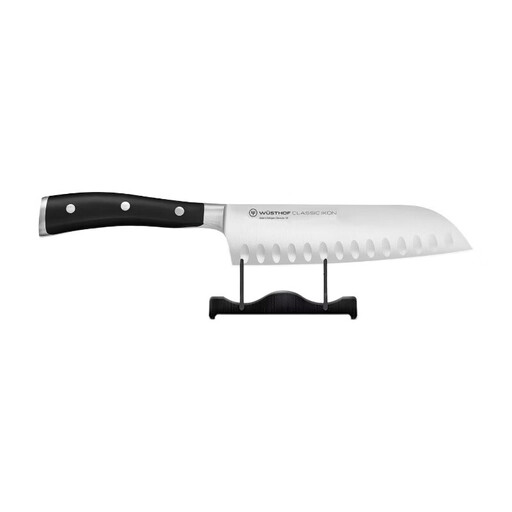
Why it suits this profile: This forged chef’s knife is designed to offer control when cutting vegetables, herbs, fruit, fish and meat. Its size suits many British home kitchens.
The specifications state X50CrMoV15 steel, a 16 cm blade length and 14 degrees per side. According to the product information, the knife is not dishwasher-safe.
Forged construction; plastic handle; dimples in the blade according to the product description.
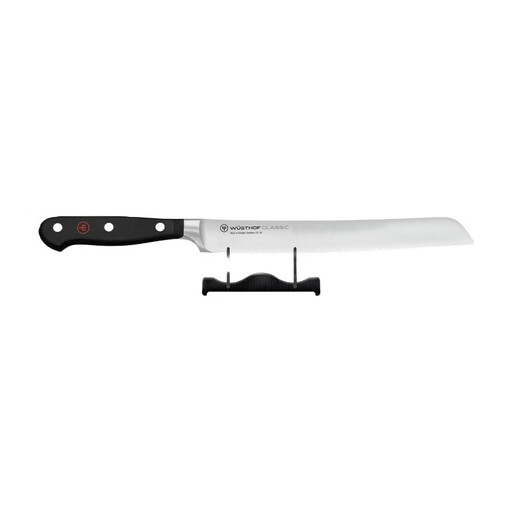
Why it suits this profile: If you often cut bread, cake or vegetables with tough skins, a suitable bread knife is more useful than a second chef’s knife.
The serrated edge is designed for crusts and tough skins. According to the product information, hand washing is recommended; this helps prevent the edge from knocking unnecessarily against other cutlery.
20 cm blade; X50CrMoV15 stainless steel; suitable for left- and right-handed use according to the product description.
We have compiled a complete, up-to-date list of products that fully meet these strict selection criteria and the applicable European safety regulations.
That depends on the steel, sharpening angle, chopping board and how the knife is used. A knife that handles hard ingredients every day needs maintenance more often than one used for light cutting. Use a honing steel regularly when it is suitable for the blade, and have a blunt knife sharpened. Using a dishwasher, glass chopping boards and storing knives loose in a drawer can damage the edge more quickly.
For most households, a combination of three knives is sufficient: a chef’s knife, a bread knife and a paring knife. If you often serve meat at the table, you can add steak knives. A santoku knife is an alternative to a chef’s knife, particularly if you enjoy finely chopping vegetables and prefer a wider cutting shape.
Not automatically. Always check the product information. Some models, such as the Wüsthof Classic 3-Piece Knife Set mentioned above, are described as dishwasher-safe. Other knives, including several forged kitchen knives with a coating or specific finish, are specifically recommended for hand washing. Hand washing and drying the knives immediately remain the safest choices for a longer service life.
