
Vandaag of morgen in huis

Kwaliteit gegarandeerd

Welkomstaanbiedingen ontgrendelen: GRATIS bezorging | Tot 80% korting | Gratis 30 dagen JoyPlus-proefperiode
Download de app
Buying a kitchen knife seems simple, until you realise how much knives differ in shape, length, material and intended use. A knife that works well for vegetables is not automatically suitable for bones or bread. Terms such as “extra sharp”, “professional” and “durable” also mean little when the specific product details are missing.
Pay particular attention to these three common pitfalls:
The shape of a knife determines how safely and practically you can use it.
Stainless steel is popular because it is relatively easy to clean and less prone to staining than some other types of steel. However, “stainless” does not mean that a knife can be left wet indefinitely. Dry it thoroughly after washing and do not leave it submerged in water for long periods.
The WANGMAZI household knife is made from stainless steel and is intended for use with meat, vegetables and fruit. The product information recommends hand washing and drying it immediately. The WANGMAZI fruit and paring knife is also stated to be unsuitable for dishwashers and comes with a protective cover. Always check the care instructions for each model.
A longer blade cuts through larger ingredients in a single motion, but it also requires more space and control. For many households, a chef’s knife with an 18 to 20 cm blade is a practical all-round size. A smaller paring knife works better for apples, potatoes and small vegetables.
Also consider the weight. According to the product information, the Wüsthof Gourmet chef’s knife has a 20 cm blade and weighs 184 grams. The Wüsthof Classic Ikon santoku has a 17 cm blade and a stated weight of approximately 170 grams. These details help you compare models objectively, but how a knife feels in your hand is still a personal matter.
A non-slip or ergonomically shaped handle can help you hold the knife securely. Check that the handle is firmly joined to the blade and that there is no detectable movement. Always use a sturdy, stable chopping board. Glass and stone can damage the edge more quickly; wood or plastic is generally more suitable for everyday cutting.
A kitchen knife is not a lever or screwdriver. Do not use a cleaver to prise food apart, and only use an oyster knife to open oysters. Store knives in a knife block, on a magnetic strip or with a protective cover. Keep them out of children’s reach.
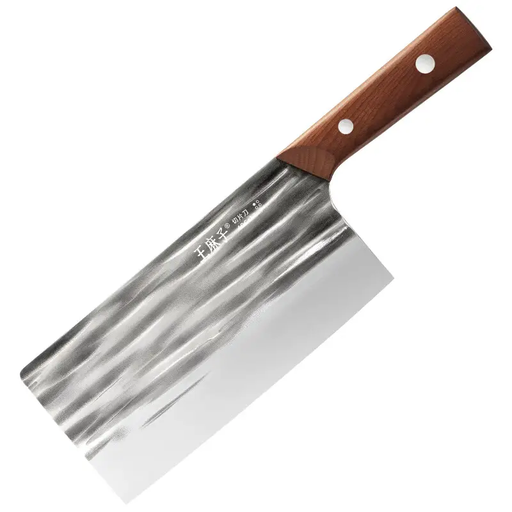
Why this suits the profile: This multifunctional kitchen knife is designed for everyday cutting of meat, vegetables and fruit in a home kitchen.
The product information lists specific uses and recommends hand washing and drying, making the care requirements clear.
Stainless steel construction, an ergonomic handle and a design suited to several everyday cutting tasks.

Why this suits the profile: The model uses X50CrMoV15 high-carbon stainless steel and, according to the product description, is manufactured from a single piece of steel.
The product page specifies the type of steel, the 17 cm blade length and recommended hand washing, rather than relying solely on general sharpness claims.
Santoku shape for vegetables, herbs, fish and meat; synthetic handle and a stated weight of approximately 170 grams.
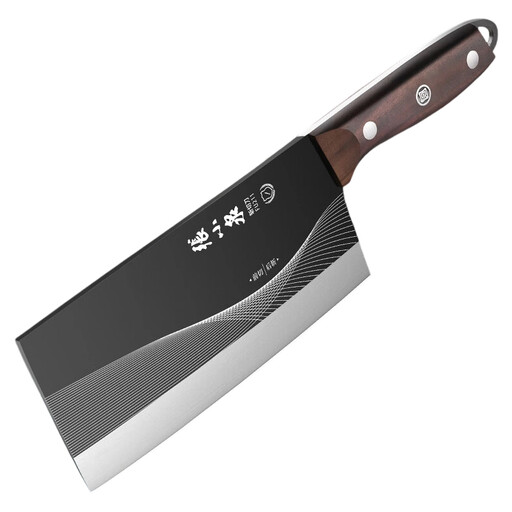
Why this suits the profile: The thick construction and 313 mm length are designed for chopping around bones, rather than fine cutting.
The product name and dimensions make it clear that this is a bone cleaver, so you are less likely to use it accidentally as an all-purpose chef’s knife.
Stainless steel blade and a reinforced construction for specific chopping applications. Use on a suitable chopping board.
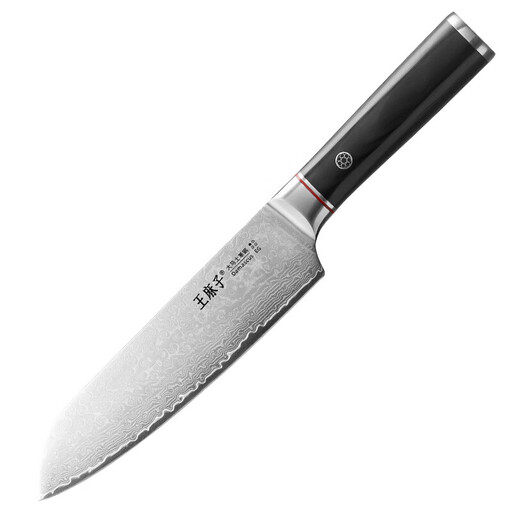
Why this suits the profile: The santoku shape is designed for versatile cutting of meat and vegetables during everyday food preparation.
The product name identifies the knife as a santoku. This helps distinguish it from a cleaver or carving knife designed for heavier tasks.
Multifunctional shape for meat and vegetables; check the exact dimensions and care instructions on the product page before buying.
We have put together a complete, up-to-date list of products that fully meet these strict selection criteria and the applicable European safety regulations.
A kitchen knife will remain useful when you look after it properly:
A manufacturer’s claim about sharpness or lifespan is not a guarantee for every user. A brand’s own research may indicate that a product can deliver a certain level of performance, but everyday care, cutting technique and usage also affect the results.
A chef’s knife measuring approximately 18 to 20 cm is suitable for many common tasks, such as cutting vegetables, chopping herbs and portioning meat. If you prefer a more compact model, you could consider a santoku knife of around 17 cm.
This depends on the steel, frequency of use, chopping board and care. A knife used only on a suitable board and sharpened regularly will generally continue cutting comfortably for longer than one used on glass or left in a cutlery drawer where it can come into contact with other objects.
No. Always check the product page. Some models are described as dishwasher-safe, while hand washing is recommended. The WANGMAZI fruit knife is explicitly stated to be unsuitable for dishwashers. Hand washing and drying immediately are a safe care choice when the instructions are unclear.
