
Vandaag of morgen in huis

Kwaliteit gegarandeerd

Welkomstaanbiedingen ontgrendelen: GRATIS bezorging | Tot 80% korting | Gratis 30 dagen JoyPlus-proefperiode
Download de app
A good kitchen knife should suit the way you cook. A home cook who mainly chops vegetables has different needs from a culinary student, restaurant worker or enthusiast looking for a complete knife set. Yet many people buy based on a glossy product photo, a claim such as “extra sharp” or the number of knives in the box.
There are three common pitfalls to watch out for:
For most UK kitchens, a small, carefully chosen selection is enough. Start by considering the tasks you do most often.
A knife block takes up more space, but gives your knives a dedicated place to live. A knife roll or drawer insert may be a better fit for a compact kitchen, or if you want to take your knives to a course or workplace.
A 16 cm blade is easy to manoeuvre and often comfortable for smaller hands or limited worktop space. A 20 cm chef’s knife gives you more cutting surface and is useful for large vegetables, cabbage and bigger cuts of meat. The right length isn’t a quality rating; it depends on your control, chopping board and how you’ll use the knife.
Pay attention to the shape too. A wide chef’s knife can help you scoop ingredients into a pan after chopping. A santoku knife often has a straighter cutting edge and indentations in the blade. According to some brands’ product descriptions, these indentations can help prevent sliced food from sticking to the blade as easily. This isn’t guaranteed for every user or ingredient.
A stainless steel knife is resistant to corrosion, but should be dried thoroughly after washing. Product information may specify X50CrMoV15 or another type of stainless steel. Check that the manufacturer actually names the type of steel, rather than relying solely on terms such as “premium” or “professional”.
A forged kitchen knife is shaped from a single piece of steel. Some models also have a full-tang construction, where the steel extends through the handle. This can contribute to balance and strength, but it doesn’t automatically make a knife right for everyone. Consider the weight and handle, and check how the knife should be cared for.
Before buying, check whether the knife is dishwasher-safe. That doesn’t mean the dishwasher is always the best option. Hand-washing with mild washing-up liquid and drying the knife straight away will generally help keep the edge, handle and any coating in good condition for longer.
Use kitchen knives on a wooden or plastic chopping board. Glass, stone and metal can damage the edge more quickly. A honing steel can help maintain certain edges, while occasional sharpening with a whetstone or suitable sharpening system may be needed when a knife becomes blunt.
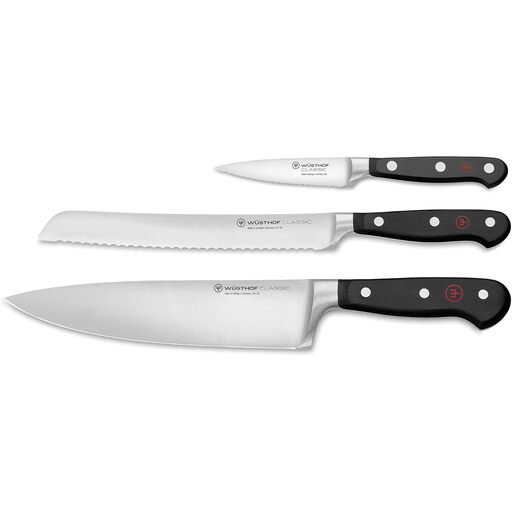
Why it suits this type of user: The set covers three everyday essentials: food preparation, slicing bread and small cutting tasks. That means beginners don’t have to pay for knives they’re unlikely to use.
The number of pieces is kept to a minimum, and the product description clearly explains what each knife is for. The set is described as dishwasher-safe, but hand-washing and drying are still sensible ways to keep it in good condition for everyday use.
Three practical knives, stainless steel blades and plastic handles. The set weighs 1 kg, according to the specifications.
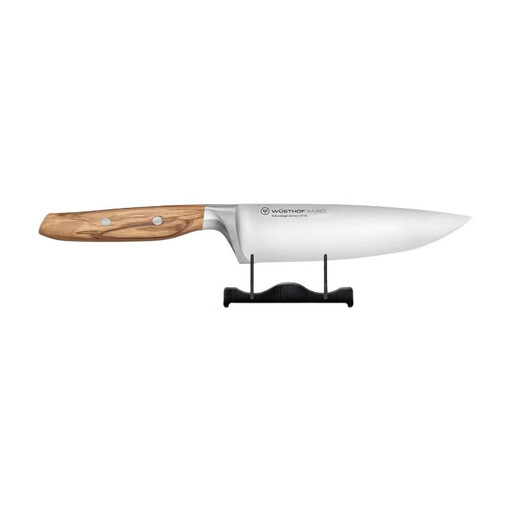
Why it suits this type of user: This Wüsthof chef’s knife is designed for people looking for one versatile knife for regular slicing, chopping and finely preparing ingredients.
The product information specifies X50CrMoV15 steel, a 20 cm blade and a 14-degree sharpening angle. You can therefore assess the marketing claim about sharpness alongside specific details.
Forged from a single piece of steel, according to the product description, with a half-bolster construction and an olive wood handle.

Why it suits this type of user: A 17 cm santoku knife is well suited to finely slicing vegetables, herbs, fruit, fish and meat, particularly if you prefer a more compact shape than a long chef’s knife.
The product description gives both the type of steel and the sharpening angle of 14 degrees per side. This makes it clear that the manufacturer’s sharpness claim is a brand claim, not a universal standard.
X50CrMoV15 high-carbon stainless steel, a half-bolster handle and a weight of around 170 grams.
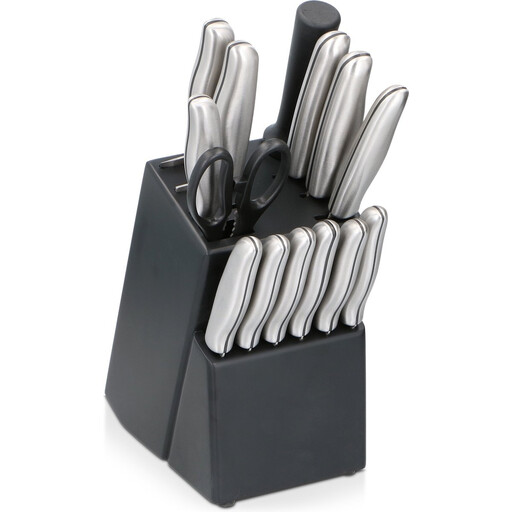
Why it suits this type of user: This kitchen knife set is designed for households looking for more than just a chef’s knife: it also includes a bread knife, santoku knife, steak knives, scissors and storage.
The contents are clearly specified: 13 knives, a knife block and a pair of scissors. You know exactly what you’re getting, rather than having to rely on the total number of pieces alone.
Stainless steel knives, a black knife block and a range of knives for preparing vegetables, meat and bread.
We’ve put together a complete, up-to-date list of products that meet these strict selection criteria and the applicable European safety regulations.
Its lifespan depends on the steel, how you use it, your chopping board and how you care for it. A well-maintained kitchen knife can last a long time, but no blade stays sharp forever without sharpening. Wash it according to the instructions, dry it straight away and store it where it won’t come into contact with other metal objects.
It depends on what’s included. A set can be good value if you need several types of knife. If you mainly need a chef’s knife and a bread knife, buying two separately may make more sense. Compare the individual knives, materials, storage and care instructions before you decide.
Some product descriptions say that a knife or set is dishwasher-safe. However, hand-washing is often recommended to protect the edge, handle and any coating. Never leave knives loose among hard crockery, and dry them thoroughly after washing.
