
Vandaag of morgen in huis

Kwaliteit gegarandeerd

Welkomstaanbiedingen ontgrendelen: GRATIS bezorging | Tot 80% korting | Gratis 30 dagen JoyPlus-proefperiode
Download de app
A good kitchen knife does not necessarily have to be expensive. It does, however, need to suit the way you cook. A home cook who mainly chops vegetables has different requirements from someone who prepares bread, meat or fish every day. So do not focus solely on the brand name or claims of an “extra-sharp” edge.
A sharp blade is a pleasure to use, but sharpness is not everything. The shape, steel, balance and maintenance all help determine how long the knife remains useful. According to information provided by some brands, a particular sharpening method may improve sharpness compared with standard knives. This is a product claim made by the brand, not a universal guarantee for every user.
A 20 cm chef’s knife offers plenty of cutting surface, but may be awkward to use on a small Dutch kitchen worktop. For smaller hands or more precise work, a 16 cm chef’s knife may feel more comfortable. Also consider the weight: a knife that sits well in your hand requires less adjustment during extended chopping.
“Dishwasher-safe” does not mean that the knife will retain its sharpness indefinitely. Hot water, dishwasher detergent and contact with other cutlery can put strain on the edge and handle. For many high-quality kitchen knives, hand washing with mild washing-up liquid is recommended. Dry the knife immediately and store it safely in a knife block, drawer insert or suitable magnetic strip.
Choose the length according to your main tasks:
A serrated knife, such as a bread knife or some steak knives, requires different care from a smooth-edged chef’s knife. Sharpening it with a standard honing steel is not always suitable.
Stainless steel is popular because it resists moisture and is relatively easy to maintain. Some Wüsthof knives use X50CrMoV15 steel. The product information gives a hardness of approximately 58 HRC for various models. Greater hardness can help the edge stay sharp for longer, but it does not eliminate the need for proper maintenance and careful use on a suitable chopping board.
Also consider the construction:
Use kitchen knives on wood or plastic. Glass, stone, metal and very hard chopping boards can damage the edge more quickly. You can hone a smooth-edged chef’s knife regularly with a suitable honing steel; for genuinely blunt knives, a whetstone or professional sharpening service is more practical. Never use a knife as a screwdriver, opener or cleaver.
The recommendations below are based on verifiable details such as blade length, material, handle, serrated or smooth edge and care advice.
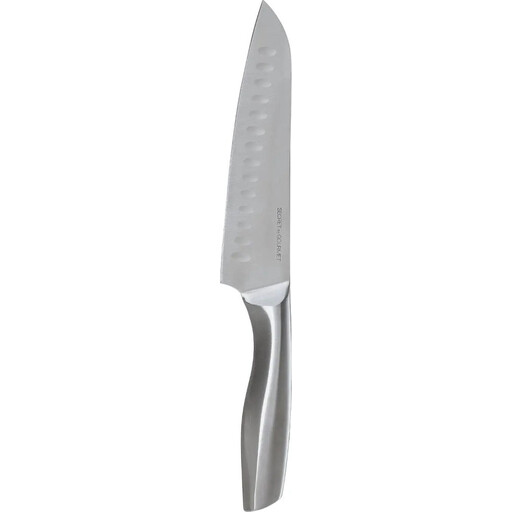
Why it suits this profile: This stainless steel santoku knife is designed for everyday slicing of vegetables, fruit and other ingredients. The product information states a blade length of 18 cm and a weight of 180 grams.
The specifications clearly state the material, dimensions and care instructions. However, check that the stated total length of 32 cm is suitable for your kitchen space.
Stainless steel, sturdy handle and, according to the product information, dishwasher-safe.
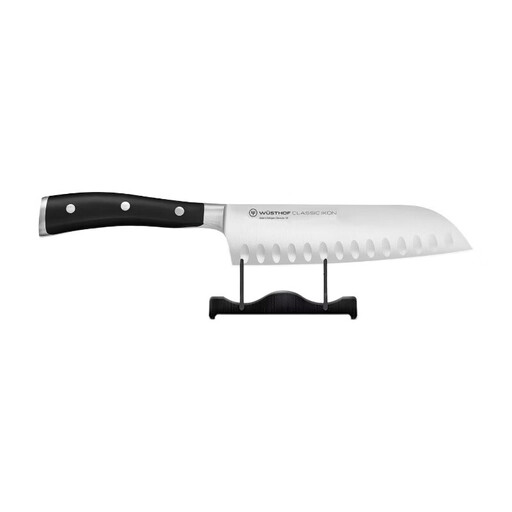
Why it suits this profile: A 16 cm chef’s knife offers control during everyday preparation and is less cumbersome than a 20 cm model. The blade is made from X50CrMoV15 stainless steel.
The half bolster reduces extra weight and, according to the product information, makes it easier to sharpen the full blade. Hand washing is still recommended.
16 cm blade, ergonomic plastic handle and a non-stick profile with dimples according to the product specifications.
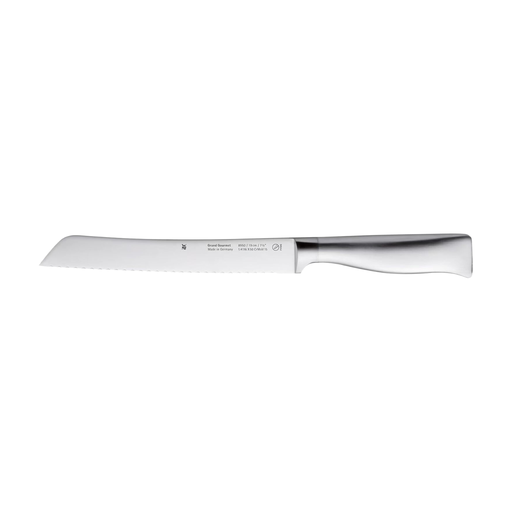
Why it suits this profile: This long bread knife is designed for bread, soft rolls and fruit. The double serration and 32 cm blade are suitable for large loaves and hard crusts.
The serrated edge is specifically chosen for bread, rather than using a smooth knife for multiple tasks. According to the product information, hand washing is required.
32 cm blade, double-serrated edge and a seamless Cromargan 18/10 handle according to the product description.
We have put together a complete, up-to-date list of products that fully meet these strict selection criteria and the applicable European safety regulations.
For most households, a chef’s knife, bread knife and paring knife are sufficient. If you often prepare vegetables, you could add a santoku knife. A steak knife or serrated tomato knife is mainly useful if you regularly carry out those tasks.
Use a suitable wooden or plastic chopping board, wash the knife by hand and dry it immediately. You can hone a smooth blade regularly. Have a serrated bread knife sharpened by a specialist using suitable equipment. Store knives separately so that the cutting edges do not touch each other.
Not necessarily. The extra cost may reflect the type of steel, finish, balance, brand and construction. A home cook who only cuts vegetables and bread may not make use of all the features of an expensive model. So first compare the blade length, handle, care requirements and warranty. The products mentioned are covered by a minimum of two years’ statutory warranty according to the product information; additional rights may apply under the relevant Dutch law.
