
Vandaag of morgen in huis

Kwaliteit gegarandeerd

Welkomstaanbiedingen ontgrendelen: GRATIS bezorging | Tot 80% korting | Gratis 30 dagen JoyPlus-proefperiode
Download de app
A good kitchen knife does not have to be expensive. It does, however, need to suit what you cut every day, how you maintain it and how it feels in your hand. If you focus only on terms such as “extra sharp”, “professional” or “damascus”, you could easily end up buying a knife that proves awkward in practice.
The three most common pitfalls when choosing kitchen knives are:
The right type of kitchen knife depends on the task:
Do not look only at the length. Also consider the overall length, weight and the space available in your knife block or drawer.
Many stainless-steel kitchen knives are resistant to moisture and everyday use. That does not mean they require no maintenance. Check the product information to see whether the blade is made from stainless steel, high-carbon steel or damascus steel.
A sharpening angle of 14 degrees per side generally indicates a fine edge. According to the product descriptions of various Wüsthof models, this angle is used for specific knives. Treat it as a technical product specification, not as a guarantee that every ingredient will be cut effortlessly.
With a damascus knife, it is worth checking whether “damascus” refers to the visible steel pattern, the construction of the blade or both. A damascus knife is also often unsuitable for the dishwasher. Hand washing and drying it immediately help keep the surface and edge in good condition for longer.
An ergonomic handle should feel secure without requiring you to apply extra force. Look for:
A dishwasher is convenient, but heat, moisture and contact with other cutlery can cause the edge to wear more quickly. For knives such as the WMF Grand Gourmet Bread Knife, hand washing is explicitly listed as a maintenance recommendation. According to the product information, the Victorinox Swiss Classic Bread Knife is dishwasher-safe.
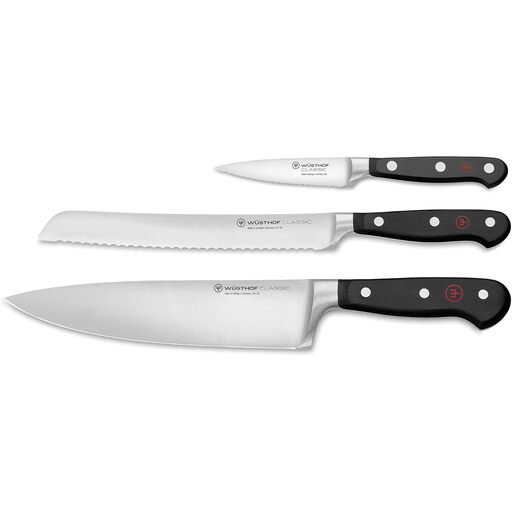
Why it suits this profile: The set contains three practical knives for everyday tasks: cooking, slicing bread and smaller preparation jobs. This means you do not pay for knives that are rarely used.
The contents are straightforward: a chef’s knife, bread knife and paring knife. Do check the care information before putting the set in the dishwasher.
Three knives for different tasks, ergonomic plastic handles and, according to the product information, dishwasher-safe.
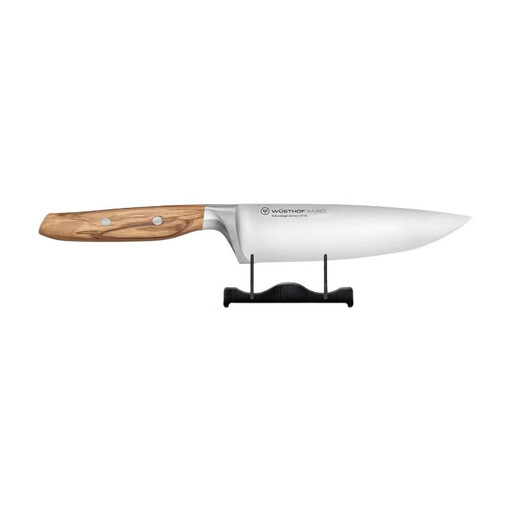
Why it suits this profile: This chef’s knife is designed for home cooks who want one versatile knife for vegetables, herbs, meat and larger ingredients.
The product description clearly states the steel type, X50CrMoV15, a 20 cm blade and a sharpening angle of 14 degrees. This allows you to compare specifications rather than relying solely on marketing terms.
Forged from a single piece of stainless steel, with a wooden handle and broad blade that can also be used to scoop up ingredients.
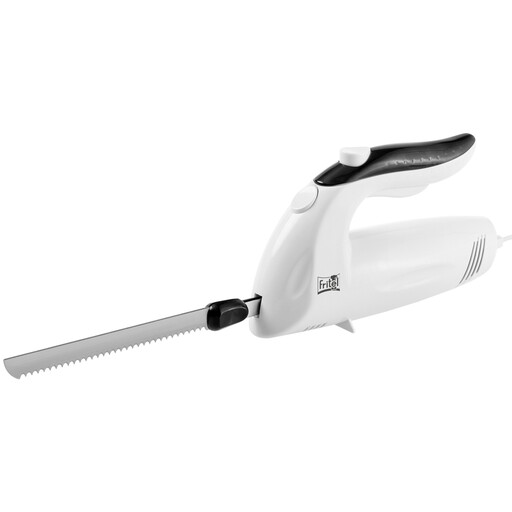
Why it suits this profile: This electric knife is intended for users who regularly slice roasts, baguettes, frozen products or cabbage.
The set contains two blades for different applications. The dual safety switch helps prevent accidental activation; always follow the safety instructions when changing the blades.
150 watts of power, a 1-metre cord and blades for meat and frozen products. The motor handle must not be immersed in water.

Why it suits this profile: The 17 cm blade is well suited to finely slicing, chopping herbs and preparing vegetables, fish and meat.
The product details specify the steel type, X50CrMoV15, a double-sided edge of 14 degrees and hand washing as the recommended care method. This makes the usage requirements clear.
17 cm blade, synthetic handle and a single-piece steel construction. Hand washing is recommended instead of using the dishwasher.
We have put together a complete, up-to-date list of products that fully meet these strict selection criteria and the applicable European safety regulations.
Even sharp kitchen knives need regular maintenance. Rinse off food residue after use, dry the blade immediately and store the knife so that the edge does not knock against other cutlery. Use a suitable honing steel or have the knife professionally sharpened when the edge no longer moves smoothly through ingredients.
Do not cut on glass, stone or ceramic surfaces. A wooden or plastic chopping board is generally more suitable. Only use an electric knife according to the instructions and unplug it before removing or fitting the blades.
For many households, a chef’s knife, bread knife and small vegetable knife provide a practical foundation. If you mainly prepare vegetables and herbs, you could also choose a santoku knife. A knife set is worth considering when it genuinely includes the three types you use most often.
This depends on usage, the steel, the chopping board and maintenance. A knife used every day may need occasional care; do not force it when the edge feels blunt. Always check that the sharpening method is suitable for the recommended sharpening angle.
Some models are dishwasher-safe according to the product information, such as the Victorinox Swiss Classic Bread Knife. Other knives, including various Wüsthof and WMF models, require or are recommended for hand washing. So check the care instructions for each product rather than relying solely on the material.
