
Vandaag of morgen in huis

Kwaliteit gegarandeerd

Welkomstaanbiedingen ontgrendelen: GRATIS bezorging | Tot 80% korting | Gratis 30 dagen JoyPlus-proefperiode
Download de app
A good kitchen knife or electric meat slicer can make preparing bread, meat, cheese and vegetables easier. Yet many people buy a product that isn’t suited to their worktop, how much they need to slice or their cleaning routine. When choosing kitchen knives and meat slicers, it’s not just about the brand or appearance. Size, handling, safety and the ingredients you usually prepare matter most.
A razor-sharp knife sounds appealing, but the right shape and balance are just as important. A 16 cm chef’s knife is easy to manoeuvre for smaller hands and more compact kitchens. A 20 cm blade offers more cutting surface for larger vegetables or cuts of meat.
With a bread slicer or electric meat slicer, wattage doesn’t tell you everything. Check the maximum cutting thickness, blade diameter, stability and recommended operating time too. For example, a 150 W motor isn’t automatically suitable for prolonged, continuous use.
A cleaver is designed for forceful chopping, but it’s less suitable for finely chopping herbs or accurately portioning soft ingredients. Conversely, a thin kitchen knife can be damaged if you use it to chop bones or hard joints.
So, pay attention to the differences between:
A stainless steel kitchen knife isn’t automatically dishwasher-safe. High temperatures, detergents and contact with other items can damage the blade’s edge. For electric appliances, important things to check include removable blade parts, a food pusher, non-slip feet and a clear safety lock.
For everyday slicing, a blade measuring 16 to 20 cm is often a practical choice. A shorter professional kitchen knife offers more control with smaller ingredients. A longer knife is handy for squash, cabbage or larger cuts of meat, but requires more space and skill to use.
Check the material too. X50CrMoV15 stainless steel is listed for several Wüsthof models. However, a knife’s performance also depends on its sharpening angle, blade thickness, handle and how it’s maintained. A product description may specify a particular hardness or sharpening angle; treat this as a product specification, not a guarantee of how it will feel to use.
For an electric meat slicer, the adjustable thickness is a useful consideration. According to the product specifications, the Fritel Slicer SL 3710 has a range of 0 to 20 mm and a blade diameter of 190 mm. The Fritel SL 3110 has a range of 0 to 15 mm and a blade diameter of 170 mm.
A wider range is useful if you want to slice both thin cold meats and thicker slices of bread. Consider the space available too: the SL 3710 measures 420 × 312 × 240 mm, while the SL 3110 folds away, which can be useful in smaller kitchens.
Place a slicing machine on a dry, stable surface. Always use the supplied food holder or pusher as the food gets smaller. Never touch the blade with your fingers, even when the appliance is switched off.
According to the product information, the Fritel SL 3710 has a maximum continuous motor operating time of 10 minutes, followed by a cooling period. Unplug the appliance before removing or cleaning the blade. For hand knives, washing by hand, drying immediately and storing in a knife block or drawer insert are generally sensible choices.

Why it suits this type of user: A compact electric slicer for households that occasionally want to cut bread, cheese or cold meats into even slices.
The cutting thickness adjusts from 0 to 15 mm, and the machine has a food holder. Its foldable design makes it easier to store.
17 cm serrated blade, removable parts and a child-safe on/off switch, according to the product information.
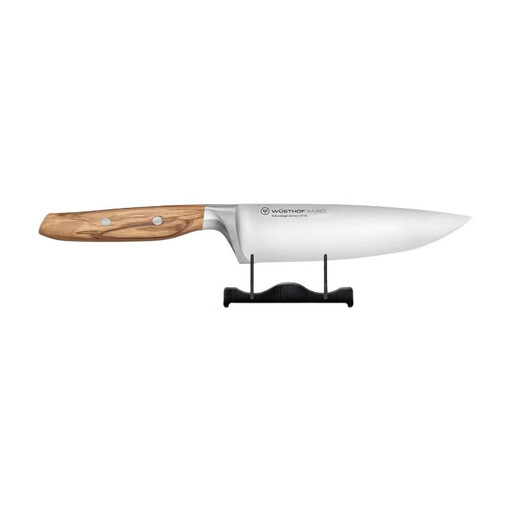
Why it suits this type of user: A good choice for home cooks and professionals looking for one versatile kitchen knife for vegetables, herbs, meat and fish.
The product specifications list a single piece of X50CrMoV15 stainless steel, a 20 cm blade and hand washing.
A wide blade for cutting and transferring ingredients; specified sharpening angle of 14 degrees and hardness of 58 HRC.
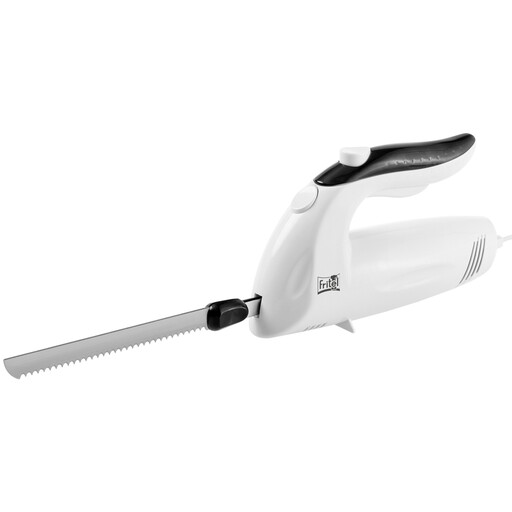
Why it suits this type of user: Handy for households that regularly portion roasts, baguettes or cabbage without having to use a hand knife each time.
Two blades are listed: one for meat and one for frozen foods. The dual safety switch helps prevent accidental starting.
Electric operation, a large ergonomic handle and suitability for left- and right-handed use, according to the product description.
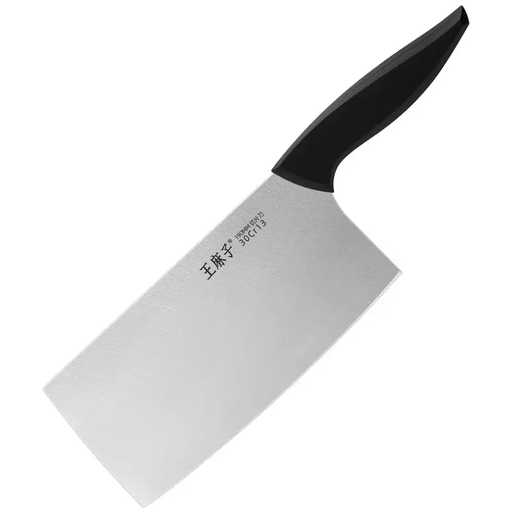
Why it suits this type of user: A cleaver-style knife for cooks who want to prepare vegetables, meat and herbs with a broad blade.
The product description mentions stainless steel, a full-tang construction and a handle for stable control. Don’t assume it’s suitable for hard bones unless the product specifications say so.
190 mm blade, designed for slicing and chopping meat, vegetables and herbs; hand washing and immediate drying are recommended.
We’ve put together a complete, up-to-date list of products that meet these strict selection criteria and the applicable European safety regulations.
A chef’s knife or santoku knife is usually more versatile than a dedicated carving knife. Consider the blade length, grip and balance. For large cuts of meat or repeated portioning, an electric meat slicer may be more practical. Only use a cleaver for tasks the manufacturer says it’s suitable for.
Power consumption depends on the motor’s wattage and how long you use it. Check the wattage, but also the recommended cooling time and number of slicing sessions. A lower-capacity appliance may be enough for occasional use, while more frequent use calls for greater care with motor load and cleaning.
It varies depending on the type of steel, sharpening angle, chopping board and how you use the knife. Don’t cut on glass, stone or metal, and don’t use the knife on bones unless it’s designed for that purpose. Regularly honing it with a suitable honing steel or sharpening it with a whetstone can help maintain the edge. Store it separately from other cutlery to reduce the risk of damage.
