
Vandaag of morgen in huis

Kwaliteit gegarandeerd

Welkomstaanbiedingen ontgrendelen: GRATIS bezorging | Tot 80% korting | Gratis 30 dagen JoyPlus-proefperiode
Download de app
A sharp kitchen knife makes chopping vegetables, fruit, meat and herbs easier. Yet many people choose a knife based on an eye-catching pattern, a promise of exceptional sharpness or a large number of pieces. This can lead to a purchase that’s not the best fit for your kitchen, cutting technique or care routine.
This guide helps you compare kitchen knives by material, size, handle, care and use. You’ll soon see which option suits everyday cooking, intensive use or a fully equipped kitchen.
Terms such as “professional”, “razor-sharp” or “stays sharp” don’t automatically tell you how a knife will perform in your kitchen. It’s better to check:
For example, the Wüsthof Classic Chef's Knife is listed as having a 16 cm X50CrMoV15 stainless steel blade and a sharpening angle of 14 degrees per side. These are verifiable details that tell you more than a general promise of sharpness.
A kitchen knife set with lots of knives may look appealing, but a bread knife, carving knife, vegetable knife, steak knives and scissors are only useful if you actually use them. So check what’s included rather than focusing on the number of pieces.
According to the product description, the 5Five 13-piece set includes a chef’s knife, bread knife, various other knives, six steak knives, a knife sharpener and scissors. This may be practical for a household that needs several knives, but less suitable if you’re mainly looking for one good chef’s knife.
A glass, stone or metal chopping board can make a knife blunt more quickly. Leaving it to soak for a long time, storing it incorrectly or putting it in the dishwasher can also damage the handle or edge. So check in advance:
A knife that the product information says should be hand-washed needs different care from a model that’s listed as suitable for dishwasher cleaning. Hand washing is generally the gentler option for extending its lifespan.
Stainless steel is popular for everyday use because it’s relatively easy to clean and suitable for a range of kitchen tasks. However, the name alone doesn’t tell you everything. Check the type of steel and the construction too.
Some models are forged from a single piece of steel, while others have a simpler stamped blade. A full-tang construction, where the steel extends through the handle, can contribute to balance and strength. Always check that this feature is actually stated in the product description.
A Damascus kitchen knife usually refers to layered steel or a decorative steel pattern. The pattern alone doesn’t prove that a knife is sharper or more durable. Check the stated steel type, hardness, care instructions and blade geometry. The available product information for the WANGMAZI Damascus Steel Santoku Knife mainly lists the manufacturer and importer details, so check the current product page for further specifications.
A 16 cm blade is often manoeuvrable on smaller chopping boards and handy for herbs, fruit and vegetables. A 20 cm chef’s knife offers more cutting surface and can be useful for larger vegetables, cabbage or several ingredients at once.
A santoku knife usually has a broad, relatively straight edge and is designed for slicing, chopping and finely cutting ingredients. A carving knife is generally longer and narrower, while a bread knife has a serrated edge. Choose the shape that suits the task:
A handle should feel secure and shouldn’t twist while you’re cutting. An ergonomic design can help with control, but the right shape varies depending on your hand and cutting technique. Check the overall length, weight, grip material and whether it has finger protection.
Always use kitchen knives on a suitable wooden or plastic chopping board. Keep knives out of children’s reach and store them in a knife block, protective sheath or drawer insert. A sharp knife also needs less pressure, but it can still cause an injury if used incorrectly.
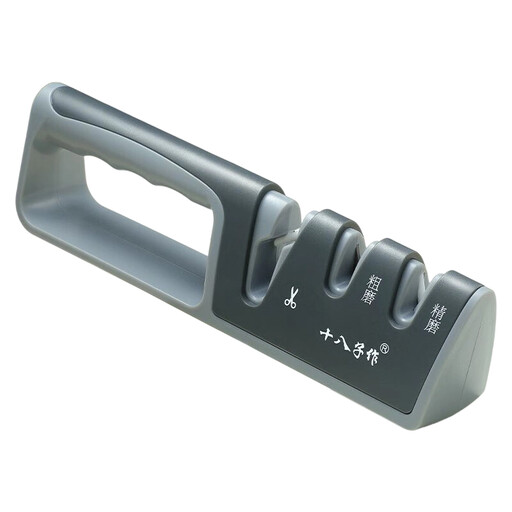
Why it suits this profile: A compact knife sharpener can be an easy way to improve your care routine if you already own kitchen knives.
Rather than automatically buying a large set of knives you may not use, you can focus on a specific care need.
Single-handle design; intended as a household knife sharpener.
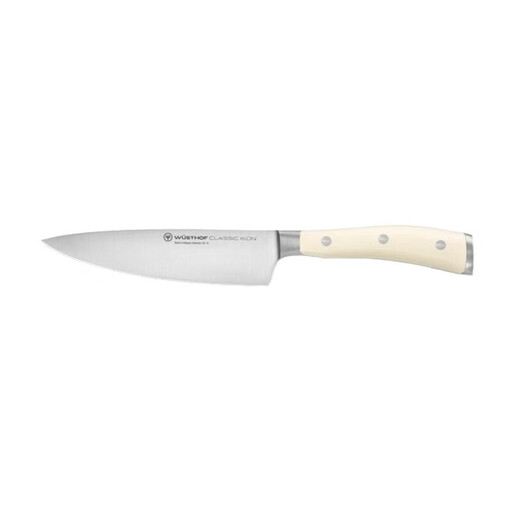
Why it suits this profile: This chef’s knife is designed for users who value construction, balance and a versatile size for everyday cooking.
The product description specifically mentions a full-tang construction, a single piece of steel and a 16 cm blade, rather than relying on general claims about sharpness.
X50CrMoV15 stainless steel; suitable for left- and right-handed use; hand washing recommended.
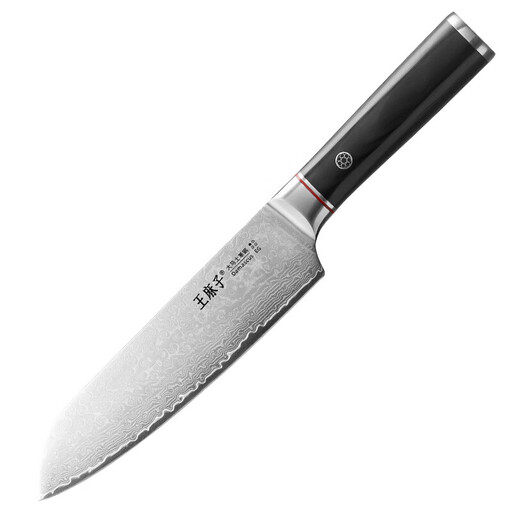
Why it suits this profile: A santoku knife may appeal to home cooks who prepare lots of vegetables, herbs and meat, and are looking for a different blade shape from a traditional chef’s knife.
The choice is based on its specific santoku shape and the stated Damascus steel. Check the product page for further details on hardness and care.
Santoku knife for a range of cutting tasks; Damascus steel is stated in the product name.
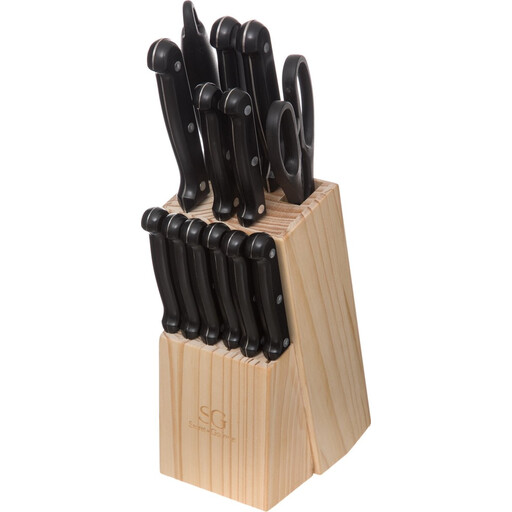
Why it suits this profile: This kitchen knife set includes a variety of knives, a bread knife, steak knives, scissors and a sharpener for households that need several tools.
The contents are clearly listed, so you can decide in advance whether you’ll use the extra steak knives, scissors and sharpener.
13-piece set; stainless steel knives; wooden knife block; not dishwasher-safe according to the product information.
We’ve put together a complete, up-to-date list of products that meet these strict selection criteria and the applicable European safety regulations.
A brand’s own research may support certain claims about sharpening or hardness, but such claims haven’t necessarily been independently verified. So base your choice on the published product specifications and care instructions.
A chef’s knife of around 16 to 20 cm is suitable for many household tasks. Choose 16 cm if you prefer a manoeuvrable knife or use a smaller chopping board. A 20 cm model offers more cutting surface for larger ingredients.
It depends on what’s included. A set can be useful if you also need a bread knife, carving knife, steak knives, scissors and a sharpener. If you mainly chop vegetables and herbs, you may get better value from one chef’s knife and, perhaps, a separate vegetable knife.
It depends on the steel, chopping board, how often you use the knife and the sharpener. Don’t wait until the knife is noticeably blunt. Check regularly that it cuts smoothly through vegetables and fruit, and follow the manufacturer’s care advice.
