
Vandaag of morgen in huis

Kwaliteit gegarandeerd

Welkomstaanbiedingen ontgrendelen: GRATIS bezorging | Tot 80% korting | Gratis 30 dagen JoyPlus-proefperiode
Download de app
A good kitchen knife doesn't have to be expensive. What matters is that it suits the way you cook. A home cook who mainly chops vegetables needs different features from someone who regularly prepares bread, meat or bones. When comparing kitchen knives, many buyers focus on appearance or the claim "extra sharp", while important details about material, maintenance and use are overlooked.
A knife set with a block may seem practical, but first check which knives are actually included. Some sets contain several knives with similar functions, yet lack a bread knife, chef's knife or suitable meat knife. Also consider maintenance: according to the product information, a set may be not dishwasher safe, even though individual knives in other collections are.
A sharp kitchen knife cuts well when the edge is properly finished. However, its lifespan also depends on the steel, the cutting angle, the chopping board and how you maintain it. A wooden or plastic chopping board is generally more suitable than glass or stone. A blunt knife doesn't become safe or usable just by looking at a marketing claim; always check the material and care information.
A cleaver or bone chopper is designed for heavier preparation than a fine chef's knife. Don't use a thin santoku knife for bones, and don't use a regular kitchen knife as a cleaver. Always check whether the product description mentions the intended use. Specifications such as blade length, weight and construction tell you more than a general description like "multifunctional".
Many kitchen knives are made from stainless steel. This is practical for daily use and easier to maintain than steel that oxidises quickly. "Stainless" doesn't mean a knife will stay spot-free in all conditions. Soaking for long periods, acidic foods and damp storage can affect the surface.
Some models use high-carbon stainless steel, such as X50CrMoV15 in the Wüsthof Classic Ikon Santoku Knife. This is a specific steel type you can include in your comparison. Also pay attention to the handle and the connection between the handle and blade. A forged one-piece model can feel different from a knife with a separately attached handle.
A chef's knife of around 18 to 20 cm is useful for many preparation tasks, but not comfortable for every user. A shorter knife often gives more control with small ingredients. A longer bread knife cuts through a large loaf more easily, while a steak knife is mainly used at the table.
Look out for these details:
Check before purchase whether hand washing is recommended. The 13-piece 5five set is not dishwasher safe according to the product information, while the 6-piece Excellent Houseware steak knife set is listed as dishwasher safe. Hand washing and drying immediately remain a simple way to limit discolouration and moisture problems.
Use the right type for different tasks:
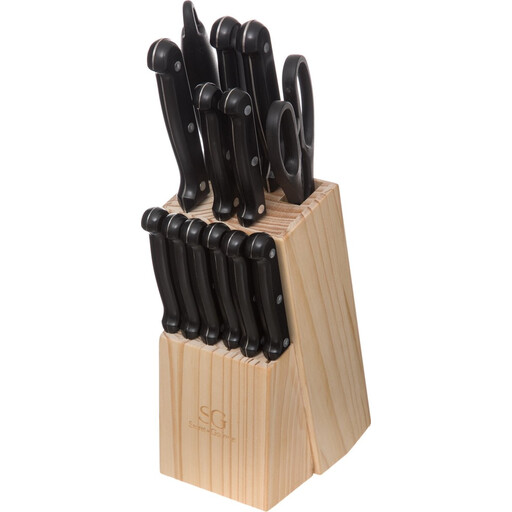
Why this fits the profile: This kitchen knife set is designed for those who want multiple functions straight away. According to the product information, the contents include a knife block with 11 knives, a pair of scissors and a knife sharpener.
The functions and quantities are clearly described, so you can check in advance whether the set suits your kitchen. Bear in mind that the set is not dishwasher safe.
13 pieces, including a chef's knife, bread knife, steak knives, scissors and knife sharpener; wooden knife block.

Why this fits the profile: This 17 cm santoku knife suits cooking enthusiasts looking for one versatile knife for vegetables, herbs, fish and meat.
The steel type, blade length and recommended hand washing are stated. According to Wüsthof's own information, the knife has a 14° edge and is laser-assisted sharpened; this remains a brand claim.
X50CrMoV15 high-carbon stainless steel; 17 cm blade; synthetic handle.
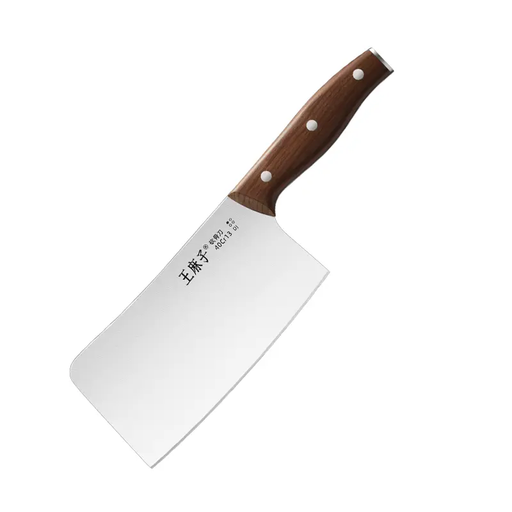
Why this fits the profile: This model is aimed at heavy kitchen tasks where a regular chef's knife isn't suitable, such as preparing certain bones, ribs and poultry.
It's clearer which use a cleaver is intended for. Do not use it on hard surfaces and check the current product specifications and safety information before purchase.
Forged construction according to the product description; designed for bones, ribs and poultry.
We've put together a full, up-to-date list of products that fully meet these strict selection criteria and comply with current European safety regulations.
For most households, a chef's knife or santoku knife of around 17 to 20 cm is sufficient. If you often cut bread, you can add a bread knife. A steak knife is mainly intended for use at the table and does not replace a general kitchen knife.
That depends on use, the chopping board and the knife's material. Sharpen when the knife no longer glides smoothly through ingredients and requires more pressure. A sharpener can touch up the edge, but damaged or bent blades may sometimes need a different solution.
A set can be practical when you need several functions at once. Individual kitchen knives are often more logical if you already own a good chef's knife and only want to add a bread knife, meat knife or bone chopper. So compare the contents, maintenance and the knives you'll actually use, rather than just the number of pieces.
