
Vandaag of morgen in huis

Kwaliteit gegarandeerd

Welkomstaanbiedingen ontgrendelen: GRATIS bezorging | Tot 80% korting | Gratis 30 dagen JoyPlus-proefperiode
Download de app
A sharp knife makes daily cooking more enjoyable, but a high price tag or a flashy product claim doesn’t automatically tell you enough. When it comes to kitchen knives, the type of knife, its finish, size and maintenance are what really matter. If you only focus on a brand name or the word “professional”, you could end up with a knife that doesn’t feel right in your hand or isn’t suited to your cutting tasks.
In this buying guide, you’ll learn what to look for in a chef’s knife, santoku knife, bread knife, steak knife or a complete kitchen knife set.
A knife may feel sharp when you first buy it, but how long it stays that way depends on the steel, the grind angle, the chopping board and how you look after it. Claims like “extra sharp” or “stays sharp for longer” often come from the brand’s own product description. So don’t treat them as a universal guarantee.
Instead, check:
A 20 cm kitchen knife offers a long cutting edge and can be handy for large vegetables, cabbage and bigger cuts of meat. However, a 20 cm chef’s knife can feel less manoeuvrable for smaller hands or a compact worktop. A 16 cm kitchen knife is often easier to control when working with herbs, fruit and smaller portions.
The right length isn’t a quality badge. Choose the size based on your chopping board, hand size and everyday ingredients.
A kitchen knife set can seem like good value when it includes lots of pieces. In practice, one chef’s knife, one small paring knife and a bread knife are the ones you’ll use most. So check the contents carefully. Also pay attention to the storage method, maintenance and whether all the knives are dishwasher-safe.
A set with steak knives is mainly useful if you regularly dine with several people. For everyday cooking, a smaller set can be more practical.
Many kitchen knives are made from stainless steel. That doesn’t mean the knife is completely immune to stains or corrosion. Food residue, moisture and prolonged soaking can damage the material. So dry the knife after washing and follow the care instructions.
With a forged kitchen knife, the blade is formed from a single piece of steel, according to the product information. A full-tang construction runs through to the handle and can contribute to a stable balance. A stamped knife can be lighter and isn’t necessarily inferior; the difference lies in construction, weight and price.
A smaller grind angle can give a fine cutting feel according to the product specification, but it also requires careful use. The Wüsthof Classic series states an angle of 14 degrees per side for some models. According to Wüsthof’s own information, certain knives are laser-checked during sharpening and finished by hand. This is a brand claim, not a universal guarantee for every user.
Never use a kitchen knife on glass, stone or metal. A wooden or plastic chopping board is better for preserving the edge.
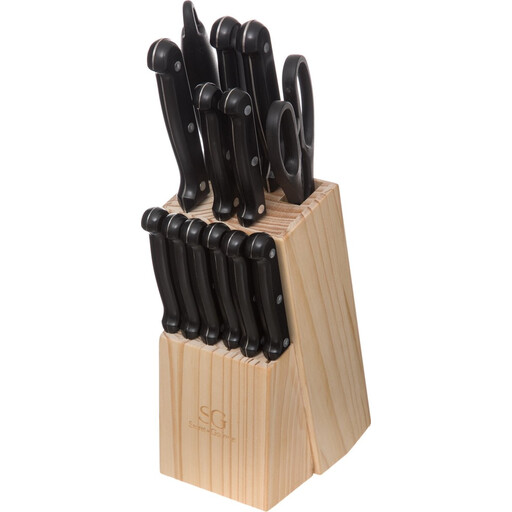
Why this fits the profile: This set offers multiple knife types for a household that wants to cover various kitchen tasks with a single purchase.
The contents are clearly listed: a chef’s knife, bread knife, several smaller knives, six steak knives, a pair of scissors and a sharpener. Just check whether you’ll actually use all these pieces.
13-piece composition, with a wooden block and stainless steel knives. According to the product information, the set is not dishwasher-safe.
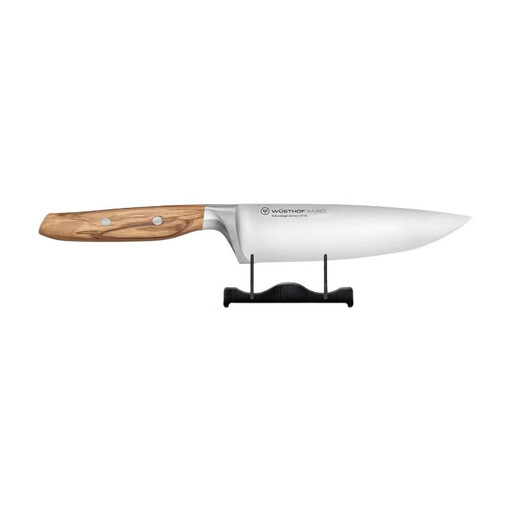
Why this fits the profile: An experienced home cook or professional chef looking for a long, versatile chef’s knife for large ingredients may want to consider this 20 cm model.
The specifications mention X50CrMoV15 stainless steel, a forged construction and a half-bolster. This allows you to make a more informed comparison than relying solely on the term “professional kitchen knife”.
20 cm blade, olive wood handle and a stated hardness of 58 HRC. According to Wüsthof’s own information, the edge is ground to 14 degrees per side.
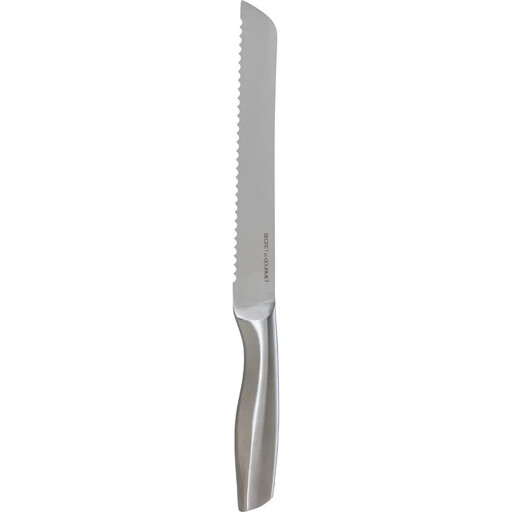
Why this fits the profile: If you often slice bread, baguettes or larger baked goods, a long bread knife is more useful than a second chef’s knife.
The 34 cm length makes its purpose clear. Use this knife for bread instead of your chef’s knife, so you put less strain on that blade’s edge.
Stainless steel blade, total length of 34 cm and a handle that is described as sturdy in the product information. The description states it is dishwasher-safe.
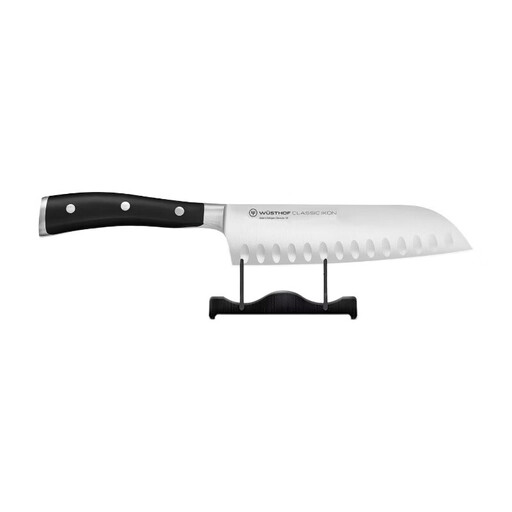
Why this fits the profile: The 16 cm size is suitable for everyday portions, herbs, vegetables, fruit, fish and meat without requiring the space of a longer chef’s knife.
The product information mentions X50CrMoV15 steel, a half-bolster and a granton edge. These verifiable details give you more to go on than just a claim about sharpness.
16 cm blade, suitable for both left- and right-handed use and a synthetic handle. Hand washing and regular sharpening are recommended.
We’ve put together a full, up-to-date list of products that fully meet these strict selection criteria and comply with current European safety regulations.
Good maintenance prevents many problems with kitchen knives:
A dishwasher can be convenient, but heat, moisture and contact with other items can put extra strain on the edge and handle. If hand washing is recommended, follow that instruction.
A chef’s knife of 16 to 20 cm is a practical starting point. Choose 16 cm if you want a compact, manoeuvrable knife. Choose 20 cm if you often prepare large vegetables or generous quantities. A small paring knife and a bread knife can be added later.
That depends on use, the steel, the chopping board and your technique. Maintaining the edge with a honing steel can help in between; a whetstone is intended for more thorough sharpening. Don’t wait until the knife is extremely blunt, and always sharpen at the recommended angle.
Some product descriptions mention dishwasher safety, while others recommend hand washing. Check this for each model. Hand washing with mild washing-up liquid and immediate drying is generally the safer choice for preserving the blade and handle.
