
Vandaag of morgen in huis

Kwaliteit gegarandeerd

Welkomstaanbiedingen ontgrendelen: GRATIS bezorging | Tot 80% korting | Gratis 30 dagen JoyPlus-proefperiode
Download de app
A good kitchen knife should suit your cooking routine, chopping board and cleaning habits. Yet many people buy a knife set based on the number of pieces, an eye-catching pattern or a promise of long-lasting sharpness. This can leave you with knives you rarely use, that quickly feel blunt or are difficult to keep clean.
This buying guide will help you compare kitchen knives by material, size, use and care. That way, you can make a more informed choice between a carving knife, a Santoku knife, a chef’s knife, a bread knife or a complete kitchen knife set.
A knife set with 13 or 15 pieces may look appealing, but check what’s actually included first. Some sets contain several steak knives or knives in similar sizes. For everyday cooking, a chef’s knife, bread knife, paring knife, kitchen scissors and perhaps a Santoku knife are often more useful than a long list of accessories.
Also check the difference between the number of pieces and the number of knives. A block, knife sharpener and scissors are often included in the total.
Terms such as “extra sharp” or “razor-sharp” say little on their own about how long a blade will stay sharp. Instead, look at the blade material, sharpening angle, construction and care instructions. According to Wüsthof’s product description, the Classic Ikon Santoku knife has a 14° double bevel and an X50CrMoV15 steel blade. The claim that the knife is 20% sharper than standard knives comes from the brand’s product information; it isn’t a general measurement standard for all kitchen knives.
A Damascus kitchen knife may have a layered pattern on its blade, but appearance alone doesn’t determine how well it cuts. Check which steel is actually specified, how the handle is finished and whether the knife needs to be washed by hand. A stainless-steel kitchen knife isn’t entirely maintenance-free either: prolonged contact with water, acids or dishwasher detergents can encourage discolouration or corrosion.
Stainless steel is popular because it’s relatively easy to care for and suitable for everyday use. If available, check the exact type of steel, such as X50CrMoV15 in the Wüsthof Santoku knife. Other products may only specify “stainless steel”. Don’t draw conclusions about hardness or sharpness that aren’t included in the product specifications.
A forged knife may have a different balance and thickness from a stamped knife. For home use, a sturdy handle, an even blade and a size you can control comfortably are what matter most.
An ergonomic handle should feel secure in your hand and shouldn’t twist while you’re cutting. Check whether it’s made from plastic, polypropylene or another material, and whether the knife is dishwasher-safe. The 5five knife set is recommended for hand washing; dishwasher use isn’t recommended for the Wüsthof Santoku knife. According to the product description, the 5five bread knives are dishwasher-safe.
It’s best to wash knives by hand, dry them straight away and avoid leaving them loose in an overcrowded cutlery drawer. A kitchen knife set with a knife block keeps everything organised and reduces the chance of blades knocking against each other.
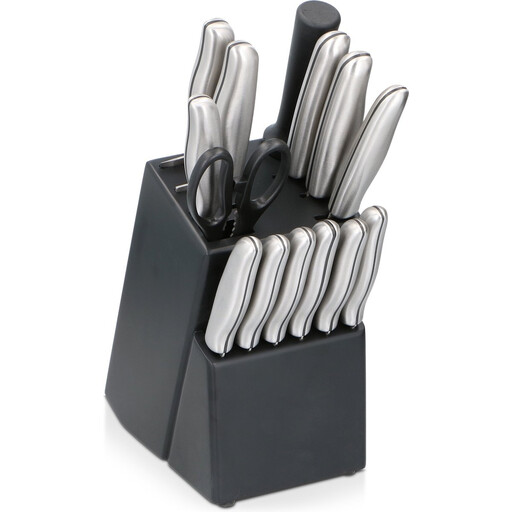
Why it suits this profile: This set brings together knives for everyday cooking in one purchase, including a chef’s knife, bread knife, paring knife, steak knives, Santoku knife and kitchen scissors.
The contents are clearly specified: 13 knives, a block and a pair of scissors. This means you can check the number of pieces before you buy.
Stainless-steel knives, a black knife block and a complete selection for a range of kitchen tasks.

Why it suits this profile: The 17 cm Santoku knife is designed for precise cutting of vegetables, herbs, fish and meat.
The exact steel type, X50CrMoV15, the blade length and the care instructions are all specified. You’re buying based on details you can check, not just on appearance.
Forged construction, a synthetic POM handle and a 14° double bevel, according to the product description.
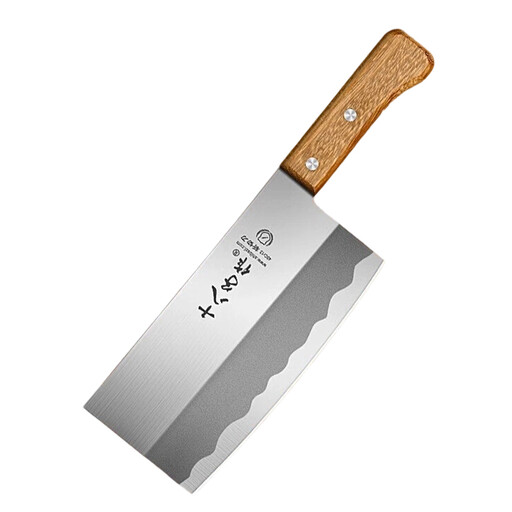
Why it suits this profile: The long blade is designed for anyone looking for a larger cutting surface when preparing bigger ingredients.
The 280 mm length is clearly stated. Check beforehand that your worktop, chopping board and grip are suited to this size.
Stainless-steel construction and a single-handle design for specific cutting tasks.

Why it suits this profile: An electric food slicer is a good fit for households or home cooks who regularly want to make even slices of bread, meat or cheese.
The product description lists a smooth blade and a serrated blade, a cutting thickness of up to 23 mm and an adjustable speed. Do check that you have enough space and that the noise level will suit your kitchen.
Metal construction, a 24 cm cutting path and two blade options, according to the product information.
We’ve put together a complete, up-to-date list of products that meet these strict selection criteria and the applicable European safety regulations.
How long a knife lasts depends on how it’s used, the type of steel, the chopping board and how it’s cared for. Don’t use knives on glass, stone or ceramic. A wooden or plastic chopping board is generally more suitable. Store knives in a block, knife holder or protective sheath, and use a sharpener that’s suitable for the blade edge.
A blunt knife requires more pressure and can be harder to control. Sharpen it or have it professionally maintained as soon as cutting becomes noticeably more difficult. Wash the knife after use, dry it straight away and don’t leave it in water for long periods.
For most households, a chef’s knife or Santoku knife, a bread knife, a small paring knife and kitchen scissors are enough. Add a carving knife, cleaver or slicing knife if you regularly do those tasks.
It depends on what’s included. A set can be practical if you need several knives. First check how many pieces you’ll actually use, what materials are specified and whether the block offers enough space. If you already own a good chef’s knife, you may get better value from buying just a bread knife or specialist knife.
Some models are sold as dishwasher-safe, but hand washing and drying straight away are often the gentler option. Always check the care instructions for the specific product. This also applies to Damascus kitchen knives and knives with wooden or composite handles.
