
Vandaag of morgen in huis

Kwaliteit gegarandeerd

Welkomstaanbiedingen ontgrendelen: GRATIS bezorging | Tot 80% korting | Gratis 30 dagen JoyPlus-proefperiode
Download de app
A good kitchen knife does not have to be expensive. It does, however, need to suit what you cut every day, how you maintain it and how much control you prefer. If you focus only on phrases such as “extra sharp”, “Damascus” or “professional”, you could easily end up buying a knife that is too heavy, difficult to sharpen or awkward to use in practice.
In this buying guide, the Joybuy Product Recommendation Officer discusses the key points to consider. You will discover which kitchen knives are suitable for vegetables, meat, bread or bones, and which specifications to check before buying.
A brand may present a knife as exceptionally sharp or durable. That does not automatically make it an independently verified fact. According to Wüsthof’s own product information, the Classic Ikon Santoku knife has a 14° edge, and a laser-controlled sharpening method is said to make the knife 20% sharper than standard knives. Treat this as a product claim and also check the steel type, blade length and care instructions.
With other kitchen knives, information about the type of steel or hardness may even be missing. This makes it more difficult to assess the expected resistance to wear.
A santoku knife is useful for vegetables, herbs, fruit, fish and pieces of meat. A chef’s knife often has a longer blade and is well suited to rocking and chopping movements. A bread knife has a serrated edge that cuts through crusts without completely flattening soft bread.
A steak knife, paring knife or vegetable knife has a different purpose. Do not use a thin paring knife on hard bones, and do not use a cleaver for accurately peeling fruit. The wrong combination can damage the blade and reduce your control.
Stainless steel kitchen knives are generally easy to clean, but dishwasher detergents, heat and contact with other cutlery can damage the edge. Some models are described as dishwasher-safe, while hand washing is still recommended to help extend their useful life.
Therefore, always check:
For everyday cutting, a blade of around 17 to 20 cm is practical for many home cooks. A shorter knife offers more control when working with small ingredients. A longer chef’s knife is comfortable for large vegetables, bunches of herbs and larger pieces of meat, but it also requires more space and technique.
As well as the length, consider the shape:
Stainless steel is practical for everyday use because it discolours and rusts less quickly than many types of carbon steel. High-carbon stainless steel, such as X50CrMoV15 in the Wüsthof Classic Ikon Santoku knife, combines a rust-resistant material with a robust edge, according to the product specifications.
The name of the steel alone does not determine how long a knife will stay sharp. How you use it, the sharpening angle, the chopping board and the way you maintain it all make a difference. A sharp knife also requires safe handling: cut away from your fingers, keep the handle dry and store the knife out of children’s reach.
A heavy cleaver can reduce the effort needed for firm ingredients, but it is less suitable for fine cutting work. A lighter knife may be more comfortable during lengthy food preparation. Therefore, consider the weight of the knife, the length of the handle and the transition between the handle and blade.
A full-length blade, also known as a full tang, can provide extra stability. However, check that this is actually stated in the product information, and do not take ergonomic claims at face value.
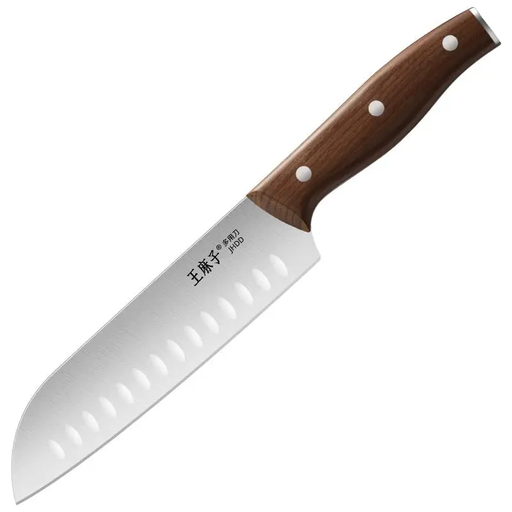
Why it suits this user profile: This multifunctional model is designed for everyday cutting of meat, vegetables and fruit. That makes it suitable as a first addition to a simple kitchen.
The product description specifies stainless steel, an ergonomic handle and hand washing followed by immediate drying. This makes care requirements clearer than with a knife that provides no material information.
Stainless steel blade, multifunctional design and care instructions for everyday use.

Why it suits this user profile: Hobby cooks who value a specified steel type, a 17 cm blade and a well-balanced handle get clear product information to compare here.
The product specification states X50CrMoV15 steel, a 14° double bevel and hand washing as the recommended care method. The claim of 20% extra sharpness comes from Wüsthof’s product information and is not presented here as an independent fact.
17 cm blade, X50CrMoV15 high-carbon stainless steel and a synthetic POM handle.
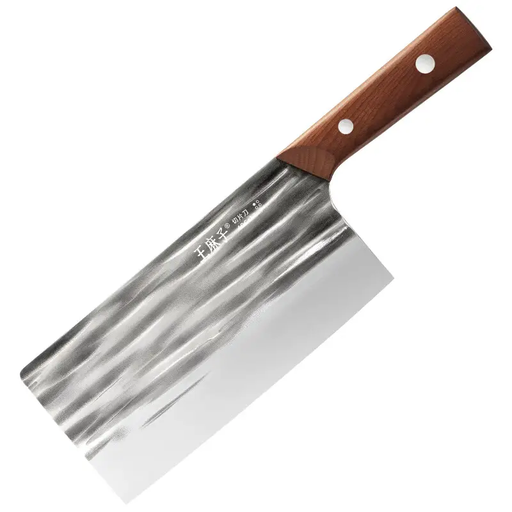
Why it suits this user profile: This cleaver is designed for slicing, shredding and chopping. It suits users who regularly prepare firm ingredients and deliberately want a specialised knife.
Choosing a cleaver for heavy cutting work prevents a thin chef’s knife from being overloaded. Use it only on a sturdy chopping board and check the product specifications before cutting bones.
175 mm size and a multifunctional design for meat, vegetables and chopping tasks.
A kitchen knife set can offer good value if you carry out several different tasks. However, pay attention to what it contains. A set consisting only of steak knives is not the same as a complete set with a chef’s knife, bread knife, paring knife and possibly a santoku knife.
For a basic kitchen kit, these three types are often enough:
A set is only worthwhile if you actually use most of the knives. Otherwise, you are paying for pieces that will simply sit in a kitchen drawer.
We have put together a complete, up-to-date list of products that fully meet these strict selection criteria and the applicable European safety regulations.
Wash the knife according to the product instructions, dry it immediately and use a suitable chopping board. Sharpen the knife, or have it professionally sharpened, when it no longer glides smoothly through ingredients. Do not use a glass or stone surface, as these can damage the edge more quickly.
Some models are described as dishwasher-safe, including certain 5five and Wüsthof Gourmet models. Even so, hand washing can help extend the life of the blade and handle. Always check the specific product page and do not leave the knife loose among other cutlery.
For most households, a chef’s knife or santoku knife, a bread knife and a paring knife are sufficient. Add a carving knife, steak knives or a cleaver if you regularly carry out those tasks. It is better to choose according to how you will use the knives than by the number included in a kitchen knife set.
