
Vandaag of morgen in huis

Kwaliteit gegarandeerd

Welkomstaanbiedingen ontgrendelen: GRATIS bezorging | Tot 80% korting | Gratis 30 dagen JoyPlus-proefperiode
Download de app
A good kitchen knife doesn't need to be complicated. Yet many shoppers pay for features they barely use, while important details about size, maintenance or grip remain unclear. When comparing kitchen knives online, it's better to focus on verifiable product specifications rather than flashy marketing claims.
A sharp edge is nice, but it doesn't tell you everything. The shape of the blade, the cutting edge and how you maintain the knife all affect how useful it stays. A long bread knife with a serrated edge, for example, is great for a hard crust but less practical for fine chopping.
Claims like "20% sharper" come from product information or the brand's own testing. So treat them as extra information, not a universal standard. Also check the blade length, steel type and grind angle.
A set with lots of kitchen knives might seem like good value, but unused knives take up space and still need maintenance. For many households, a combination of a chef's knife, bread knife and paring knife is enough. Only add a santoku knife, vegetable knife or steak knives later if you really need them for those tasks.
Stainless steel kitchen knives are generally resistant to moisture, but that doesn't mean every model is suitable for the dishwasher. Heat, detergents and contact with other cutlery can damage the edge and handle. For many forged knives, hand washing with warm water and mild washing-up liquid is recommended.
Choose the size based on your worktop, hand size and ingredients:
A chef's knife usually has a wide, slightly curved edge that lets you chop and rock. A santoku knife often has a straighter edge and a wide blade; the dimples on some models can, according to the product description, help stop food from sticking to the blade.
Stainless steel is practical for everyday use because it's less prone to staining than non-stainless steels. X50CrMoV15 is found in several German kitchen knives. In the product information, this steel is linked to a hardness of 58 HRC across various Wüsthof models. A higher hardness can help maintain sharpness for longer, but it doesn't make proper sharpening and careful use unnecessary.
With forged knives, the steel is shaped from a single piece. This can give a sturdy construction and good balance, but "forged" on its own isn't a guarantee that the knife will perform better for every user. Also look at the connection between blade and handle, the tang and the finish.
A handle should feel stable without you having to use much force. Look for:
Use kitchen knives on a wooden or plastic chopping board. Glass, stone and metal can damage the edge more quickly. Store knives in a knife block, drawer insert or on a suitable magnetic strip, out of reach of children.
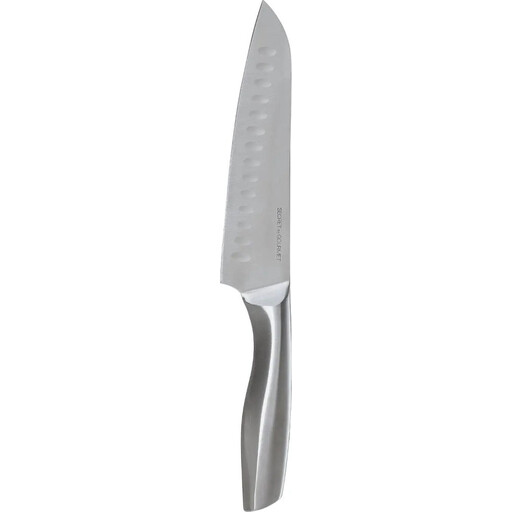
Why this fits the profile: The 18 cm cutting edge offers a versatile starting point for vegetables, meat and fish, without having to buy several knives at once.
The product information mentions stainless steel, a fully forged construction and a sturdy handle. Do check the available care instructions before buying.
18 cm blade, 32 cm total length and a weight of approximately 180 grams.
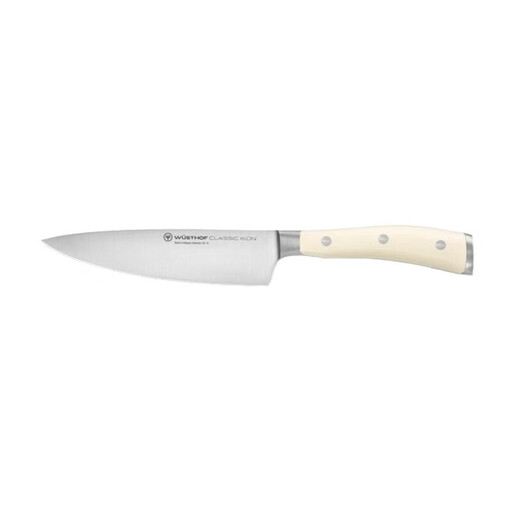
Why this fits the profile: A compact chef's knife for home cooks who value balance, ergonomics and a recognisable forged construction.
The specifications mention one piece of steel, full tang and a plastic handle. The shorter length stops the knife from feeling unnecessarily large on a small worktop.
16 cm blade, full-tang construction and ergonomic handle with three rivets.
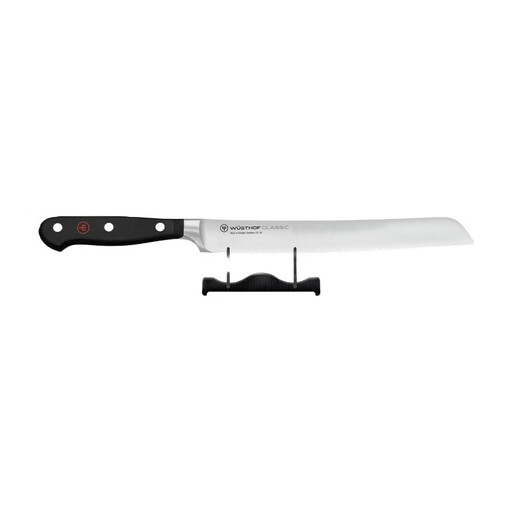
Why this fits the profile: A dedicated bread knife for everyday bread, pastries and ingredients with a hard skin.
The serrated edge is designed for bread and hard exteriors, so you don't try to use one smooth chef's knife for every task.
20 cm blade, X50CrMoV15 stainless steel and a double-edged blade according to the product information.
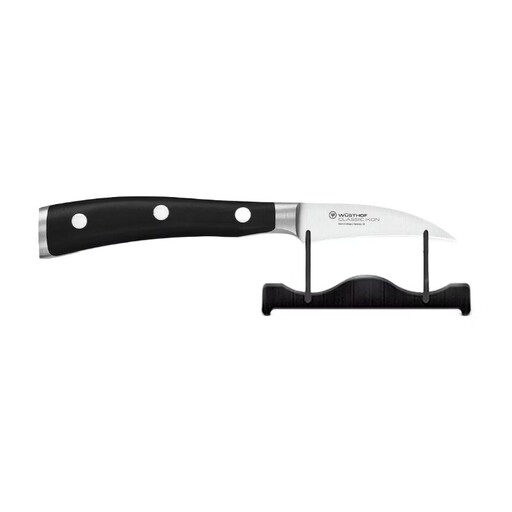
Why this fits the profile: The short, curved blade is designed for peeling, garnishing and turning work with small vegetables and fruit.
The specific blade shape makes it clear what the knife is for. That means you don't have to use a large chef's knife for precision work.
7 cm curved blade, 14 degrees per side according to the product information and suitable for left- and right-handed use.
We've put together a full, up-to-date list of products that fully meet these strict selection criteria and current European safety regulations.
Wash kitchen knives by hand as soon as possible after use and dry them straight away. Use a sharpening stone or honing steel according to the manufacturer's instructions. A honing steel mainly restores the edge alignment; for truly blunt knives, sharpening is needed. A serrated knife, such as a bread knife, requires a different sharpening method than a smooth chef's knife.
Also pay attention to the difference in product information. Some models are listed as dishwasher-safe, yet hand washing is still recommended for a longer lifespan. Check this per model before you buy a kitchen knife.
Start with a chef's knife of 16 to 20 cm, plus a paring knife and a bread knife if you eat bread regularly. A santoku knife is an alternative if you mainly prepare vegetables, fish and smaller pieces of meat.
That depends on use, chopping board, steel type and maintenance. Cutting on wood or plastic and regular honing helps keep the edge usable for longer. Don't use glass, stone or metal as a cutting surface.
They can be, but pay attention to weight, handle and maintenance. Professional kitchen knives are often designed for heavy use and sometimes need hand washing and regular sharpening. A simpler stainless steel model can be more practical for everyday home use.
