
Vandaag of morgen in huis

Kwaliteit gegarandeerd

Welkomstaanbiedingen ontgrendelen: GRATIS bezorging | Tot 80% korting | Gratis 30 dagen JoyPlus-proefperiode
Download de app
A blunt knife, an awkward pair of kitchen scissors, or a knife set with pieces you never use – these are all common buying mistakes. When it comes to kitchen knives and kitchen scissors, it's not just about a sharp appearance or a nice box. The shape, the material, the maintenance and the intended use all determine whether a product works well in your kitchen.
Watch out for these three common pitfalls:
A chef's knife is a versatile choice for vegetables, herbs and boneless meat. A santoku knife typically has a wide, relatively straight blade and is handy for finely chopping vegetables and portioning meat. A bread knife with a serrated edge is designed to cut through bread crusts without squashing the loaf.
For hard parts, a different design is needed. A cleaver or bone knife usually has a heavier blade, but always check the product description and safety information before you start chopping bones. Not every knife called a "cleaver" is suitable for the same level of force. A carving knife, on the other hand, is intended for thin, even slices and not for hard bones.
With stainless steel kitchen knives, the exact type of steel, blade length and thickness are relevant purchase details. "Stainless steel" alone doesn't give you a complete picture of hardness, wear resistance or maintenance. If a brand mentions extra sharpness, durability or rust resistance, treat this as a brand claim. According to the brand's own research, such a claim may apply under certain conditions, but the product page should make clear what it is based on.
Also look at:
A product may be described as dishwasher-safe, but hand washing and immediate drying often remain the safer choice for the lifespan of the blade. Always follow the manufacturer's instructions. Use a chopping board made of wood or plastic and avoid glass or stone, as those materials can dull the blade more quickly.
A pair of kitchen scissors should open and close smoothly, not wobble, and be suitable for the intended food. For chicken, herbs, packaging and prawns, a multifunctional model can be handy. Don't automatically use household scissors for heavy bones. Also check whether the parts can be separated for cleaning and what the manufacturer has intended the product for.
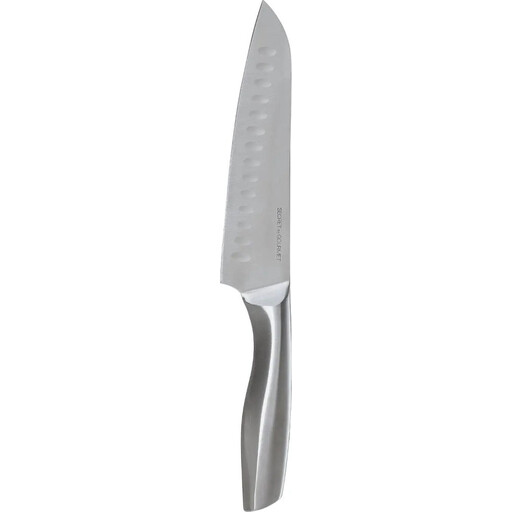
Why this fits the profile: This santoku knife is a straightforward starting point for daily chopping of vegetables, herbs and boneless meat. The stated blade length is 18 cm and the product weight is 180 g.
The product specifications mention material, dimensions and weight. This means you can check beforehand whether the knife suits your worktop and cutting habits, rather than relying solely on marketing language.
Stainless steel construction, sturdy handle and, according to the product information, dishwasher-safe.
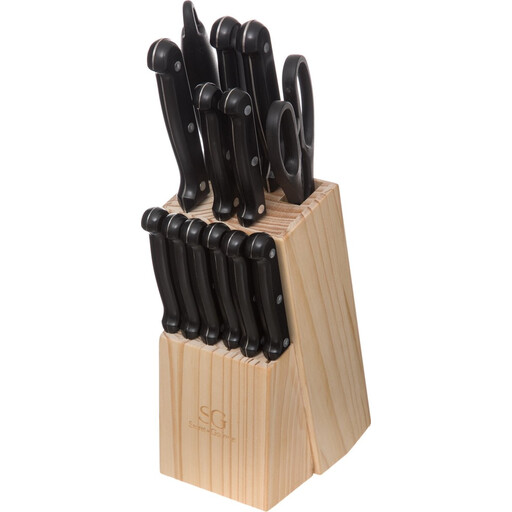
Why this fits the profile: A household that cooks regularly and performs various cutting tasks will get multiple sizes in one block with this set.
The contents are clearly described: a chef's knife, bread knife, smaller knives, six steak knives, a pair of kitchen scissors and a knife sharpener. You can therefore assess which pieces you actually need.
13-piece composition, wooden block and at least two years' statutory warranty according to the product information. Not dishwasher-safe.
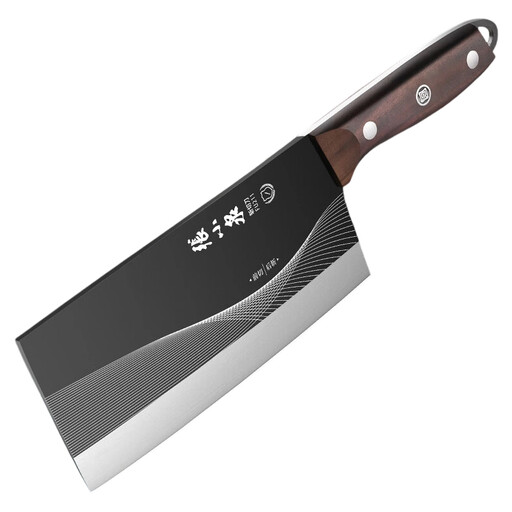
Why this fits the profile: This heavier model is aimed at households that regularly prepare poultry, ribs or other tough ingredients. Use it only according to the product instructions.
The length of 313 mm makes it clear that this is not an all-round chef's knife. This prevents you from using a fine slicing knife for a task that requires a heavier cleaver.
Stainless steel blade and a thickened construction according to the product listing. Because of its size, a stable chopping board is especially important.
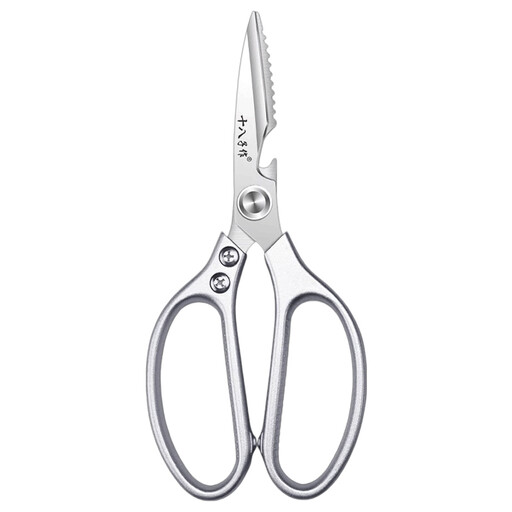
Why this fits the profile: A multifunctional pair of kitchen scissors can be handy for cutting herbs, poultry and packaging when you'd rather not use a large knife.
The product name and description mention food use and stainless steel. Do check the cleaning instructions and usage limits before purchase; multifunctional does not mean suitable for every heavy task.
Single handle, stainless steel construction and intended for various food preparation tasks according to the product information.
We've put together a full, up-to-date list of products that fully meet these strict selection criteria and comply with current European safety regulations.
Alongside a chef's knife or santoku knife, a few additional tools can be useful:
Rinse a knife after use, dry it immediately and store it out of reach of children. Don't put loose knives unprotected in a full cutlery drawer. A knife block, protective sheath or magnetic holder can limit contact with other kitchen utensils.
For bones and hard joints, use a suitable cleaver or let the butcher do the work. A thin carving knife or bread knife can be damaged by incorrect use. Check the blade regularly and have a knife sharpened as soon as you need to apply more force than normal.
For most households, a chef's knife or santoku knife, a bread knife and a small paring or vegetable knife are sufficient. Add a pair of kitchen scissors if you often cut herbs, packaging or poultry. A cleaver or bone knife is mainly useful for specific preparations.
This varies by product. Some models are listed as dishwasher-safe, while others must be washed by hand. Always check the product page and dry the tools immediately after cleaning to limit moisture and stains.
That depends on use, chopping board and type of steel. A knife that no longer glides smoothly through food, requires more pressure or crushes ingredients rather than cutting them may need maintenance. Use a sharpening tool that suits the knife and follow the manufacturer's instructions.
