
Vandaag of morgen in huis

Kwaliteit gegarandeerd

Welkomstaanbiedingen ontgrendelen: GRATIS bezorging | Tot 80% korting | Gratis 30 dagen JoyPlus-proefperiode
Download de app
A good kitchen knife doesn’t have to be the most expensive model. For a home cook, what really matters is whether the knife suits your cutting technique, hand size and daily use. A chef’s knife with a 20 cm blade feels comfortable for large vegetables, while a paring knife or vegetable knife gives you more control with smaller ingredients.
However, the market is full of terms like “professional”, “extra sharp” and “durable”. Such descriptions only mean something when you check the product specifications. Below, you’ll find out what to look for and which kitchen knives suit different cooking situations.
A sharp kitchen knife cuts well, but sharpness alone doesn’t determine how long the knife will stay usable. The type of steel, grind angle, blade thickness and maintenance method also play a role. According to some brands’ own information, a particular sharpening technique can help the blade stay sharp for longer, but the actual lifespan also depends on use and care.
A thin blade can cut very precisely, but it’s less suitable for hard bones, frozen products or twisting. Never use a standard chef’s knife for that.
A 20 cm blade offers room for large ingredients, but it doesn’t feel comfortable for everyone. For smaller hands or a compact kitchen, a 16 cm chef’s knife can be easier to control. So don’t just look at the blade length, but also at the total weight and the balance between handle and blade.
Some kitchen knives are described as suitable for the dishwasher. Yet manufacturers often recommend hand washing to keep the blade, edge and handle in good condition for longer. Hot water, harsh detergents and contact with other cutlery can make a sharp kitchen knife go blunt more quickly.
Wash a knife after use with warm water and mild washing-up liquid, dry it immediately and store it in a knife block, drawer insert or with a protective sheath.
Choose the length based on your ingredients and chopping board:
A stainless steel knife is practical for daily use and, with normal care, requires little attention to prevent rust. Some models use X50CrMoV15 steel, high-carbon stainless steel or a DLC coating. Always check exactly what the product details say; “Damascus” doesn’t automatically refer to the same steel construction or maintenance requirements for every product.
A plastic or synthetic handle is generally easy to clean. A fully extended blade, also known as full-tang, can contribute to a sturdy construction. That doesn’t mean every full-tang knife is automatically more comfortable: the shape, grip and balance remain personal.
Use kitchen knives on a wooden or plastic chopping board. Glass, stone and metal can damage the edge more quickly. A honing steel helps to realign the edge, but doesn’t replace sharpening. Sharpen a knife when it starts to push through food instead of cutting smoothly.
Also pay attention to differences in care. A DLC-coated or Damascus blade may, according to the product information, need hand washing. A dishwasher option is therefore not just a convenience feature, but also an important purchase criterion for busy households.
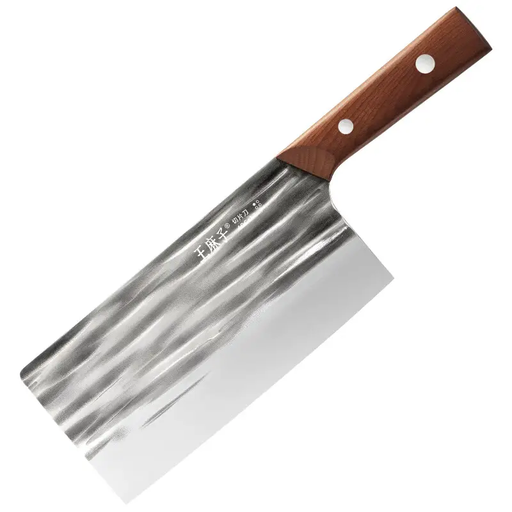
Why this fits the profile: This multi-purpose stainless steel knife is designed for everyday preparation of meat, vegetables and fruit. It’s a practical choice if you want to start with one affordable knife.
The product information clearly states the material, application and care instructions. This allows you to compare the knife without relying solely on general claims about professional performance.
Stainless steel blade; suitable for meat, vegetables and fruit; hand washing and immediate drying recommended.
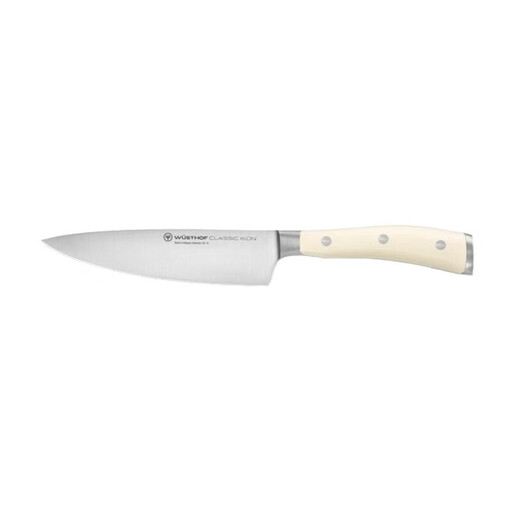
Why this fits the profile: The 16 cm length offers control for daily tasks. The knife is designed for vegetables, herbs, fruit, fish and meat, and has a synthetic handle with a full-tang construction according to the product description.
Choosing a medium-length blade prevents you from buying a knife that’s too big for a compact kitchen or smaller chopping board. Hand washing is recommended, which makes the care expectations clear.
X50CrMoV15 stainless steel; 16 cm blade; ergonomic synthetic handle; suitable for left- and right-handed use according to the product details.
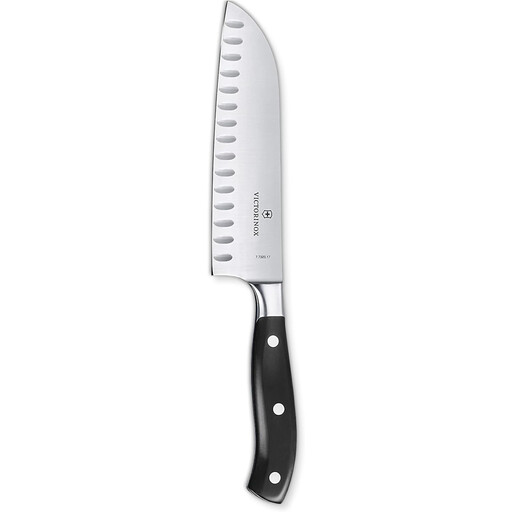
Why this fits the profile: This 17 cm santoku knife suits cooks who slice a lot of vegetables, fish and meat, and who appreciate a wide blade with dimples for their working style.
The shape is specific: it’s not a universal chef’s knife, but a santoku knife with a 17 cm blade. This means you know in advance what the knife is intended for.
Stainless steel blade; ergonomic handle; 17 cm length; dimples on the blade are used, according to the product information, to help reduce ingredients sticking.
A kitchen knife set may seem good value, but check whether you’ll actually use all the pieces. For many households, a chef’s knife, a paring knife and possibly a bread knife are enough. Buying individually gives you more control over blade length, handle and care.
A professional kitchen knife is especially worthwhile when you cook often, process larger quantities or already know which cutting technique you use. If you mainly prepare small portions, you may be better off with a compact chef’s knife and a good vegetable knife than with a large set.
We’ve put together a full, up-to-date list of products that fully meet these strict selection criteria and current European safety regulations.
That depends on the use, the type of steel and the chopping board. A knife that’s used daily may need regular maintenance. Use a honing steel for small corrections and have the edge sharpened when the knife noticeably starts to cut less smoothly.
Some models are offered as dishwasher-safe, but hand washing is often wiser. The dishwasher can put extra strain on the handle, coating and edge. Always check the specific product information and dry the knife immediately after washing.
A 16 cm blade is usually agile enough for everyday preparation. A 20 cm model offers more cutting space for large ingredients, but also requires more control. Take into account your hand size, chopping board and the amount of food you usually prepare.
