
Vandaag of morgen in huis

Kwaliteit gegarandeerd

Welkomstaanbiedingen ontgrendelen: GRATIS bezorging | Tot 80% korting | Gratis 30 dagen JoyPlus-proefperiode
Download de app
A good kitchen knife makes chopping more enjoyable, but you may not notice a poor purchase until several weeks later. A knife can look impressive on the product page and still be unsuitable for your chopping board, hand or cooking routine. Home cooks and beginners often run into the same problems: a blade that is too large, an awkward handle or a knife set containing pieces that are rarely used.
In this buying guide, we look at what to consider when choosing kitchen knives. This includes blade length, steel type, maintenance, ergonomics and the difference between a standalone chef’s knife and a complete kitchen knife set.
A knife set can often seem like good value, but not every cook needs steak knives, several small knives and a separate sharpener. Check the exact contents carefully. A set with a knife block also takes up permanent space on the worktop.
A basic collection usually consists of:
Terms such as “extra sharp”, “professional kitchen knife” and “long-lasting sharpness” mean little without technical information. Check the blade length, material and care instructions. According to the product description of some Wüsthof models, for example, a sharpening angle of 14 degrees per side is used. That is verifiable information; practical sharpness also depends on use and maintenance.
Not every stainless-steel kitchen knife is suitable for the dishwasher. Even when a product is described as dishwasher-safe, hand washing can help extend the life of the blade and handle. Hand washing with mild washing-up liquid is recommended for the Wüsthof Classic range. According to the product information, the Wüsthof Gourmet Chef’s Knife is described as dishwasher-safe, but hand washing is still advised.
A blade measuring 16 to 17 cm often offers greater control when preparing smaller quantities of vegetables, herbs and meat. A 20 cm chef’s knife provides more cutting surface and is suitable for larger ingredients, but it also requires more space and familiarity.
A santoku knife generally has a relatively wide blade and a shape suited to chopping, finely slicing and preparing vegetables. A bread knife uses a serrated edge, so bread and baked goods are less likely to be squashed. Do not use a bread knife as a substitute for a chef’s knife.
Stainless steel is popular because it is easy to clean and less prone to staining than non-stainless steel types. Also check whether the blade is made from a single piece of steel, whether it has a full-tang construction and which material is used for the handle.
Full tang means that the steel extends into the handle. This can contribute to balance and strength, but on its own it does not tell you everything about the cutting experience. A plastic handle is often practical to maintain; wood can offer a warm appearance, but usually requires more care.
A sharp kitchen knife is not automatically comfortable to use. Pay attention to:
A knife weighing 170 to 185 grams may feel agile to many users, while a heavier model provides more heft when cutting. The right choice depends on the size of your hand and your cutting style.
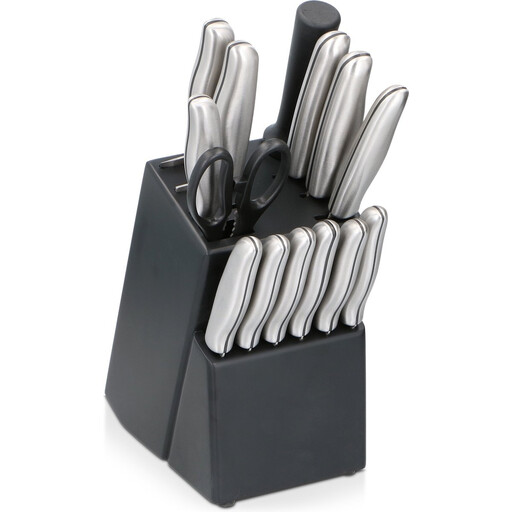
Why it suits this profile: This kitchen knife set combines several knives, a pair of scissors and a knife block for anyone who wants to put together their basic equipment in a single purchase.
The contents are clearly specified: 13 knives, a pair of scissors and a block. This lets you decide in advance whether the additional pieces suit your cooking routine.
Stainless-steel knives, including a santoku knife and bread knife; the black knife block provides tidy storage.
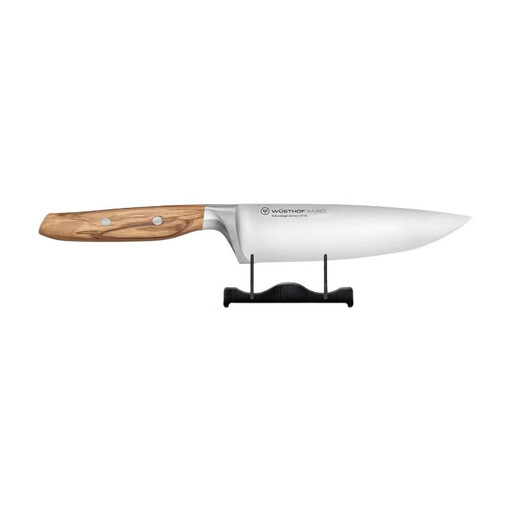
Why it suits this profile: This 20 cm chef’s knife is aimed at users looking for one versatile knife for vegetables, herbs, meat and larger ingredients.
The specifications state X50CrMoV15 steel, a 20 cm blade and an olive-wood handle. You are therefore buying based on concrete features, not just marketing language.
Forged from a single piece of steel; stated sharpening angle of 14 degrees and a half bolster for balance and maintenance.
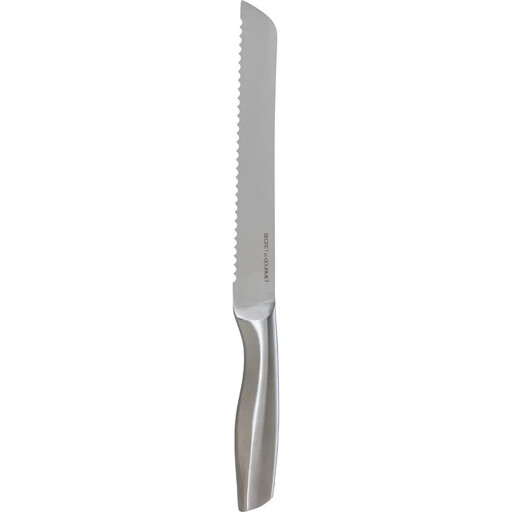
Why it suits this profile: This long bread knife is designed for bread, baked goods and other foods where a serrated edge is useful.
The 34 cm length and stainless-steel blade are clearly stated. This makes it clear that it is a specialist bread knife rather than an all-purpose chef’s knife.
Stainless-steel blade, sturdy handle and a stated weight of 180 grams; according to the product information, it is dishwasher-safe.
We have put together a complete, up-to-date list of products that fully meet these strict selection criteria and the applicable European safety regulations.
Use a wooden or plastic chopping board and avoid glass, stone and metal. These hard surfaces can damage the edge more quickly. Wash knives according to the product instructions, dry them immediately and store them in a knife block, protective sheath or drawer insert.
A honing steel can help maintain the edge with regular use, but it will not fully restore a blunt blade. For periodic sharpening, use a suitable sharpening system and follow the manufacturer’s recommended sharpening angle.
For most households, a chef’s knife, bread knife and small paring or utility knife are sufficient. A santoku knife can replace a chef’s knife if you mainly finely slice vegetables, herbs and fish. Choose individual kitchen knives if you want to decide precisely which types you use.
This depends on the steel, sharpening angle, use, chopping board and maintenance. A knife used daily on a hard board needs maintenance sooner than one used occasionally. Hand washing, drying immediately and sharpening correctly help keep the edge in good working order.
Sometimes, but always check the product information. Heat, moisture and contact with other cutlery in the dishwasher can affect the blade and handle. Hand washing with mild washing-up liquid is the safer choice for many kitchen knives.
