
Vandaag of morgen in huis

Kwaliteit gegarandeerd

Welkomstaanbiedingen ontgrendelen: GRATIS bezorging | Tot 80% korting | Gratis 30 dagen JoyPlus-proefperiode
Download de app
A good kitchen knife doesn’t have to be the most expensive model. The right choice depends on what you’ll be cutting, the size of your hands, how you care for your knives and how much storage space you have. Home cooks, food enthusiasts and professional chefs are better off focusing on practical features than eye-catching terms such as “professional”, “ultra-sharp” or “Damascus”.
A Damascus kitchen knife may look attractive, but the pattern on the blade doesn’t tell you how comfortable it is to use or how easy it is to care for. Always check the blade material, length, weight and handle.
A budget kitchen knife can also be practical for everyday use, as long as its size and care requirements suit the way you cook.
A sharp kitchen knife is comfortable to use when the blade is properly sharpened and the knife feels stable in your hand. However, manufacturers may describe sharpness in different ways. According to Wüsthof’s product description, the Classic Ikon Santoku knife is offered with a 14° cutting angle and laser-assisted sharpening, among other features. These are verifiable product specifications; the stated sharpness claim remains a claim made by the brand.
Also consider your chopping board. Glass, stone and hard ceramic surfaces can wear down the edge faster than wood or plastic.
A set with 7 or 16 pieces may seem appealing, but some people mainly need a chef’s knife, a Santoku knife and a small paring knife. Before you buy, check:
A stainless steel kitchen knife is practical for everyday cooking because the material is more resistant to corrosion than untreated carbon steel. That doesn’t mean every stainless steel knife is maintenance-free. Dry the knife after washing and don’t leave it soaking in water.
According to product specifications, high-carbon stainless steel can allow for a hard, thin edge. The exact alloy matters more than general terms such as “premium steel”. For example, the Wüsthof Classic Ikon is specified as being made from X50CrMoV15.
A chef’s knife of around 18 to 20 cm is a versatile choice for vegetables, herbs, meat and fruit. A Santoku knife often has a relatively wide blade and a straighter cutting edge, making it suitable for chopping and fine slicing.
A short paring knife or vegetable knife gives you more control with smaller ingredients. A carving knife with a longer, narrower blade is better for cutting even slices. A cleaver is designed for heavier chopping, but only use it on a suitable chopping board and check whether the product is actually intended for bones or hard ingredients.
An ergonomic-handled kitchen knife should feel secure without you having to grip it tightly. Check whether the handle is made of plastic, ABS, wood or a composite material. Also look at the join between the handle and the blade; a smooth, well-finished join is easier to clean.
Dishwasher suitability varies by model. According to the product information, some 5five knives are dishwasher-safe. Handwashing is recommended for the Wüsthof Performer and Wüsthof Classic Ikon. Always follow the care instructions for the specific product.
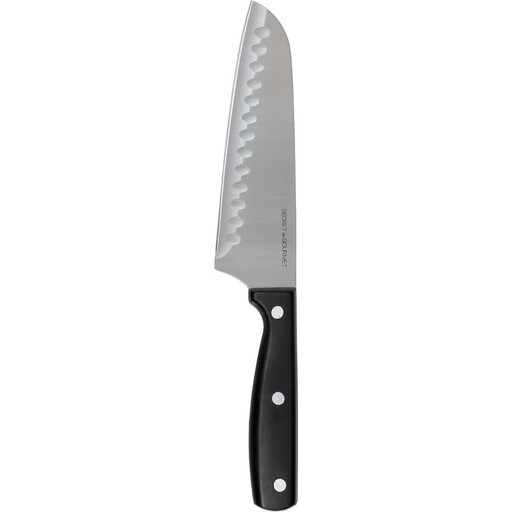
Why it suits this type of cook: According to the product information, this Santoku knife has a stainless steel blade, an ABS plastic handle and a 17 cm blade. It’s a straightforward choice for everyday chopping of vegetables, fruit and meat.
You’re buying one versatile knife rather than a large set with pieces that may go unused. The product information also states that it’s dishwasher-safe.
17 cm blade, stainless steel, ABS handle and a weight of 140 grams according to the product details.

Why it suits this type of cook: This model is aimed at buyers who value a specific type of steel, a 17 cm blade and an ergonomic synthetic handle. It’s well suited to frequent chopping of vegetables, herbs, fish and meat.
The product description specifies X50CrMoV15 high-carbon stainless steel, a 14° cutting angle and manual post-sharpening. Handwashing is recommended, so you know not to expect it to be suitable for the dishwasher.
17 cm blade, X50CrMoV15 steel, synthetic handle and a stated weight of around 170 grams.
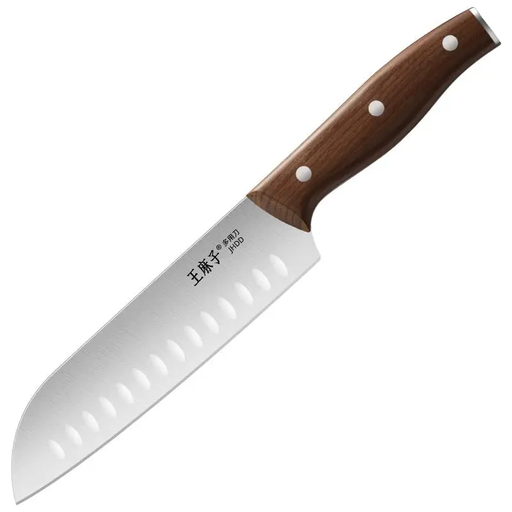
Why it suits this type of cook: According to the product name, this cleaver is intended for slicing, shredding, chopping and preparing bones. It’s suited to cooks looking for a heavier knife for specific tasks, alongside a standard chef’s knife.
You’re choosing a knife for a specific task rather than relying on looks or marketing language alone. Use it on a suitable chopping board and check the full product specifications before use.
175 mm size and a versatile design for slicing, shredding and chopping, according to the product listing.
We’ve put together a complete, up-to-date list of products that meet these strict selection criteria and the current European safety regulations.
A chef’s knife or Santoku knife with a blade of around 17 to 20 cm is versatile enough for many households. Choose a shorter vegetable knife if you mainly cut small ingredients or need more control.
That depends on the type of steel, chopping board, cutting technique and care. A knife used only on wood or plastic and honed correctly on a regular basis may stay comfortable to use for longer than one used on hard surfaces. There’s no set lifespan that applies to all kitchen knives.
Not always. Check the product information for the specific model. Handwashing is recommended for the Wüsthof Performer, and prolonged contact with acidic ingredients is not advised. Even if a knife is described as dishwasher-safe, handwashing can help keep the handle and edge in better condition for longer.
