
Vandaag of morgen in huis

Kwaliteit gegarandeerd

Welkomstaanbiedingen ontgrendelen: GRATIS bezorging | Tot 80% korting | Gratis 30 dagen JoyPlus-proefperiode
Download de app
A good kitchen knife doesn’t have to be expensive or complicated. It should, however, suit what you cut every day, how you work and how much maintenance you’re willing to do. If you focus only on claims such as “extra sharp”, “professional” or “Damascus”, you could easily end up with a knife that feels awkward or goes blunt quickly.
A sharp kitchen knife makes cutting easier, but sharpness alone tells you little about the overall experience. Also consider the blade length, weight, handle and whether the knife can be sharpened again. A very thin knife may be suitable for vegetables, but less suited to heavier tasks.
A chef’s knife or santoku can handle many tasks, but not every knife is suitable for bread, bones or fine peeling. A bread knife, for example, needs a serrated blade. For bones, use a heavier cleaver or bone cleaver. A small paring knife gives you more control with fruit and vegetables.
Not every stainless steel kitchen knife is dishwasher-safe. On some models, the dishwasher can wear down the edge, handle or finish more quickly. Always check the care instructions. Also make sure the product page clearly states the material, dimensions, weight and the responsible economic operator in the EU.
For everyday cooking, a blade of around 16 to 20 cm often feels comfortable to use. A chef’s knife has a wide, versatile blade for herbs, meat and vegetables. A santoku knife usually has a straighter cutting edge and is well suited to finely slicing vegetables, fruit, fish and meat.
A carving knife is generally longer and narrower, making it easier to cut slices. A vegetable knife or paring knife is shorter and more manoeuvrable. For bread, choose a serrated bread knife so you can cut through the crust without squashing the loaf.
Many kitchen knives are made from stainless steel. It generally needs less maintenance than steel that can discolour more easily, but “stainless” doesn’t mean that prolonged exposure to water will have no effect. Dry the knife after washing and don’t leave it in the sink.
For example, the Wüsthof Classic Chef’s Knife is listed as being made from X50CrMoV15 stainless steel, with a blade length of 16 cm. The manufacturer also specifies a sharpening angle of 14 degrees per side. These are verifiable specifications that tell you more than a general advertising claim about sharpness.
A handle should feel secure and provide a good grip, even when your hands are damp. Weight is a matter of personal preference: a lightweight knife is easy to manoeuvre, while a heavier model can give you extra force when chopping.
Use a soft wooden or plastic chopping board. Glass, metal and stone can damage the edge more quickly. Hand-washing with warm water and mild washing-up liquid is often the safest choice, unless the manufacturer specifically states that the knife is dishwasher-safe. Store knives in a knife block, protective sheath or drawer insert to reduce contact with other cutlery.
The options below are matched to specific uses. Before buying, always check the current product page, available version and care instructions.
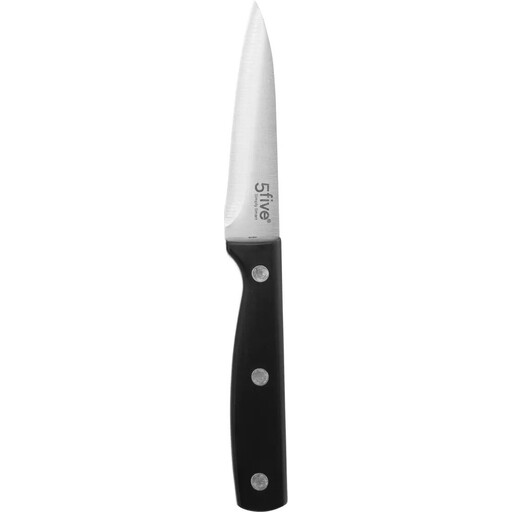
Why it suits this profile: This compact paring knife is handy for small tasks such as preparing fruit and vegetables and adding garnishes. It has a stainless steel blade, an ABS handle and a stated overall length of 18 cm.
Its compact shape means you don’t have to use a large, less manoeuvrable knife for simple peeling tasks. Be sure to check that the blade length suits you before buying.
Stainless steel blade, plastic handle, low product weight of 40 grams and, according to the product information, dishwasher-safe.
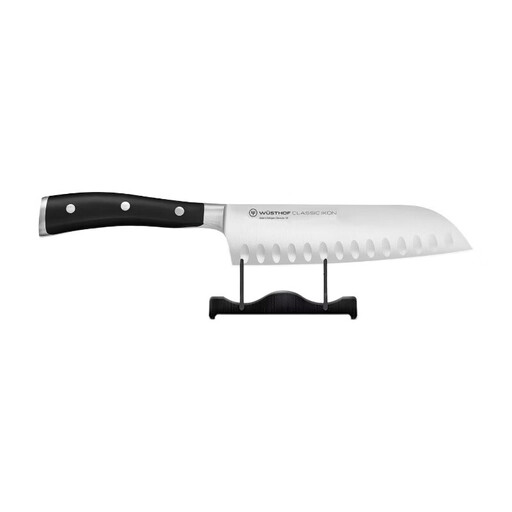
Why it suits this profile: A versatile chef’s knife for anyone looking for one well-specified knife for herbs, vegetables, fruit, fish and meat. The blade is 16 cm long and made from X50CrMoV15 stainless steel.
The product information covers the material, dimensions, sharpening angle and care. That means you don’t have to rely solely on general claims such as “professional” or “extra sharp”.
Half bolster, plastic handle, suitable for left- and right-handed use, with a stated sharpening angle of 14 degrees per side.
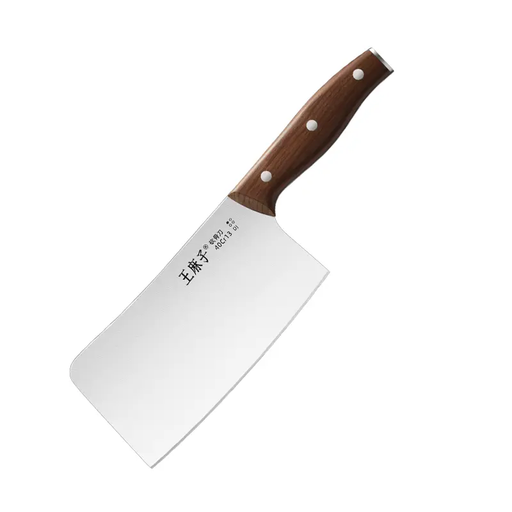
Why it suits this profile: A bone cleaver is designed for specific heavy-duty tasks, such as cutting through bones, ribs and poultry. It isn’t a substitute for a fine chef’s knife.
Choosing a dedicated bone cleaver means you won’t use a thin slicing knife for a task it wasn’t designed for. Always use a suitable, stable chopping board.
A forged model for heavy-duty kitchen tasks; the product description states that it is suitable for bones, ribs and poultry.

Why it suits this profile: This santoku knife has a 17 cm blade and is designed for finely slicing herbs, vegetables, fruit, fish and meat. Its handle is made from synthetic material.
The stated blade length and distinctive santoku design make it clear what the knife is intended for. That makes it a more targeted choice than an unspecified all-purpose knife.
X50CrMoV15 stainless steel, half-guarded handle and a stated weight of around 170 grams.
We’ve put together a complete, up-to-date list of products that meet these strict selection criteria and the applicable European safety regulations.
A chef’s knife of around 16 to 20 cm is a practical starting point for many households. You can use it to prepare vegetables, herbs, fruit, meat and fish. If you mainly finely chop vegetables, you may also find a santoku knife comfortable to use. Above all, check the balance, handle and care instructions.
It depends on the steel, how often you use it, the chopping board and how well you care for it. Don’t use a glass or stone board, avoid cutting through hard bones with a standard chef’s knife, and sharpen or hone the blade when it no longer cuts smoothly. A bone cleaver and a chef’s knife are designed for different tasks and shouldn’t be used interchangeably.
Some models are listed as dishwasher-safe in the product information, but hand-washing is often the more cautious option. Always check the guidance on the product page. Dry the knife straight after washing and store it so the blade doesn’t knock against other cutlery.
