
Vandaag of morgen in huis

Kwaliteit gegarandeerd

Welkomstaanbiedingen ontgrendelen: GRATIS bezorging | Tot 80% korting | Gratis 30 dagen JoyPlus-proefperiode
Download de app
A sharp kitchen knife makes chopping, slicing and peeling much easier. Yet the choice is vast: from a chef's knife and santoku knife to a cleaver, bread knife or compact vegetable peeler. If you only focus on words like "extra sharp" or "professional", you could end up buying a knife that doesn't suit your kitchen.
Instead, pay attention to the intended use, dimensions and maintenance requirements. Below, you'll discover which features matter and which kitchen knives are best suited to different cooking situations.
A knife may be described as sharp out of the box, but how long it stays that way depends on the steel, your chopping board and how you look after it. A cheap knife that goes blunt quickly can end up being less practical than a slightly more expensive one that can be regularly sharpened.
Look out for information on:
Claims like "extra sharp" or "razor sharp" come from the brand's product messaging. Don't take them as a guaranteed promise for every user.
A large chef's knife is handy for vegetables, fruit and meat, but it's not right for every job. A bread knife needs a serrated blade to saw through bread without squashing it. For bones, a sturdy cleaver or bone knife is more suitable. A carving knife, on the other hand, is designed for controlled, long cuts.
If you use one knife for all ingredients, you're more likely to end up with a damaged edge or awkward handling.
Stainless steel kitchen knives are generally easy to maintain, but "rust-resistant" doesn't mean that prolonged soaking has no effect. Moisture, dishwasher detergents and hard chopping boards can all shorten their lifespan.
So always check whether hand washing is recommended. Dry the knife immediately after cleaning and store it in a knife block, protective sheath or a safe drawer organiser.
For everyday chopping, a blade of around 17 to 20 cm is practical for most people. A smaller vegetable knife or paring knife gives you more control with small ingredients. A longer carving knife can be useful for roasts, while a bread knife is often around 30 to 34 cm long.
The shape determines the cutting motion:
Stainless steel requires relatively little maintenance and is suitable for daily use. High-carbon steel can, according to product information, offer a hard edge that takes a good sharpening, but it often needs more care when it comes to drying and storage.
Also look at the handle. An ergonomic shape can feel comfortable, but check that the handle fits securely and that the weight is well balanced. A fully forged construction or a one-piece blade can, on some models, contribute to a stable transition between handle and blade. The exact durability, however, depends on the material, usage and maintenance.
A sharp kitchen knife isn't automatically safer. A blunt knife can actually require more pressure, making it more likely to slip. Always use a stable chopping board and keep your fingers out of the cutting line.
Bear these points in mind:
The choices below are linked to specific features from the product information. Brand claims about sharpness, durability or sharpening technique are shown as product claims, not as independently verified results.
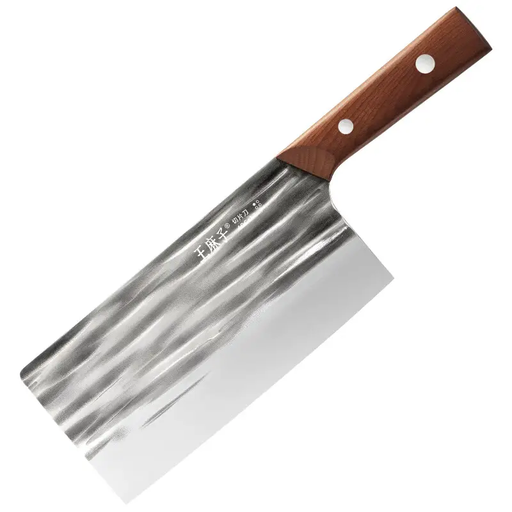
Why this fits the profile: A practical stainless steel kitchen knife for everyday preparation of meat, vegetables and fruit. The listed specifications are straightforward and aimed at household use.
The product information mentions hand washing and immediate drying. This makes the maintenance expectation clearer than a general claim about rust resistance.
Stainless steel blade; suitable for cutting meat, vegetables and everyday cooking; ergonomic handle according to the product description.

Why this fits the profile: This santoku knife has a 17 cm blade made from X50CrMoV15 high-carbon stainless steel and is designed for fine slicing of vegetables, fruit, fish and meat.
The specifications mention a specific steel type, blade length and recommended hand washing. According to Wüsthof's own information, the sharpening technique should produce a 14° edge; check this if that feature is important to you.
17 cm blade; high-carbon stainless steel; synthetic handle; hand washing recommended.
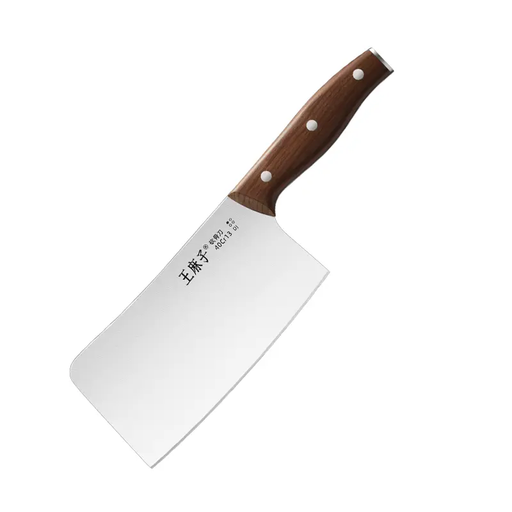
Why this fits the profile: A cleaver for users who regularly prepare poultry, ribs or tough cuts and need a heavier model for the job.
The product is clearly intended for bones and hard parts. Don't use it as an all-purpose chef's knife and choose a sturdy, suitable chopping board to minimise damage to the edge.
Forged construction according to the product description; designed for bones, ribs and poultry; sturdy build with non-slip handle according to the stated information.
We've put together a full, up-to-date list of products that fully meet these strict selection criteria and comply with current European safety regulations.
A chef's knife of around 17 to 20 cm is a practical starting point for vegetables, fruit and meat. Add a bread knife and paring knife later if you often do those tasks. A santoku knife is an alternative if you mainly prepare vegetables and fish.
That depends on the steel, usage, chopping board and maintenance. Don't cut on glass, stone or ceramic, and don't use the knife for ingredients it wasn't designed for. Sharpen the knife or have it maintained as soon as it needs more pressure for normal cutting tasks.
Only when the product information explicitly says so. Hand washing and immediate drying are generally the safer choice, especially for knives with a wooden handle or high-carbon steel. Prolonged soaking can damage both the handle and the blade.
