
Vandaag of morgen in huis

Kwaliteit gegarandeerd

Welkomstaanbiedingen ontgrendelen: GRATIS bezorging | Tot 80% korting | Gratis 30 dagen JoyPlus-proefperiode
Download de app
A good kitchen knife doesn’t have to be the most expensive model. What matters is that it suits your cutting tasks, your hand, and how you plan to look after it. Home cooks often focus only on sharpness or appearance, but it’s the blade length, handle, type of steel, and care instructions that determine whether a knife remains comfortable to use over time.
There are also a few common pitfalls to watch out for:
A chef’s knife is a versatile knife for vegetables, herbs, meat and fish. A blade of 16 to 20 cm is standard. A santoku knife often has a wider blade and is suitable for fine chopping, dicing and preparing vegetables and fish. When choosing a santoku knife, don’t just look at the appearance – pay attention to the exact blade length too.
A bread knife has a serrated edge. It lets you slice bread and soft products without crushing them. A model around 32 to 34 cm gives you room for large loaves, but also takes up more space in a drawer or knife block.
A steak knife or tomato knife usually has a smaller, serrated blade. It’s practical at the table and for ingredients with a firm outside and soft inside. A steak knife doesn’t replace a chef’s knife.
A stainless steel kitchen knife is resistant to corrosion under normal use, but that doesn’t mean it can be left wet indefinitely. Washing by hand and drying immediately helps prevent stains and damage to the blade edge.
With forged kitchen knives, the steel is shaped according to the product description. A full tang means the steel runs all the way through the handle. This can contribute to balance and sturdiness, but also look at the fixing, weight and shape of the handle.
Some manufacturers specify a steel type, such as X50CrMoV15, a hardness rating or a cutting angle. Such details are more useful than vague words like “professional” or “ultra-sharp”. Claims about sharpness or longer edge retention come from the manufacturer, so treat them as product information from the brand, not as a guaranteed result in every kitchen.
A handle should feel stable without you having to grip it tightly. A finger guard, balanced weight distribution and a suitable handle length can make the knife more comfortable to use. Also check whether the knife is suitable for both left- and right-handed use.
Use a wooden or plastic chopping board. Glass, stone and metal can damage the blade edge more quickly. A honing steel helps with regular maintenance, while a whetstone or professional sharpening service may be needed once the edge has become truly blunt.
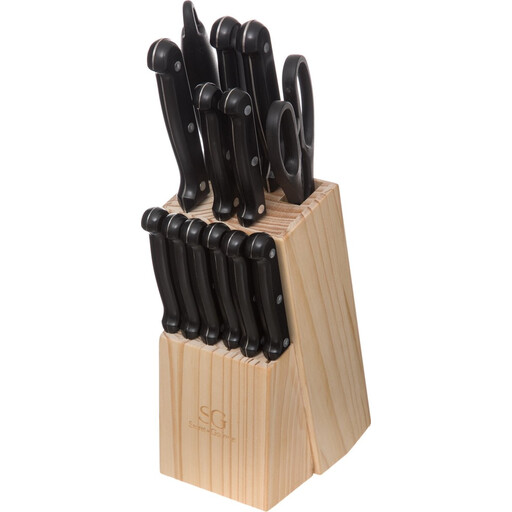
Why this fits the profile: This knife set includes a chef’s knife, bread knife, six steak knives, kitchen scissors and a sharpener. It’s practical for a household that wants to cover different tasks with one purchase.
The contents of the set are clearly described. Bear in mind that according to the product information, the knives are not dishwasher-safe.
13-piece set including knife block and sharpener; stainless steel knives for everyday kitchen use.
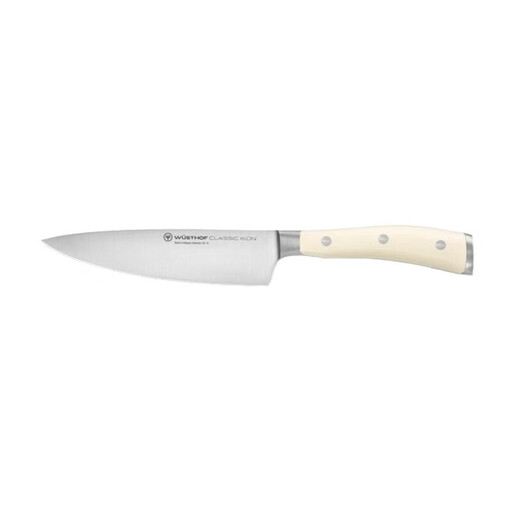
Why this fits the profile: If you prefer to choose one versatile knife, this 16 cm chef’s knife comes with a synthetic handle, full tang and finger guard.
The blade length is clearly stated and the construction is one piece of stainless steel. The product information recommends hand washing.
16 cm blade, full tang and three rivets; suitable for vegetables, herbs, meat and poultry.
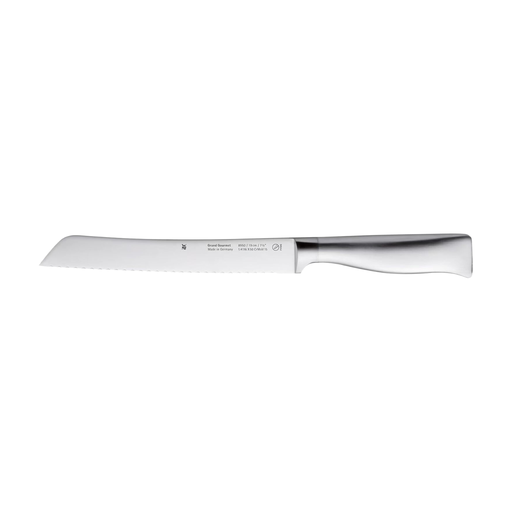
Why this fits the profile: This bread knife is designed for daily slicing of bread, soft rolls and fruit. The 32 cm length suits larger loaves.
The serrated edge is intended for bread and prevents you from using a smooth chef’s knife for the wrong task. According to the product details, the knife is not dishwasher-safe.
32 cm long serrated blade; stainless steel and a seamlessly designed handle according to the product description.

Why this fits the profile: The 17 cm santoku knife is suitable for finely chopping vegetables, herbs, fruit, fish and meat.
The intended use and blade length are clearly stated. The manufacturer recommends hand washing; dishwasher cycles are therefore not the advised maintenance choice.
X50CrMoV15 stainless steel, synthetic handle and a 17 cm double-edged blade according to the product information.
We’ve put together a full, up-to-date list of products that fully meet these strict selection criteria and comply with current European safety regulations.
A chef’s knife of 16 to 20 cm is a logical starting point for most preparations. You can add a bread knife and a small paring or utility knife later if needed. A complete knife set is especially practical if you want to cover different cutting tasks and table use straight away.
That depends on the steel type, chopping board, cutting technique and how often you use it. Don’t cut on glass or stone, don’t use the knife as a lever, and dry it after washing. Regular maintenance with a honing steel can help; have a damaged or very blunt edge re-sharpened.
Some models state that they can go in the dishwasher, but hand washing is often the safer choice for the blade edge and handle. Always check the specific product information. Never place knives loose among other cutlery, as contact with hard objects can damage the edge.
