
Vandaag of morgen in huis

Kwaliteit gegarandeerd

Welkomstaanbiedingen ontgrendelen: GRATIS bezorging | Tot 80% korting | Gratis 30 dagen JoyPlus-proefperiode
Download de app
A good kitchen knife does not necessarily have to be the most expensive model. The right choice depends on your cutting technique, the ingredients you use most often and how much maintenance you are prepared to do. If you only look for terms such as “extra sharp”, “professional” or “Damascus”, you could still end up with a knife that becomes blunt quickly, feels uncomfortable in your hand or is unsuitable for the dishwasher.
These points will help you compare kitchen knives objectively and avoid a disappointing purchase.
A sharp edge is useful, but sharpness alone says little about how long it will last. The type of steel, cutting angle, hardness and maintenance also play a role. According to the product description of some Wüsthof knives, the blades are sharpened using laser control and supplied with an angle of 14 degrees per side. This is verifiable product information, but it does not mean the knife will always stay sharp without maintenance.
A knife needs regular maintenance with a honing steel or sharpening stone. You should also use a wooden or plastic chopping board. Glass, stone and metal can damage the edge more quickly.
A knife set may seem appealing, but it sometimes contains several knives you will hardly ever use. For many Dutch households, a chef’s knife, bread knife and paring knife are sufficient. A set of steak knives is mainly useful if you often eat at the table with several people.
Before buying, check which knives are actually included in the packaging. A compact set with three practical knives can be more useful than a large set with several overlapping functions.
Some kitchen knives are described as dishwasher-safe. Even so, hand washing can help extend the life of the edge and handle. Hot water, dishwasher detergent and contact with other items can make the knife blunt more quickly.
For knives with a wooden handle, special coating or finely sharpened edge, hand washing is generally the sensible choice. Always check the brand’s specific care instructions.
The most common sizes are:
A longer knife provides more cutting surface, but it also requires more space and control. For a small kitchen or a beginner cook, a 16 cm chef’s knife is often easier to handle. If you regularly prepare cabbage, pumpkin or large pieces of meat, a 20 cm chef’s knife may be more suitable.
A stainless steel kitchen knife is easy to maintain and resistant to corrosion under normal use. X50CrMoV15 is a commonly used type of steel in German kitchen knives. The product descriptions for several Wüsthof models list this steel as the blade material.
Damascus steel does not automatically indicate a particular level of cutting performance. Check the full product specifications: is it a decorative layer, a laminated blade or a specific steel construction? The Wüsthof Performer Santoku, for example, is described as having a black Damascus steel blade and a plastic handle. According to the product information, it must be hand washed.
An ergonomic handle should suit your hand and cutting style. Look for:
A full-length blade, also known as a full tang, can contribute to a sturdy construction. A half bolster can make it easier to sharpen the entire blade. These are practical construction features, not a guarantee of a particular cutting experience.
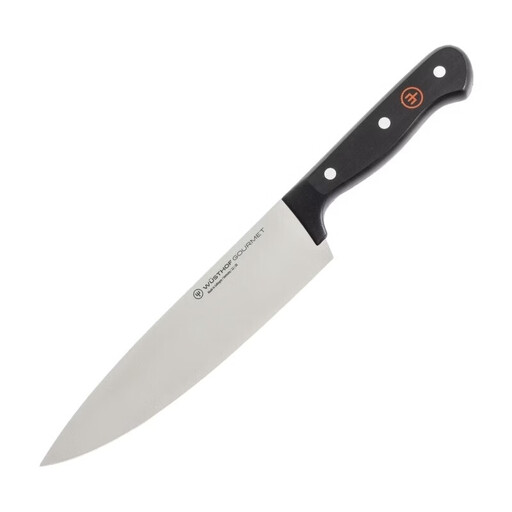
Why it suits this profile: A versatile 20 cm chef’s knife for slicing, chopping and dicing, without having to buy several knives straight away.
The product information specifies the dimensions, material and care requirements. This means you do not have to rely solely on marketing claims about sharpness.
20 cm blade, plastic handle, weight of 184 grams and, according to the product description, dishwasher-safe.
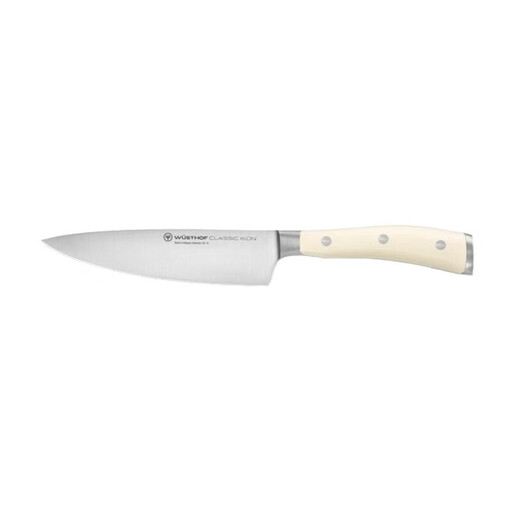
Why it suits this profile: The 16 cm version offers control during everyday food preparation and has an ergonomic synthetic handle with three rivets.
The specifications state that it has a full tang, and give the blade length and handle material. This allows you to compare construction and size rather than focusing only on appearance.
Forged from a single piece of stainless steel, with a full-tang construction and a 16 cm blade for everyday use.
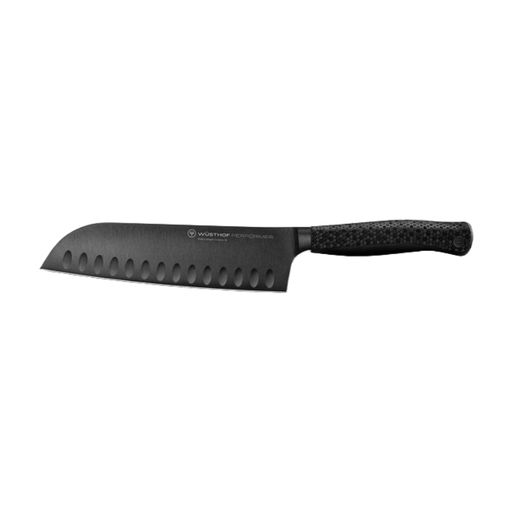
Why it suits this profile: A 17 cm santoku knife for anyone who prepares lots of vegetables, fish and meat and enjoys a Japanese cutting style.
The product information states that the knife is not dishwasher-safe. This limitation makes the care requirements clear in advance.
17 cm Damascus steel blade, plastic handle and a size suitable for a range of cutting tasks.
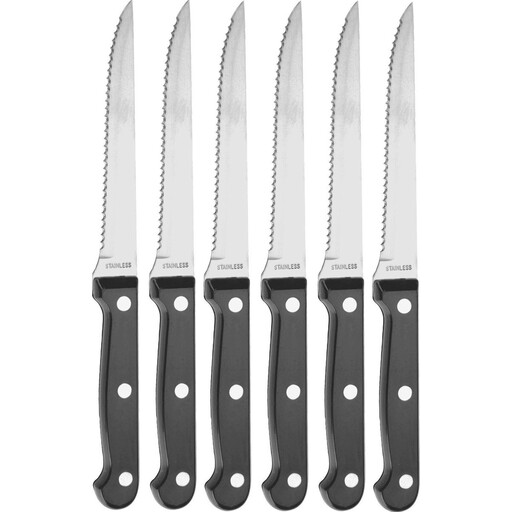
Why it suits this profile: A set of six steak knives for families, dinner parties and households that need several place settings at once.
You are buying a clearly specified number of knives for a specific purpose, rather than a large set containing unnecessary items.
Six stainless steel steak knives, plastic handles and, according to the product information, dishwasher-safe.
We have put together a complete, up-to-date list of products that fully meet these strict selection criteria and the applicable European safety regulations.
Sharp kitchen knives also need regular care. Follow this routine:
When using a chef’s knife, also pay attention to your chopping board. A soft plastic or wooden board is generally more suitable than a glass or stone surface.
Start with a 16 to 20 cm chef’s knife. Add a bread knife if you regularly slice bread, and consider a paring knife for smaller ingredients. A knife set is mainly useful when the knives included match the cooking tasks you carry out every day.
This depends on how you use it, the type of steel, your chopping board and your technique. Use a honing steel as soon as the knife no longer cuts as smoothly. A sharpening stone is needed when honing is no longer enough. Do not force the knife through food; a blunt knife or incorrect movement increases the risk of slipping.
German kitchen knives, including various Wüsthof models, are often designed as versatile knives for vegetables, fruit, fish and meat. However, check the blade length, type of steel, cutting angle and care instructions for each model. A professional kitchen knife is not automatically right for every hand or kitchen.
