
Vandaag of morgen in huis

Kwaliteit gegarandeerd

Welkomstaanbiedingen ontgrendelen: GRATIS bezorging | Tot 80% korting | Gratis 30 dagen JoyPlus-proefperiode
Download de app
A good kitchen knife should feel comfortable in your hand, suit the way you cut and be easy to maintain. However, it can be difficult to compare knives online using only product photos and marketing copy. For example, a knife advertised as “razor-sharp” may impress mainly at first glance. And a large knife set doesn’t always include the knives you’ll actually use.
These points will help home cooks, food lovers and professional chefs make a more informed choice when buying kitchen knives.
Many retailers use terms such as “extra sharp” or “professional”. On their own, these tell you little about how long a blade will stay sharp. The material, sharpening angle, construction and care matter more. A stainless steel kitchen knife can be practical, but stainless steel doesn’t mean the knife needs no maintenance.
Check whether the product information mentions:
A 16-piece set may look appealing, but some pieces can end up unused in the knife block. For everyday cooking, a chef’s knife or santoku knife, a paring knife and a bread knife are often enough. If you regularly debone meat or prepare poultry, you may also need a cleaver.
Check exactly what’s included, too. “16-piece” may mean several knives, a knife block, scissors and accessories. So don’t compare only the number of pieces: focus on what each one is for.
A 34 cm chef’s knife won’t suit every kitchen or every hand. Check both the overall length and the blade length. A shorter paring knife offers more control for small tasks, while a santoku knife with a blade around 17 to 18 cm can be suitable for vegetables, herbs and meat.
A smooth metal handle may be easy to clean, while an ABS or non-slip handle may offer some users a more secure grip. The right choice depends on your cutting technique, hand size and preference.
Stainless steel is popular because it’s easy to care for and resistant to corrosion. It doesn’t guarantee a particular level of sharpness or lifespan, though. Also check whether the knife is fully forged. For example, the product information for the 5five Forged Stainless Steel Santoku Knife states that it is forged from a single piece.
Knives made from high-carbon steel may feel different in terms of hardness and cutting performance. According to the product description, the Wangmazi Kitchen Cleaver is made from high-carbon steel and is designed for bones, ribs and poultry. Use this type of cleaver only on a suitable chopping board and follow the manufacturer’s care instructions.
The shape determines what a knife is used for:
A longer knife isn’t automatically more convenient. Make sure your chopping board has enough space and that you can move the knife with control.
Products may be described as dishwasher-safe, but dishwasher cycles, heat and detergents can put strain on the handle and blade over time. For a longer working life, hand-washing with mild washing-up liquid and drying the knife straight away is generally a practical choice.
Don’t leave loose knives in an overcrowded drawer. A knife block, protective sheath or separate compartment helps prevent contact with other cutlery. Sharpen or hone the knife according to the manufacturer’s instructions, and don’t use a blunt knife with extra force.
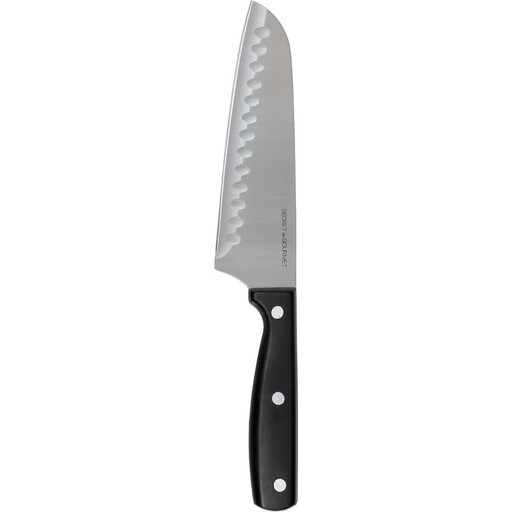
Why it suits this profile: This standalone santoku knife is a practical starting point if you don’t need a complete knife set. The blade is 17 cm long and, according to the product information, the knife weighs 140 grams.
You won’t be buying a large set with pieces you may not need. The key specifications, including the material, dimensions and ABS plastic handle, are clearly listed.
Stainless steel blade, sturdy handle and, according to the product information, dishwasher-safe.
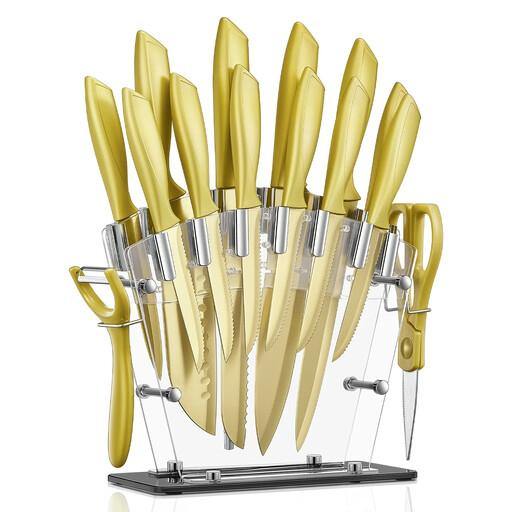
Why it suits this profile: This set is aimed at households looking to combine a range of knives with a dedicated storage spot. The product name specifies an acrylic knife block and high-carbon stainless steel knives.
The knife block helps keep knives from being left loose around the kitchen. Before buying, check exactly which 16 pieces are included and whether the block will fit on your worktop.
16-piece set, acrylic holder and, according to the product name, titanium coating on the knives.
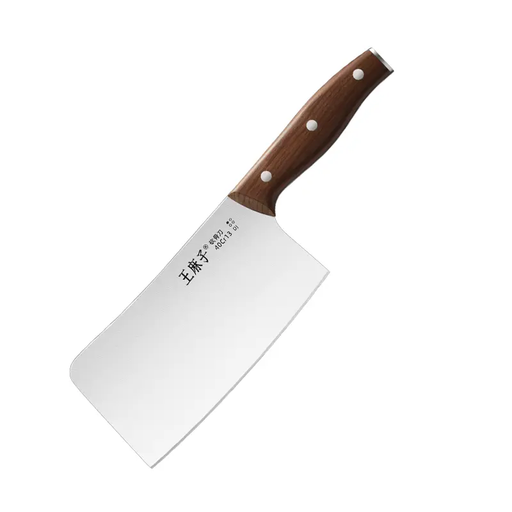
Why it suits this profile: According to the product description, this cleaver is designed for bones, ribs and poultry. It’s suited to users who need a separate heavy-duty knife as well as a chef’s knife.
You won’t be using an ordinary kitchen knife for heavy chopping. The product description states that the knife has a full-tang construction and a non-slip handle; check the current specifications before buying.
High-carbon steel according to the product description, with a design intended for bones, ribs and poultry.
We’ve put together a complete, up-to-date list of products that meet these strict selection criteria and the applicable European safety regulations.
For most households, a chef’s knife or santoku knife, a paring knife and a bread knife make a sensible combination. If you often prepare meat, you could add a separate carving knife. A knife set is especially useful if you need several knife styles and a knife block.
Check the following before buying:
A chef’s knife or santoku knife is usually versatile enough for vegetables, herbs and meat. A santoku knife often has a more compact profile; a chef’s knife may suit you if you use a rocking cutting motion. Above all, choose based on blade length, balance and grip.
Not necessarily. The label means the manufacturer allows the knife to be washed in a dishwasher, but heat and detergents can speed up wear. Hand-washing and drying straight away are often wiser if you want to keep the blade and handle in good condition for as long as possible.
It depends on the type of steel, how you use the knife, the chopping board, your cutting technique and how you care for it. Don’t cut on glass or stone, use the right knife for the task and store knives safely. You may need to sharpen or hone the knife when it no longer cuts through ingredients smoothly.
