
Vandaag of morgen in huis

Kwaliteit gegarandeerd

Welkomstaanbiedingen ontgrendelen: GRATIS bezorging | Tot 80% korting | Gratis 30 dagen JoyPlus-proefperiode
Download de app
A good kitchen knife should suit the way you cook, your chopping board and your maintenance routine. Yet many home chefs choose mainly based on a familiar brand name, striking appearance or the promise of an “extremely sharp” edge. This can result in a knife that becomes less comfortable to use after a few months, is difficult to sharpen or does not suit your everyday food preparation.
In this buying guide from the Joybuy Product Recommendation Officer, you’ll discover what to look for when choosing kitchen knives. The selection below is based on verifiable details such as blade length, material, handle and care instructions.
A sharp kitchen knife is pleasant to use, but sharpness alone says little about long-term performance. The cutting angle, the hardness of the steel and the possibility of sharpening the knife again also play a part. According to Wüsthof’s own information, some knives are sharpened with laser control and polished by hand. This is a product feature, not a guarantee that a knife will remain sharp indefinitely without maintenance.
A 20 cm chef’s knife offers a large cutting surface, but it can feel awkward if you have limited space or often prepare small ingredients. A 16 or 17 cm blade generally gives you more control when cutting herbs, vegetables and smaller portions. A santoku knife has a different shape and cutting action from a European chef’s knife. If you mainly slice bread, a long serrated knife will be more useful than a smooth-edged chef’s knife.
“Dishwasher-safe” does not automatically mean that this is the best way to preserve the knife’s lifespan. Hot water, dishwasher detergent and contact with other items can put strain on the edge and handle. Hand washing with mild soapy water is recommended for various professional kitchen knives. Always check the care information before buying.
Choose the length according to the tasks you need to carry out:
A longer blade is not automatically more practical. Make sure the length suits your chopping board and the space available in your kitchen.
Stainless steel knives are practical for everyday use because they are more resistant to moisture and discolouration than many high-carbon steel types. Also consider the construction. A knife forged from a single piece of steel or with a full tang can provide a strong connection between the blade and handle. The product specification remains the most reliable guide: terms such as “professional” or “extra sharp” mean little on their own without information about the type of steel, blade length and care requirements.
The Wüsthof Classic series is listed as using X50CrMoV15 stainless steel. For certain models, the manufacturer specifies a 14-degree edge per side and a hardness of 58 HRC. Details like these are useful when comparing knives, but they do not solely determine how comfortable a knife feels in your hand.
An ergonomic handle should feel stable without requiring you to grip it tightly. Check whether the model is suitable for left- and right-handed use and whether the transition between the blade and handle feels comfortable. A full tang and bolster can affect the balance. With wet hands, a profiled or non-slip structure can provide extra control, as with the hexagonal handle on the Wüsthof Performer series.
Why it suits this profile: The 16 cm length is easy to handle for everyday tasks such as chopping herbs, cutting vegetables and preparing fruit.
The product specification lists X50CrMoV15 stainless steel, a half bolster and hand washing for care. This tells you in advance what the knife needs.
16 cm blade, suitable for left- and right-handed users and fitted with a plastic handle.
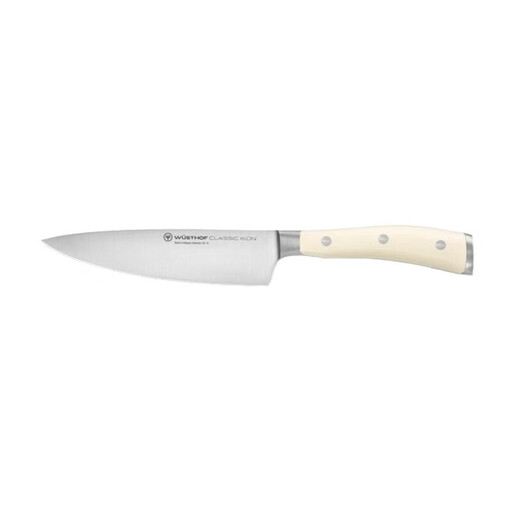
Why it suits this profile: This compact chef’s knife combines a full tang, a synthetic handle and a three-rivet design.
The construction and material are clearly described. This makes it easier to compare knives than relying solely on colour or brand image.
16 cm blade, stainless steel, full tang and finger protection according to the product description.
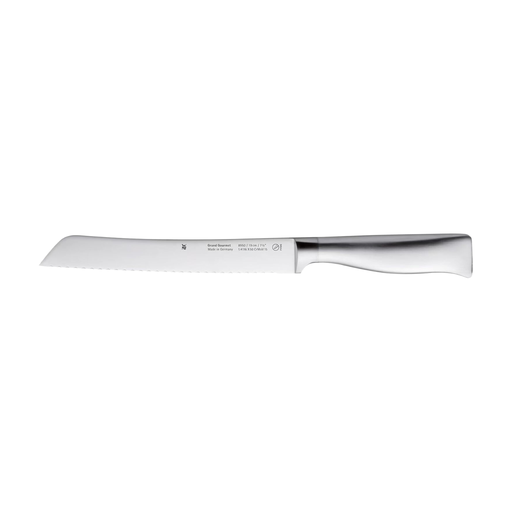
Why it suits this profile: The 32 cm double-serrated blade is designed for bread, soft bread rolls and fruit with a tough skin.
The serrated edge is designed for bread, so you do not have to use a smooth-edged chef’s knife on hard crusts.
32 cm blade, double-serrated edge, forged construction and Cromargan 18/10 handle.

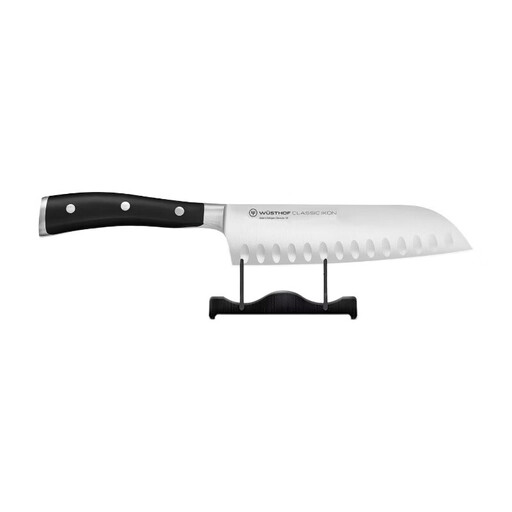
Why it suits this profile: The santoku shape is well suited to finely chopping, cutting vegetables and preparing fish and meat.
The 17 cm length is a versatile medium size. You get a broad cutting surface without immediately choosing a long, heavy chef’s knife.
X50CrMoV15 steel, synthetic handle, 17 cm blade and an edge sharpened to 14 degrees per side according to the product information.
We’ve put together a complete, up-to-date list of products that fully meet these strict selection criteria and the applicable European safety regulations.
A few consistent habits will help keep a knife useful for longer:
For most households, a 16 to 20 cm chef’s knife is a practical starting point. Add a paring knife for small tasks and a bread knife for hard crusts. A kitchen knife set may seem good value, but check that all the knives suit what you actually use.
This depends on the steel, cutting angle, use and maintenance. A knife used on glass or placed in the dishwasher may feel blunt more quickly. Regular honing and occasional sharpening help maintain the edge, but always follow the manufacturer’s instructions.
A steak knife with a serrated edge is mainly intended for meat and some soft foods, such as tomatoes. For precise slicing, chopping and julienne, a chef’s knife or santoku knife is more suitable. According to the product description, a Victorinox Grand Maitre steak knife has a 12 cm serrated stainless steel edge.
