
Vandaag of morgen in huis

Kwaliteit gegarandeerd

Welkomstaanbiedingen ontgrendelen: GRATIS bezorging | Tot 80% korting | Gratis 30 dagen JoyPlus-proefperiode
Download de app
A blunt chef’s knife, a bread knife that tears soft bread or a knife set with unused pieces: many disappointing purchases aren’t caused by a lack of choice, but by misplaced expectations. Marketing terms such as “professional”, “extra sharp” and “rust-resistant” don’t tell you much on their own. Focus instead on the specifications, how you’ll use the knives and how to care for them.
A large kitchen knife set may look appealing, but most households mainly use a chef’s knife, a bread knife and a small vegetable knife. A set with lots of accessories is only practical if you need those pieces too. Check what’s included beforehand: a set with five useful knives may make more sense than one with several accessories you’ll rarely use.
According to brands’ product information, certain sharpening angles or types of steel can help create a sharp edge. That doesn’t mean a knife will never need maintenance. A glass chopping board, contact with hard objects and a dishwasher can wear down the edge more quickly. Stainless steel knives can also develop marks if they’re stored while wet for long periods.
The handle also affects how much control you have while cutting. Consider the grip, balance, material and the join between the handle and blade. A smooth handle may feel less comfortable with wet hands. Also check whether the knife is dishwasher-safe. Some knives are recommended for handwashing, even if their material can technically withstand moisture.
A chef’s knife of around 20 cm is suitable for many everyday tasks, such as chopping herbs, slicing vegetables and portioning meat. A Santoku knife usually has a wider, relatively straight edge, making it well suited to fine cutting and vegetables. A vegetable knife or paring knife is more useful for small ingredients and precise tasks.
A serrated blade is important for bread. A bread knife measuring around 20 to 23 cm can cut through a hard crust without completely squashing the soft centre. Serrated steak knives are handy for steak or pizza, as their teeth grip the outside of the food.
Many kitchen knives are made from stainless steel. It’s practical for everyday use, but “stainless” doesn’t mean you can skip maintenance. According to the product description, a high-carbon stainless steel blade may offer properties such as hardness and corrosion resistance. Always check what the product specifications actually say.
According to the manufacturer or seller, a coating may help prevent food sticking or corrosion. Treat this as a product feature, not a guarantee of a particular lifespan. Avoid damaging the coating with abrasive sponges or by letting it come into contact with other knives.
Dry knives straight after washing and don’t leave them loose in a kitchen drawer. A knife block, protective sheath or individual slot will prevent the blades from knocking against each other. Use a knife sharpener only if it’s suitable for the type of knife, and follow the instructions on which way to move it. According to the product information, the WANGMAZI sharpener is intended for home maintenance. Use it on a stable surface and keep your fingers away from the sharpening section.
Pay attention to your chopping board too. Wood and plastic are generally more suitable for knives than hard surfaces such as glass or metal. For many knives, handwashing with mild washing-up liquid remains the safest way to care for them, even if the product is described as dishwasher-safe.
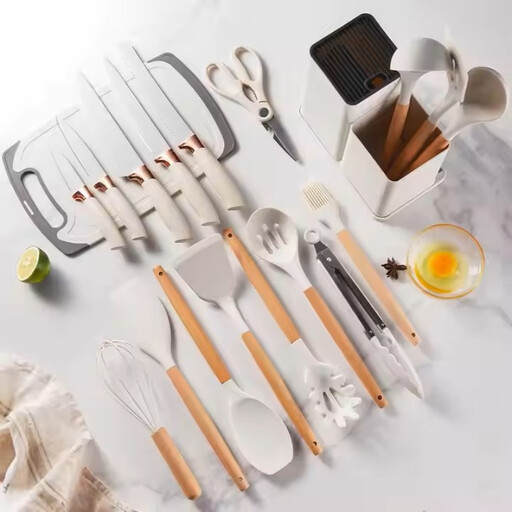
Why it suits this profile: This set is aimed at households looking to buy several kitchen tools in one go. Just check beforehand which pieces you’ll use every day.
The contents are clearly presented as a set, so you can weigh up the number of pieces against what you actually need in your kitchen before buying.
19-piece set; combines kitchen knives with silicone kitchen utensils.
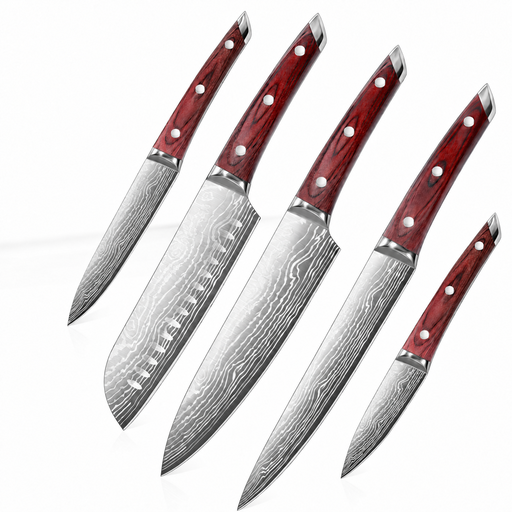
Why it suits this profile: The set includes a chef’s knife, Santoku knife, carving knife, utility knife and paring knife. It’s a good fit for home cooks who prepare a range of dishes.
The five knife types are clearly listed, so you can decide whether the set suits your cooking routine rather than relying on the word “professional”.
According to the product information: high-carbon German stainless steel, full-tang construction and a stated sharpening angle of 15 degrees.
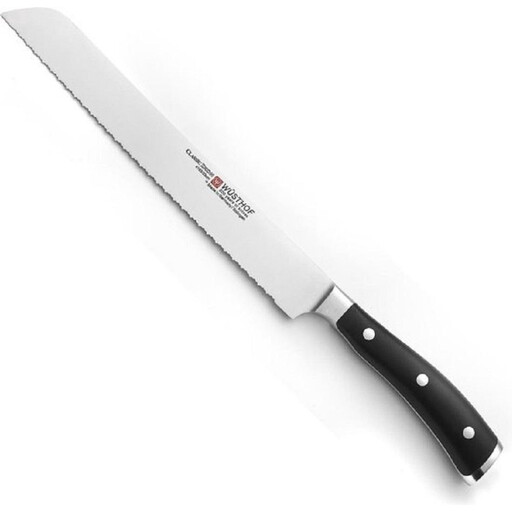
Why it suits this profile: Bakers and households that often slice loaves, cakes or foods with soft or hard crusts will get more use from a dedicated bread knife than an extra all-purpose knife.
The 23 cm double-serrated edge is designed specifically for even slicing. The product information recommends handwashing and suitable storage.
X50CrMoV15 steel according to the product description; half bolster for control and a handle designed for left- and right-handed use.
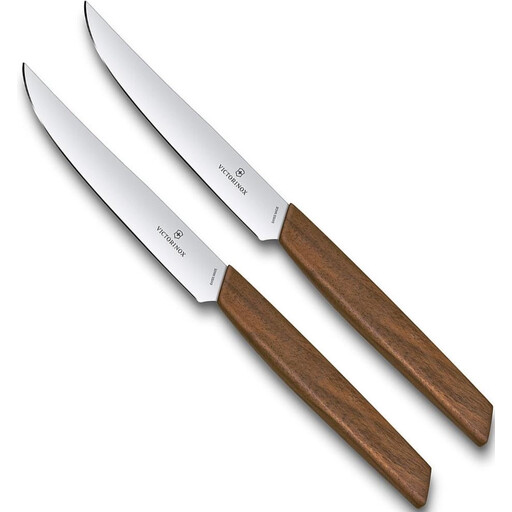
Why it suits this profile: A household looking for a couple of knives to use at dinner can make a more focused purchase with two steak knives than with a complete kitchen knife set.
The pack contains two clearly described steak knives, so you’re not paying for knives you’d only use for food preparation.
Two knives; walnut wood handles according to the product information; blade material: stainless steel.
We’ve put together a complete, up-to-date list of products that meet these strict selection criteria and the applicable European safety regulations.
For everyday cooking, a chef’s knife, a small vegetable or paring knife and a bread knife are usually enough. Add a Santoku knife if you often finely slice vegetables. Steak knives are mainly useful when you serve meat, pizza or other dishes with a firm outer layer at the table.
Use a suitable knife sharpener or whetstone, following the instructions. Cut on wood or plastic, avoid glass and metal, and dry the knife straight after washing. A serrated bread knife is generally sharpened differently from a smooth-edged chef’s knife.
It depends on the product. Some knives are described as dishwasher-safe in the product information, while other manufacturers recommend handwashing. Washing by hand with mild washing-up liquid and drying straight away limits exposure to heat, moisture and contact with other cutlery. Always check the care instructions for the specific knife before putting it in the dishwasher.
