
Vandaag of morgen in huis

Kwaliteit gegarandeerd

Welkomstaanbiedingen ontgrendelen: GRATIS bezorging | Tot 80% korting | Gratis 30 dagen JoyPlus-proefperiode
Download de app
A good kitchen knife does not necessarily have to be a large knife set. Many households buy a block containing lots of knives, even though they mainly use a chef’s knife, bread knife and small vegetable knife. Conversely, one standalone knife may not be enough if you often cook for several people.
When choosing kitchen knives and knife sets, there are three main pitfalls to look out for:
Many stainless steel kitchen knives are resistant to moisture and staining, but stainless steel does not mean that every knife has the same properties. Check whether the product information specifies the type of steel. For example, the Wüsthof Classic Ikon Santoku is described as being made from X50CrMoV15 high-carbon stainless steel. Other models simply state “stainless steel”.
According to the product specifications, high-carbon steel may be designed to offer hardness and edge retention, but it still requires correct use. Do not use knives on glass, stone or ceramic surfaces, and do not cut frozen food with a standard kitchen knife.
The right shape depends on your cooking routine:
Do not look only at the overall length. A 32 cm santoku knife, for example, may have a blade length of 18 cm. Weight and balance also affect ease of use.
A sturdy handle with a secure grip helps you cut with control. Consider the material, shape and the way the blade and handle are joined. A forged knife made from a single piece may have a different balance from a simply assembled model, but the product description does not always tell you how comfortable it will feel in your hand.
A knife set with a block keeps knives neatly together and prevents loose blades from being left in a kitchen drawer. However, check that the block has enough space for all the included knives. With a set featuring a wooden block, hand washing is often preferable to using the dishwasher.
A kitchen knife set makes sense if you want to cover several functions in one purchase. Pay attention to the balance between the number of knives and the accessories. A 15-piece set may consist of 13 knives, a block and a pair of scissors, as with the Alpina set. That is different from 15 knives.
Individual knives are more practical if you already have a good basic selection. A quality santoku knife or bread knife can then complement your existing collection without making you pay for duplicate knives. For a household that mainly prepares simple meals, a chef’s knife, bread knife and small knife are often a practical starting point.
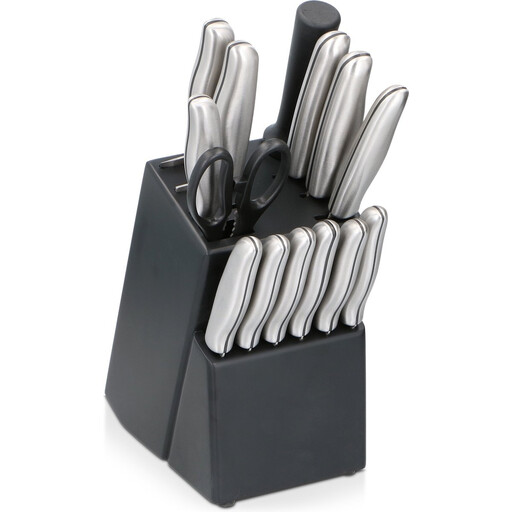
Why it suits this profile: This set provides a comprehensive starting selection for households looking for several knives and a dedicated storage solution. The packaging contains 13 knives, a knife block and a pair of scissors.
The contents are clearly listed. This means you can see that the total of 15 pieces does not consist solely of knives.
Includes a chef’s knife, bread knife, santoku knife, steak knives and knife block; the handles are described as ergonomic in the product description.

Why it suits this profile: This individual professional kitchen knife is ideal for cooks specifically looking for a santoku knife with clearly stated material and dimensions.
The specifications state X50CrMoV15 steel, a 17 cm blade and hand washing as the recommended care method. You therefore know exactly what the knife requires.
Santoku shape for vegetables, herbs, fish and meat; according to Wüsthof’s own product information, the knife has a double-sided cutting angle of 14°.
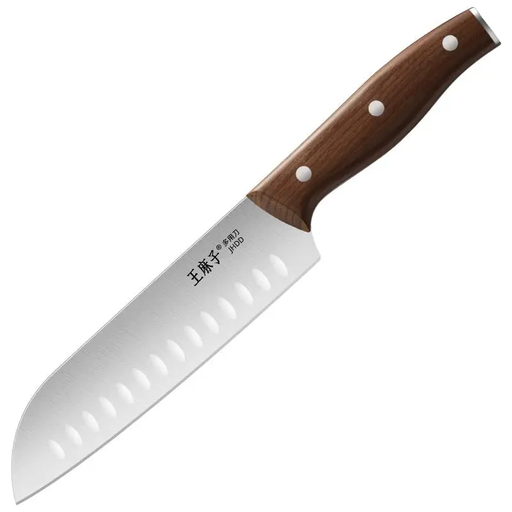
Why it suits this profile: This type of kitchen knife is designed for users looking for a wider blade for slicing, chopping and certain food preparation tasks.
The product name and usage description make it clear that this is not an all-purpose bread or peeling knife. Choose it only if the wide shape suits the way you cook.
175 mm version; described as suitable for slicing, shredding, chopping and preparing cooked ingredients.
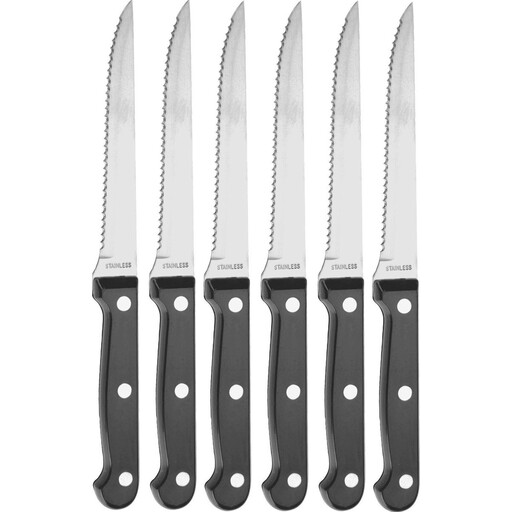
Why it suits this profile: A household that regularly dines with several people can benefit from six matching steak knives for use at the table.
The set contains only six steak knives. You are not paying for kitchen knives you already own, but these knives are not a replacement for a chef’s knife.
Six knives; stainless steel blades, plastic handles and a stated blade length of 11 cm.
We have put together a complete, up-to-date list of products that fully meet these strict selection criteria and the applicable European safety regulations.
A knife does not automatically become more durable just because it costs more. The combination of type of steel, cutting angle, handle, maintenance and use determines how much value you get from your purchase.
Dishwasher-safe knives are convenient when quick cleaning is important. However, hand washing will generally be gentler on the cutting edge and handle. Always check the specific instructions: the 5five Santoku and bread knife are described as dishwasher-safe, while hand washing is recommended for the Wüsthof Classic Ikon.
For most kitchens, a chef’s knife, a bread knife and a small vegetable or paring knife are sufficient. If you often prepare Asian dishes, you may want to add a santoku knife. Steak knives are particularly useful when you use them at the table with several people.
This depends on how you use them, the chopping board and the steel. Do not sharpen according to a fixed schedule; do so when the knife no longer glides smoothly through food. A honing steel can help maintain the cutting edge, while genuinely blunt knives require a suitable sharpening solution. First check whether the manufacturer specifies a recommended method.
