
Vandaag of morgen in huis

Kwaliteit gegarandeerd

Welkomstaanbiedingen ontgrendelen: GRATIS bezorging | Tot 80% korting | Gratis 30 dagen JoyPlus-proefperiode
Download de app
A sharp kitchen knife makes chopping vegetables, portioning meat and finely chopping herbs more manageable. However, it is unwise to rely solely on terms such as “extra sharp”, “Damascus” or “professional”. The right choice depends mainly on the type of knife, the material, the dimensions and the maintenance you are prepared to carry out.
For home chefs and cooking enthusiasts, there are three common purchasing pitfalls:
A small, carefully selected knife set is often more practical than a large collection of knives that are rarely used.
A chef’s knife measuring around 18 to 20 cm is suitable for slicing, chopping and dicing. The longer blade provides room for large vegetables and pieces of meat. Pay attention to the balance between the blade and handle, especially if you cook for long periods at a time.
A santoku knife usually has a shorter, wider blade. It works well for herbs, vegetables, fruit, fish and smaller pieces of meat. A Japanese kitchen knife such as a santoku is often chosen for its manoeuvrability. Do check that the length suits your chopping board and hand size.
A bread knife has a serrated edge that cuts through crusts and soft bread without completely flattening it. A blade measuring 32 to 34 cm provides sufficient reach for large loaves. This knife is also useful for cake and some soft fruit, but not for fine chopping.
Steak knives are designed for use at the table and are usually sold in sets. Check the number of pieces and the blade length. A cleaver has a heavier and often wider blade. Use this type only for the tasks it was designed for and always check the care instructions.
An electric knife may be worth considering for large quantities of bread, roast meat or lightly defrosted frozen food. However, it requires extra attention when it comes to storage, cleaning and safe use.
A stainless steel kitchen knife is easy to maintain, but not all stainless steels have the same properties. For example, the Wüsthof Classic Ikon Santoku Knife is listed as being made from X50CrMoV15 high-carbon stainless steel. This is verifiable product information; it does not automatically mean that the knife is suitable for every user.
Wüsthof’s product description also states a 14° double edge and, according to its own product information, 20% greater sharpness than standard knives. Treat this as a brand claim rather than a universal measurement. More important when making your purchase are the stated edge angle, blade length and sharpening options.
A 17 cm blade is manoeuvrable for everyday use. A 20 cm chef’s knife offers greater reach, but may be less comfortable on a small kitchen worktop. Also consider the weight:
The Wüsthof Classic Ikon Santoku has a 17 cm blade and weighs approximately 170 grams according to the product details. The Wüsthof Gourmet Chef’s Knife has a 20 cm blade and weighs approximately 184 grams.
A plastic handle can be practical in a busy household or professional kitchen. Check that the handle is firmly attached to the blade and that you can hold it without straining. A full-tang construction, where the steel extends through the handle, can contribute to stability, but always refer to the complete product description.
Dishwasher suitability also deserves attention. According to the product information, the 5Five knives are described as dishwasher-safe. Hand washing is recommended for the Wüsthof Classic Ikon Santoku, and use of the dishwasher is discouraged. Hand washing and drying the knife immediately will generally help limit discolouration, water spots and unnecessary wear.
Also use a wooden, plastic or other suitable cutting surface. Glass and stone can damage the edge more quickly. Store kitchen knives in a knife block, protective sheath or safe drawer insert.
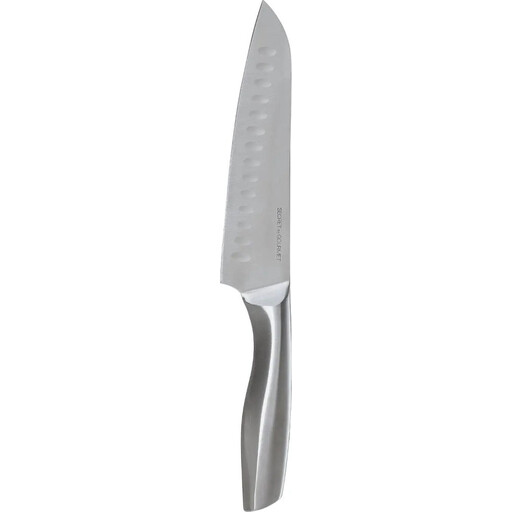
Why it suits this profile: The stainless steel construction and santoku shape offer a practical starting point for everyday slicing of vegetables, fruit and other ingredients.
The product information specifies the material, the 18 cm blade and a fully forged construction. This means you do not have to rely solely on general marketing terms.
Stainless steel, 18 cm blade, sturdy handle and, according to the product description, dishwasher-safe.

Why it suits this profile: This Japanese kitchen knife is ideal for users who value a specified steel type, a fixed edge angle and a well-balanced handle.
The product details specify X50CrMoV15 steel, a 17 cm blade, a weight of approximately 170 grams and hand washing as the recommended care method.
17 cm blade, high-carbon stainless steel, ergonomic plastic handle and a 14° double edge according to the product description.
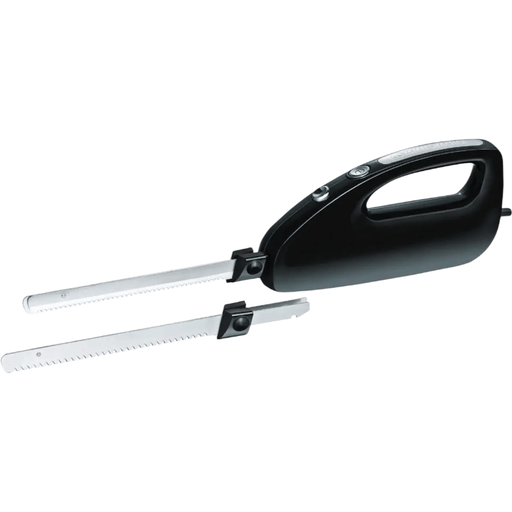
Why it suits this profile: An electric knife is suitable if you regularly slice bread, roast meat, poultry or lightly defrosted frozen food into portions.
The two detachable stainless steel blades are clearly specified. The product description also mentions finger protection and dishwasher-safe blades.
120 W power, two 15 cm blade sets, detachable blades and a 1.40 m cable.
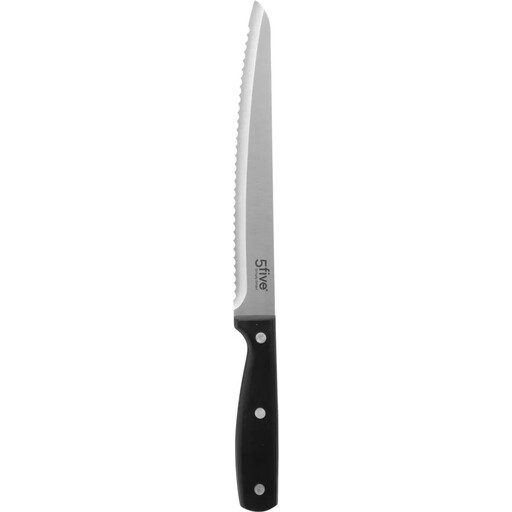
Why it suits this profile: This bread knife is designed for everyday use with bread, soft baked goods and larger slices where a long serrated blade is useful.
The product is clearly described as a bread knife and has a 33 cm blade. This means you do not use a smooth-edged kitchen knife for a task where serrations are more suitable.
33 cm blade, stainless steel, ABS handle and, according to the product information, dishwasher-safe.
We have put together a complete, up-to-date list of products that fully meet these strict selection criteria and the applicable European safety regulations.
That depends on how often it is used, the type of steel and the chopping board. A knife used every day may need sharpening after a while. A honing steel can realign the edge temporarily, but it does not replace proper sharpening. Always use a sharpening method that is suitable for the knife and its edge angle.
Some models are described as dishwasher-safe according to the product description. Even so, hand washing with mild washing-up liquid and drying the knife immediately can put less strain on the handle and edge. For a specific knife, follow the manufacturer’s care instructions.
For many households, a chef’s knife or santoku knife is sufficient as a first purchase. Choose a blade length that suits your worktop, and consider the grip, weight and maintenance requirements. You can then add a bread knife or steak knives if you regularly carry out those tasks.
