
Vandaag of morgen in huis

Kwaliteit gegarandeerd

Welkomstaanbiedingen ontgrendelen: GRATIS bezorging | Tot 80% korting | Gratis 30 dagen JoyPlus-proefperiode
Download de app
A good kitchen knife makes cutting more predictable, but a high price or shiny appearance doesn’t automatically mean it’s practical. When buying kitchen knives, it’s better to focus on the material, dimensions and type of food preparation you do than on standalone marketing claims such as ‘ultra-sharp’ or ‘professional’.
For UK households, three pitfalls are particularly worth bearing in mind:
A chef’s knife is a versatile choice for vegetables, fruit, herbs and many types of meat. A santoku knife usually has a wider blade and is suited to chopping, slicing and finely portioning ingredients. For bread, a serrated bread knife is more practical, as its serrations can cut through a crust without squashing the loaf.
For heavier tasks, there are cleavers, meat knives and boning knives. Don’t use them interchangeably:
With a stainless steel kitchen knife, the type of steel matters, but so does how you care for it. Rust resistance doesn’t mean you can leave the knife wet indefinitely. Dry it after washing and don’t leave it to soak for long periods.
Some models are described as dishwasher-safe. For other knives, hand washing is recommended. A wooden block, such as the one included with some knife sets, also needs to be stored somewhere dry. Check whether a knife sharpener is included and whether it’s suitable for the blade in question.
Pay attention to the source of material claims. When a manufacturer refers to ‘high-quality steel’, ‘lasting sharpness’ or a particular sharpening technique, treat this as a claim in the brand’s product information, not a universal guarantee.
The length of the blade determines how much ground you can cover with each cut. A santoku knife measuring around 17 to 18 cm is manageable for many kitchen tasks. A 33 or 34 cm bread knife gives you more reach when cutting large loaves. Heavier cleavers need plenty of workspace and a sturdy chopping board.
A handle should feel secure in your hand and shouldn’t turn as you cut. Check the overall weight too. A light knife can be comfortable for everyday use, while a heavier cleaver may give you more control with firm ingredients. The right choice depends on your chopping board, hand size and cooking routine.
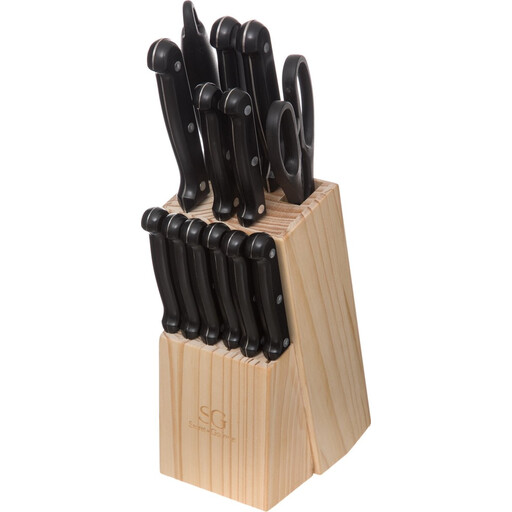
Why it suits this profile: This knife set offers a range of knives for households just starting to cook and looking to cover several tasks with one purchase.
The contents are specified: they include a chef’s knife, a bread knife, three other knives, six steak knives, a pair of scissors and a sharpener. Do check that you’ll use all the pieces.
13-piece set, stainless steel knives and a wooden block. According to the product information, the set isn’t dishwasher-safe.

Why it suits this profile: This santoku knife is designed for anyone looking for a single, high-quality knife for vegetables, herbs, fish and meat.
The specifications list X50CrMoV15 steel, a 17 cm blade and recommended hand washing. This makes the material and care requirements clearer than a general sharpness claim.
High-carbon stainless steel, made from a single piece according to the product information, and a double-sided 14° edge according to the brand description.
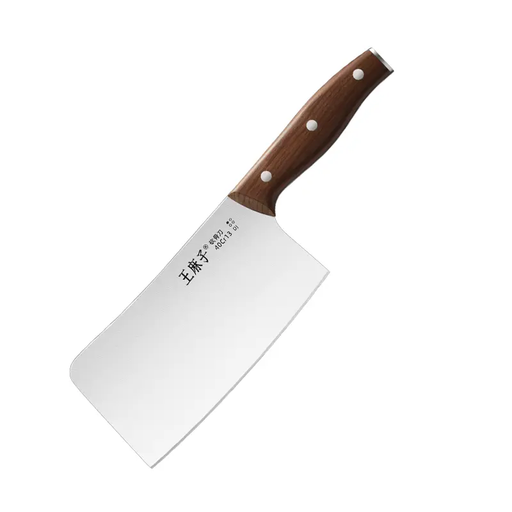
Why it suits this profile: This cleaver is designed for anyone who regularly prepares poultry, ribs or other tough cuts and needs a heavier tool for the job.
It’s clearly presented as a bone cleaver, rather than an all-purpose kitchen knife. Use it on a suitable chopping board, not for fine cutting tasks.
The product description lists forged carbon steel, a full-tang construction and a non-slip handle. The stated suitability for bones comes from the brand’s product information.
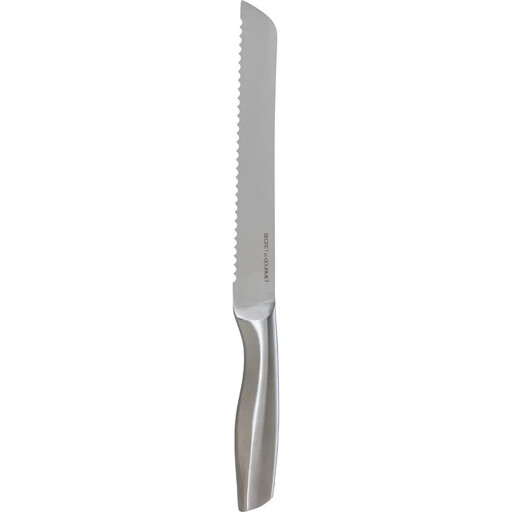
Why it suits this profile: The 34 cm length gives you room to slice large loaves, baguettes and cakes without having to repeatedly move a short blade through the food.
You’re choosing a bread knife for the job, rather than a chef’s knife that isn’t designed for cutting through crusts. The care information says it’s dishwasher-safe.
Stainless steel blade, 34 cm length and a product weight of 180 grams according to the listed specifications.
We’ve put together a complete, up-to-date list of products that meet these strict selection criteria and the applicable European safety regulations.
Even sharp kitchen knives will stay in good condition for longer if you care for them consistently:
A sharpener can help maintain the edge, but first check that it’s suitable for the knife’s cutting angle and sharpening method. When buying a kitchen knife, care information is almost as important as the material.
For most households, a chef’s knife or santoku knife is a good first choice. If you often prepare bread, a separate bread knife is useful. If you regularly prepare poultry or cuts containing bones, you could also consider a suitable cleaver.
It depends on the steel, how you use the knife, the chopping board and how you care for it. A knife used every day on a hard surface may become blunt more quickly. Wash it according to the instructions, dry it straight away and use a suitable sharpener when it no longer glides smoothly through ingredients.
Not always. A set can be practical if you need several knife shapes, a block and accessories. If you mainly need one chef’s knife or santoku knife, buying a single knife may be a more targeted choice. Compare the contents, materials, care instructions and warranty before you decide.
