
Vandaag of morgen in huis

Kwaliteit gegarandeerd

Welkomstaanbiedingen ontgrendelen: GRATIS bezorging | Tot 80% korting | Gratis 30 dagen JoyPlus-proefperiode
Download de app
A sharp kitchen knife makes everyday cooking more straightforward. Yet many people buy a knife based on terms such as “extra sharp”, “professional” or “Damascus”, without checking what lies behind them in practical terms. The result is a knife that quickly becomes blunt, is difficult to hold or does not suit the chopping board and cooking style.
This buying guide helps home chefs, keen cooks and professional chefs compare kitchen knives objectively. You’ll learn what to look for in a chef’s knife, santoku knife, bread knife, paring knife, steak knives and a complete knife set.
A brand may claim that a knife is sharper than a standard model. That is not a universal measure of quality. According to the product description of some Wüsthof models, for example, the edge is sharpened using laser guidance and brought to approximately 14 degrees per side. This is a verifiable product specification, but practical lifespan also depends on use, care and the chopping board.
Therefore, look out for:
A stainless steel kitchen knife is more resistant to corrosion than untreated steel, but salt, acid and moisture residue can still cause staining. Prolonged soaking, storing the knife while wet and using an aggressive dishwasher programme can also shorten the lifespan of the handle and edge.
Always check whether the knife:
A knife set with thirteen pieces may look appealing, but can sometimes contain several knives with almost the same function. For many households, a chef’s knife, bread knife and paring knife are enough as a starting point. Steak knives are an addition for the table, not a replacement for a good knife for preparing ingredients.
Therefore, compare the contents of the set, the dimensions of the knives and the storage space available before focusing on the number of pieces.
A chef’s knife measuring 16 to 20 cm is suitable for vegetables, herbs, meat and fish. A 16 cm blade often feels more manoeuvrable in a smaller kitchen. A 20 cm chef’s knife offers more cutting surface when preparing large vegetables or bigger pieces of meat, but also requires more space and control.
A santoku knife generally has a wider, relatively straight edge. It is suitable for:
A paring knife or tourné knife with a short, curved blade is intended for small, precise tasks. A bread knife has a serrated edge, allowing you to cut through crusts without flattening the bread.
X50CrMoV15 is a commonly used type of stainless steel in German kitchen knives. Wüsthof model product information mentions this steel type in combination with a hardness of approximately 58 HRC. This indicates the balance between sharpness, toughness and maintenance, but on its own it does not say which knife is suitable for every user.
With forged kitchen knives, the steel is formed from a single piece according to the product information. A full-tang construction extends into the handle and can contribute to balance and strength. A stamped knife may be lighter and often more affordable. The construction should therefore be weighed against the desired weight, price and the way you cook.
A good handle should feel sturdy without being too slippery. Pay attention to its length, shape and material. Plastic or POM is practical to clean; wood generally requires more care and should not be left wet for long periods.
Use kitchen knives on a wooden or plastic chopping board. Glass, stone and metal can damage the edge more quickly. Store knives in a block, knife sheath or drawer insert, and do not leave them loose in a kitchen drawer.
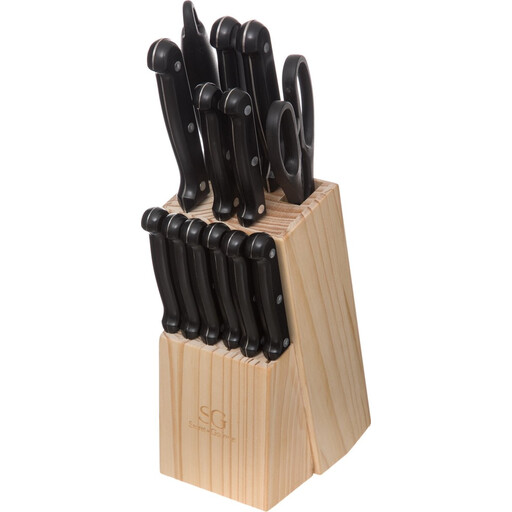
Why it suits this profile: The set includes a chef’s knife, bread knife, six steak knives, kitchen scissors and a knife sharpener, among other items. It is practical if you want to cover several essential functions in one purchase.
The contents are clearly described, so you can assess the number and type of pieces rather than focusing only on a general knife set claim. According to the product information, the set is not dishwasher-safe.
13-piece composition, wooden block and included sharpener; a suitable starting point for a kitchen with a range of cutting tasks.

Why it suits this profile: This 17 cm santoku knife is designed for finely chopping vegetables and herbs, as well as preparing fish and meat. The handle is made from POM and the blade is made from X50CrMoV15 high-carbon stainless steel.
The product specifications state the steel type, blade length and sharpening angle. According to Wüsthof’s own information, the knife is laser-sharpened; this remains a brand claim and is not a general guarantee of lifelong sharpness.
17 cm blade, double-sided edge of approximately 14 degrees and a handle that allows sharpening along the full blade length.
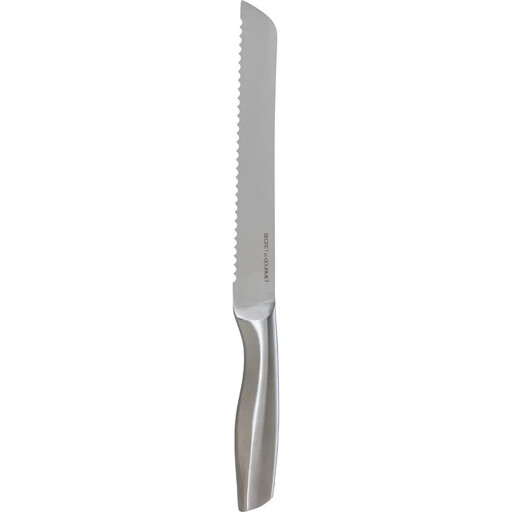
Why it suits this profile: If you regularly cut sourdough, baguettes or bread with a hard crust, a long bread knife is more useful than an extra chef’s knife.
The 34 cm length is stated, allowing you to check in advance whether the knife suits your chopping board and storage space. The product information also mentions dishwasher use.
Stainless steel blade, total length of 34 cm and a sturdy handle according to the product description.
Use this quick checklist before ordering kitchen knives:
We’ve put together a complete, up-to-date list of products that fully meet these strict selection criteria and the applicable European safety regulations.
A chef’s knife measuring 16 to 20 cm, a bread knife and a paring knife usually provide a useful foundation. Add steak knives if you regularly serve meat at the table. A knife set is particularly worthwhile if you need several functions and a dedicated storage solution.
This depends on the steel, sharpening angle, use and care. Cutting on glass or stone and storing knives loose in a drawer can damage the edge more quickly. Use a wooden or plastic chopping board, wash the knife according to the instructions and sharpen it when it no longer glides smoothly through ingredients.
Some models are dishwasher-safe according to the product description, but hand-washing with mild washing-up liquid and drying immediately is generally the gentler care option. Always check the instructions for the specific chef’s knife, santoku knife or bread knife you are buying.
