
Vandaag of morgen in huis

Kwaliteit gegarandeerd

Welkomstaanbiedingen ontgrendelen: GRATIS bezorging | Tot 80% korting | Gratis 30 dagen JoyPlus-proefperiode
Download de app
A good kitchen knife can be the difference between a chore and a joy in the kitchen. But the search for the right kitchen knives is often unnecessarily complicated. Between promises of razor-sharp performance and complete sets at a bargain price, it's easy to make the wrong choice. As a Product Recommendation Officer at Joybuy, I'll help you see through the marketing hype and make a choice that suits your kitchen.
Before you invest, it's important to recognise a few common pitfalls:
To avoid making a bad purchase, it's better to focus on a few objective characteristics. These specifications determine how a knife performs and how long it lasts.
Most kitchen knives are made of stainless steel. This material is a good all-rounder: it's relatively easy to maintain, doesn't rust quickly, and is simple to sharpen. Brands like Wüsthof often use a specific alloy such as X50CrMoV15, a type of stainless steel known for a good balance between edge retention and durability. Other knives, often in the Asian style, use steel with a higher carbon content. This steel can be harder and stay sharp longer, but it is also often more brittle and susceptible to rust. For most home cooks, a quality stainless steel knife is the most practical choice.
The "tang" is the part of the steel that extends into the handle.
For a chef's knife or another knife that you use intensively, a full tang construction is a clear advantage.
Instead of buying a large, generic set, it's often smarter to invest in a few specific knives that you'll actually need.
A good cutting board made of wood or plastic is also essential. It not only protects your countertop but also keeps your knives sharp for longer. Avoid boards made of glass or stone.
Below are a few products that suit different user profiles, based on their specifications and functionality.
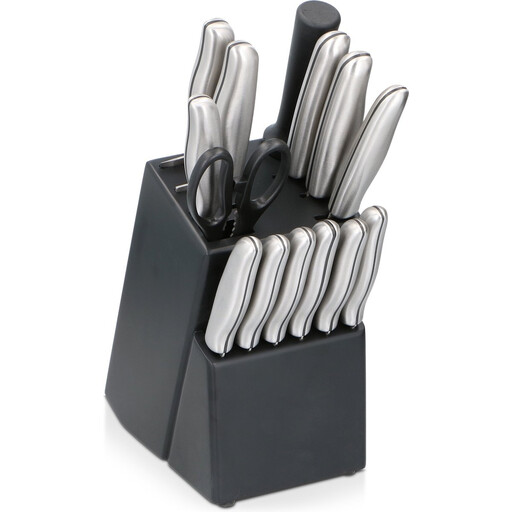
Why This Fits Their Persona: Ideal for those setting up their first kitchen or looking for a complete basic set on a limited budget. You immediately get all the common knives, a pair of shears, and a storage block.
While it is a large set, its value lies in the low entry price. It allows you to discover which knives you use most, without making a large initial investment in individual, expensive knives.
A complete 15-piece knife set including a knife block and kitchen shears. The knives are made of stainless steel, which makes them low-maintenance.
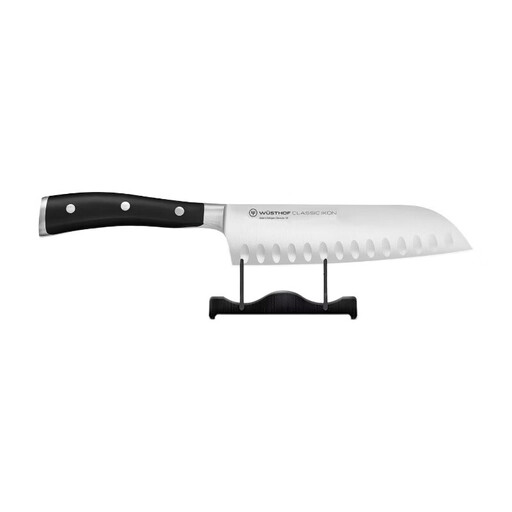
Why This Fits Their Persona: For the home cook who is ready for a serious upgrade. This user prefers to invest in one excellent, versatile knife rather than a mediocre set. Performance and durability are paramount.
This knife bypasses the "useless set" and vague marketing traps. Wüsthof knives are known for their transparent specifications (X50CrMoV15 steel) and production in Solingen, Germany.
Forged from a single piece of stainless steel for perfect balance (full tang). The ergonomic handle provides comfort and control, even during prolonged use.
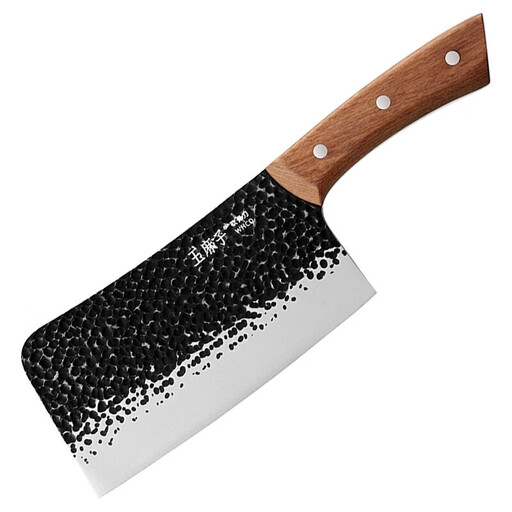
Why This Fits Their Persona: For the cook who regularly processes large cuts of bone-in meat, like spare ribs or a whole chicken. A standard chef's knife isn't made for this; this specialised cleaver is.
This is the opposite of a generic knife. It is a specific tool, designed for power and impact. The balance and weight are tailored for heavy-duty tasks, thus avoiding the pitfall of poor ergonomics.
The robust and heavy blade is designed to cut through bone and cartilage with force without chipping. It provides control for the tougher jobs in the kitchen.
A good knife block is the ideal way to store your knives safely and organised. It protects the cutting edge and ensures you always have the right knife at hand.
This depends on how often you use them and for what. A general rule is to have your knives professionally sharpened a few times a year or to sharpen them yourself with a whetstone. In between, you can maintain the edge with a honing steel. A dull knife is more dangerous than a sharp one because you have to apply more force.
A European chef's knife has a more curved blade, which makes it ideal for a "rocking" cutting motion. A Japanese santoku knife has a straighter blade and is often lighter. It is designed for a more up-and-down chopping motion and is excellent for slicing vegetables paper-thin.
It is strongly discouraged. The aggressive chemicals in dishwasher tablets, the high temperatures, and contact with other cutlery can damage the blade and the handle. Even if the manufacturer states that it's dishwasher-safe, you will significantly extend the life of your knives by washing them by hand with a mild soap and drying them immediately.
