
Vandaag of morgen in huis

Kwaliteit gegarandeerd

Welkomstaanbiedingen ontgrendelen: GRATIS bezorging | Tot 80% korting | Gratis 30 dagen JoyPlus-proefperiode
Download de app
A good kitchen knife doesn't have to be the most expensive model. What matters most is that it suits what you cut every day, feels comfortable in your hand, and is easy to maintain. If you only go by terms like "extra sharp" or "professional", you could quickly end up buying a knife that doesn't match your cooking style.
In this buying guide, I, as a Joybuy Product Recommendation Officer, explain what you can reliably look out for. This way, you can compare kitchen knives on material, size, use and storage, without being swayed by vague marketing claims.
A kitchen knife set with thirteen pieces may look appealing, but some knives will end up unused in the drawer. So first, think about which tasks you actually perform. For many households, a chef's knife, a paring knife and a bread knife are sufficient. A santoku knife is worth considering if you often chop vegetables, herbs, fish or meat.
A manufacturer can call a knife sharp, but without information about the steel, the grind angle or the type of edge, it's hard to compare. According to Wüsthof's product information, some models are ground at 14 degrees per side. That's a concrete specification. With other knives, only "extra sharp" is mentioned. In that case, check the material, the finish and the care instructions.
Stainless steel knives are not automatically resistant to every treatment. Many models keep their edge better when you wash them by hand and dry them immediately. Hard chopping boards made of glass, stone or metal can damage the edge more quickly. Storing them loose in a cutlery drawer is also impractical and can dull the blade.
A chef's knife of 16 cm is often easy to handle for beginners, students and those with smaller hands. A blade of 20 cm offers more cutting surface and is handy for large vegetables, meat or multiple ingredients in a row. Don't automatically choose the longest knife: control and comfort are at least as important.
Check whether the blade is made of stainless steel or high-carbon stainless steel. The Wüsthof Classic Ikon Santoku, for example, lists X50CrMoV15. That gives you more information than just the description "German kitchen knife".
A full-tang construction means the steel runs all the way through the handle. This can contribute to balance and sturdiness, but it doesn't in itself say how comfortable a knife feels for you. A forged knife and a stamped knife can both be suitable; pay attention to the combination of weight, handle, balance and care.
A handle should feel stable without you having to grip it tightly. Check whether the shape is suitable for left- and right-handed use and whether the material is smooth or non-slip. A knife set with a knife block is practical on the worktop, while a roll bag is handy for students, cookery classes or storage in a small kitchen.
Also watch out for contradictory information. If it says a knife is dishwasher-safe, but hand washing is recommended, choose hand washing if you want to preserve the lifespan and edge.
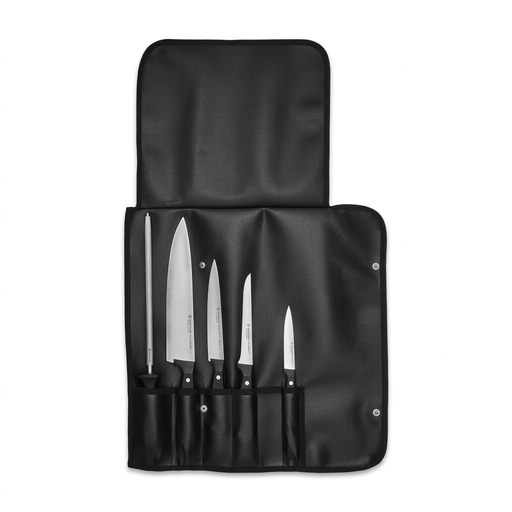
Why this fits the profile: The set contains five knives and a sharpening steel in a washable roll bag. That's practical for beginners, students and small kitchens.
The contents are specified: including a 23 cm chef's knife, a paring knife, a fish knife, a meat knife and a sharpening steel. So you're not buying a set with only tableware.
Stainless steel, washable roll bag and an included sharpening steel. Hand washing and immediate drying are recommended.
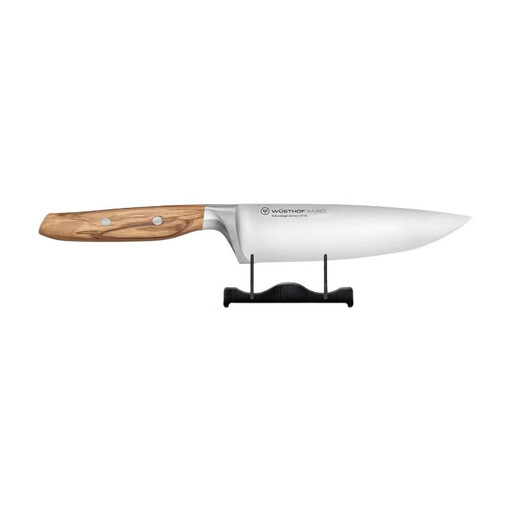
Why this fits the profile: This German chef's knife has a 20 cm blade and is designed for versatile cutting in a busy household or professional kitchen.
The product information mentions X50CrMoV15 steel, a grind angle of 14 degrees and a hardness of 58 HRC. This allows you to assess the technical properties concretely.
Forged from a single piece of steel, wide blade and a 9.5 cm olive wood handle. According to Wüsthof, the knife is laser-guided ground.

Why this fits the profile: The santoku shape is suitable for finely chopping vegetables, herbs, fish and meat. The 17 cm size offers a middle ground between manoeuvrability and cutting surface.
The product description mentions X50CrMoV15 steel, a double edge and manual finishing. The claims about sharpness come from Wüsthof themselves and are not presented here as an independent measurement.
17 cm blade, synthetic handle and a weight of approximately 170 grams. Hand washing is recommended.
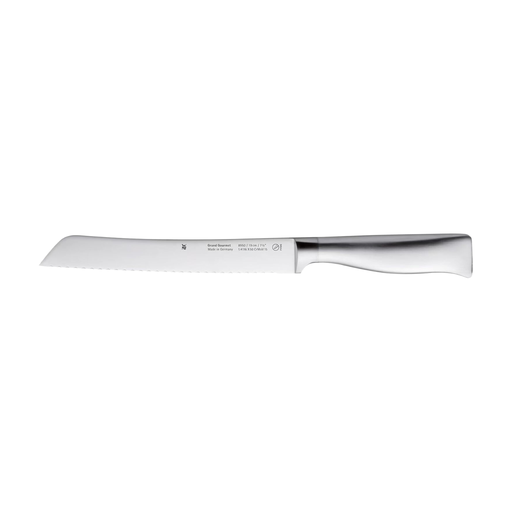
Why this fits the profile: The long, serrated blade is designed for bread, soft rolls and fruit. This makes it an addition to a chef's knife, not a replacement for one.
The function is clearly defined: a serrated bread knife of 32 cm. This means you don't have to use a universal knife for hard crusts.
Stainless steel, double serration according to the product information and a Cromargan 18/10 handle. Hand washing is required.
We've put together a full, up-to-date list of products that fully meet these strict selection criteria and comply with current European safety regulations.
Start with a chef's knife of 16 to 20 cm, supplemented with a small paring knife. If you often cut bread, add a bread knife. A complete kitchen knife set is mainly worthwhile when the components match your daily cooking tasks.
That depends on the steel, use, chopping board and care. A knife that is used on glass or stored loose in a drawer can become blunt more quickly. Regular honing and periodic professional or careful sharpening helps maintain the edge, but no knife stays permanently sharp without maintenance.
Some product information states that a knife is dishwasher-safe. However, hand washing is often recommended to keep the blade, handle and edge in good condition for longer. Always check the care instructions for the specific model.
