
Vandaag of morgen in huis

Kwaliteit gegarandeerd

Welkomstaanbiedingen ontgrendelen: GRATIS bezorging | Tot 80% korting | Gratis 30 dagen JoyPlus-proefperiode
Download de app
A kitchen knife might look impressive in photos, but that doesn't tell you much about how it handles. A handle that's too slippery, the wrong blade length, or a set full of knives you never use can quickly lead to a bad purchase. This buying guide helps home cooks, students, hobby chefs and professional cooks compare kitchen knives based on verifiable features.
Words like "razor-sharp" or "professional" don't always describe how long a knife stays sharp. The real experience depends on factors such as the steel type, grind angle, maintenance and chopping board. So check whether the product description gives concrete information about the blade material, length and recommended cleaning.
A kitchen knife set with lots of pieces might seem like good value, but it sometimes contains several knives for virtually the same task. For everyday cooking, a chef's knife, a small vegetable knife and possibly a bread or steak knife are often enough. A larger set only makes sense if you perform different cutting tasks or if several people in your household cook regularly.
Stainless steel is practical, but the name alone doesn't tell you how the knife feels in your hand. Also pay attention to the balance, handle, blade thickness and tang construction. A full tang can offer extra stability. However, that doesn't automatically mean every knife is comfortable for every user.
A chef's knife of 16 to 20 cm is suitable for most daily tasks, such as chopping herbs, cutting vegetables and preparing meat. A 16 cm blade often feels nimble and works well with smaller chopping boards. A 20 cm knife offers more cutting surface, but also requires enough workspace and a bit of getting used to.
A santoku knife typically has a wider, relatively straight cutting edge. This makes it suitable for vegetables, herbs, fish and meat. A carving knife is longer and narrower, while a vegetable knife is compact enough for small ingredients. A steak knife with a serrated edge can be handy for meat and tomatoes.
Check whether the knife is made of stainless steel and whether the exact steel type is stated. In the product information for various Wüsthof models, for example, X50CrMoV15 is mentioned. According to the product description, the Wüsthof Classic Chef's Knife has a grind angle of 14 degrees per side. Such details give you more to go on than a general claim about sharpness.
According to Wüsthof's own information, laser-controlled grinding contributes to a sharp edge. This is a brand claim and should therefore not be taken as a universal measurement for every user. In practice, hand washing, thorough drying and regular honing or sharpening remain important.
An ergonomic handle should sit securely in your hand without pressure points. Check whether the knife is suitable for left- and right-handed use when that matters. A plastic handle is generally easy to clean; wood or composite may require more care.
Also pay attention to the care instructions. Some kitchen knives are described as dishwasher-safe, but hand washing can help extend the life of the edge and handle. Use a wooden or plastic chopping board and avoid glass, stone and metal. Store knives in a block, protective sheath or drawer insert so the edge doesn't knock against other cutlery.
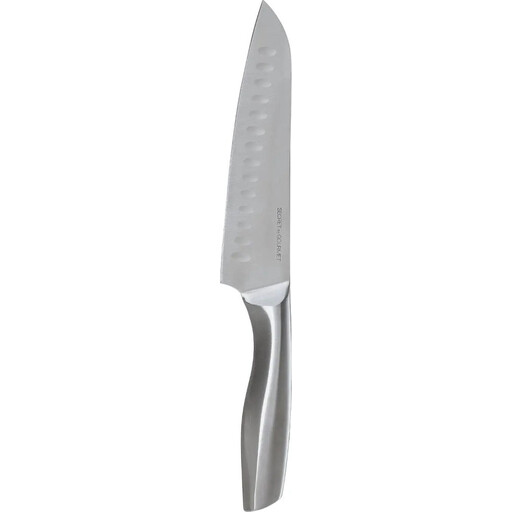
Why this fits the profile: A single santoku knife can be an affordable starting point for students and home cooks who mainly prepare vegetables, herbs and meat.
You buy one multi-purpose knife instead of a large set with unused items. The product information states stainless steel and a one-piece forged construction.
Santoku shape, stainless steel, blade length of 18 cm and a stated weight of 180 grams.
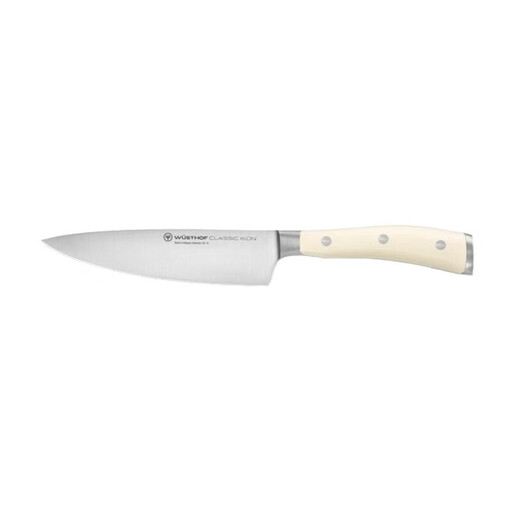
Why this fits the profile: This 16 cm chef's knife is aimed at users who value balance, an ergonomic handle and a compact all-rounder.
The product description mentions a full-tang construction, three rivets and a finger guard. This means the key construction details are visible rather than just general marketing language.
Stainless steel blade, 16 cm length, full tang and a synthetic cream-coloured handle.
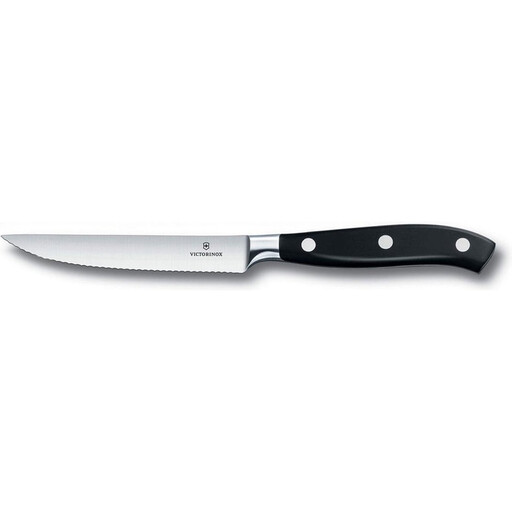
Why this fits the profile: Suitable as an addition for households that often serve steak, tomatoes or other items with a firm outer skin.
It is a specific steak and tomato knife, so you buy it for a clear purpose rather than as a general chef's knife.
Serrated stainless steel blade of 12 cm and a one-piece forged construction according to the product information.
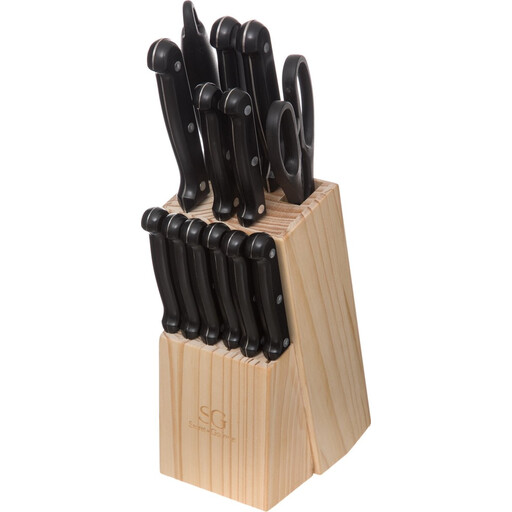
Why this fits the profile: This knife set suits families or cooking enthusiasts who want to store different knives, a block, scissors and a sharpener all in one place.
The contents are specified in advance: including a bread knife, chef's knife, six steak knives, kitchen scissors and a sharpener. This way you can judge whether the items fit your cooking routine.
13-piece composition, wooden block, stainless steel knives and an included sharpener; not dishwasher-safe.
We've put together a full, up-to-date list of products that fully meet these strict selection criteria and comply with current European safety regulations.
Wash a knife by hand if possible, dry it immediately and don't leave it soaking in water. Don't use a glass board as a cutting surface. A honing steel can touch up the edge between uses, while a whetstone or professional sharpening service may be needed when the edge becomes truly blunt.
The lifespan varies depending on the steel type, frequency of use and maintenance. A more expensive knife won't automatically last longer if it's cleaned in the dishwasher or left loose in a cutlery drawer. Also check the statutory guarantee of at least two years stated in the product information for the items mentioned. This is separate from normal wear and tear through use.
Start with a chef's knife of 16 to 20 cm. Add a small vegetable knife for precision work and only choose additional knives, such as a carving knife or steak knife, if you use them regularly.
That depends on the contents. A set can be practical if you need several knife shapes, a storage block and a sharpener. Always compare the individual features and check whether the set contains any unused items.
Use a suitable wooden or plastic chopping board, wash the knife by hand and dry it straight away. Store it protected and maintain the edge according to the manufacturer's instructions.
