
Vandaag of morgen in huis

Kwaliteit gegarandeerd

Welkomstaanbiedingen ontgrendelen: GRATIS bezorging | Tot 80% korting | Gratis 30 dagen JoyPlus-proefperiode
Download de app
A good kitchen knife should suit the way you cut, your hand and your care routine. Yet many people buy based on claims such as “razor-sharp”, “professional” or “fully dishwasher-safe”, without checking the specifications behind them. The result can be a knife that quickly goes blunt, feels uncomfortable or isn’t suited to the ingredients you use every day.
This buying guide helps you compare kitchen knives using verifiable features. Find out which knife is right for vegetables, meat, bread, fish or everyday use, and which features you shouldn’t overvalue.
A sharp edge is useful, but it isn’t the only factor. The hardness of the steel, the sharpening angle and the way you care for the knife all affect how long it cuts well. A narrow edge can make precise cuts, but it often calls for a suitable chopping board and careful maintenance.
So don’t just look for a claim such as “razor-sharp kitchen knives”. Check the type of steel, the sharpening angle and whether hand washing is recommended.
A kitchen knife set may seem appealing because you get several knives at once. However, a set sometimes includes models you’ll rarely use. For many households, a chef’s knife, a paring knife and a bread knife are enough. A santoku knife can be an alternative to a chef’s knife, especially if you often cut vegetables, herbs, fish or meat.
A set is most practical when the knives included suit your cooking routine and you need a safe way to store them.
Some stainless steel kitchen knives are described as dishwasher-safe. That doesn’t automatically mean this is the best way to protect the edge and handle over time. High temperatures, detergent and contact with other items can put stress on the edge.
Hand washing with warm water and mild washing-up liquid is recommended for many high-quality knives. Dry the knife straight away and store it in a knife block, protective sheath or drawer insert.
Stainless steel is popular because it resists rust and is relatively easy to care for. However, check exactly which type of steel is listed. The difference between a general description such as “stainless steel” and a specific grade, such as X50CrMoV15, gives you more information about the material.
Several Wüsthof models are described as using X50CrMoV15 steel. The manufacturer also mentions features such as a forged construction and a controlled sharpening process. Treat this as information from the brand’s product description, not as a universal guarantee of how long the knife will last.
The right length depends on your chopping board, hand size and ingredients:
A chef’s knife usually has a wide, slightly curved edge for chopping and rocking. A santoku knife generally has a straighter edge and a compact profile. A bread knife has a serrated edge, while a paring knife offers greater control for small, precise tasks.
A handle should feel secure without creating pressure points. Check the material, the join between the blade and handle, and the grip when your hands are wet. A blade that runs all the way through the handle, also known as a full tang, is often listed as a construction feature. Also check whether the knife is suitable for both left- and right-handed use.
Always use a soft wooden or plastic chopping board. Glass, stone and metal can damage the edge more quickly. Don’t automatically use any sharpening steel you have to hand: first check the recommended sharpening angle for the knife.
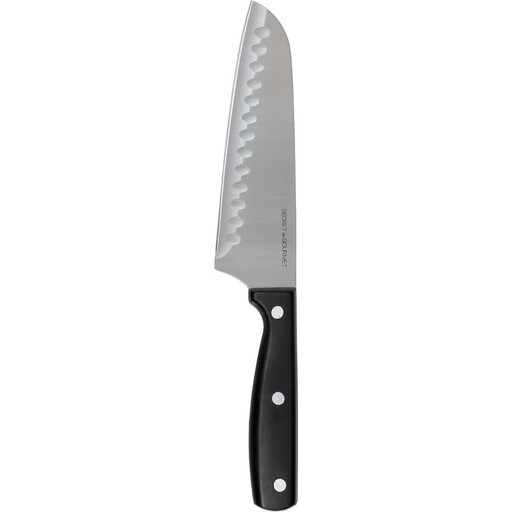
Why it suits this profile: This santoku knife has a 17 cm blade, weighs 140 grams according to the product information and is designed for everyday chopping of vegetables, fruit and other ingredients.
The specifications list the material, dimensions and care instructions instead of relying only on a general sharpness claim. The product description says that the knife is dishwasher-safe.
Stainless steel blade, ABS handle, 17 cm blade length and a compact size for everyday use.
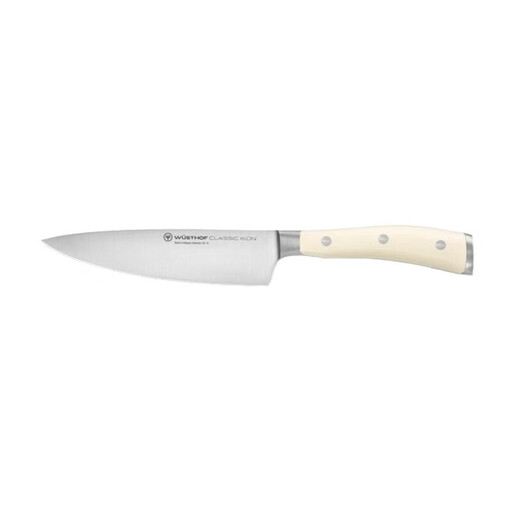
Why it suits this profile: A compact chef’s knife for home cooks who value a specific type of steel, an ergonomic handle and full-tang construction.
The product description specifies the blade material, construction and 16 cm length. According to Wüsthof’s own information, the knife is made from a single piece of steel.
X50CrMoV15 stainless steel, full tang, ergonomic synthetic handle and a size suited to vegetables, herbs, meat and poultry.
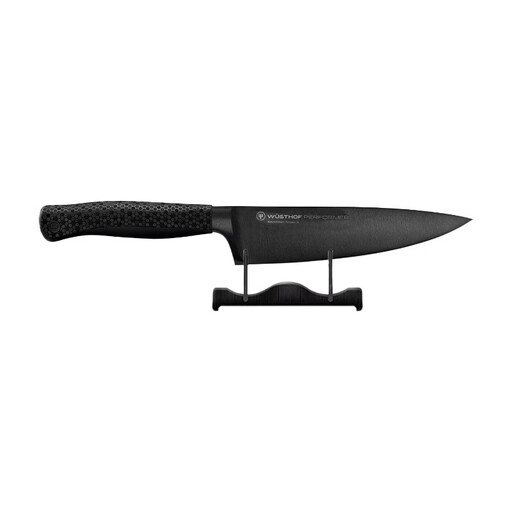
Why it suits this profile: The 20 cm length is designed for longer cutting movements and frequent everyday use in a spacious kitchen.
The product information lists the type of steel, blade length and handle. According to Wüsthof’s own information, the model has a DLC coating and a hexagonal grip profile.
20 cm blade, X50CrMoV15 steel, DLC coating and a non-slip handle according to the product description.
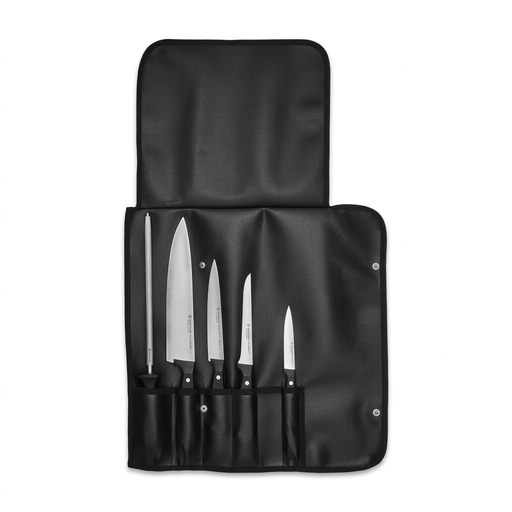
Why it suits this profile: This set includes five knives and a sharpening steel in a roll-up bag, making it useful for classes, small kitchens or cooking on the go.
The contents are clearly specified: chef’s knife, paring knife, filleting knife, carving knife, sharpening steel and bag. This lets you check in advance whether you’ll use every item.
Five stainless steel knives, a sharpening steel, a washable storage bag and a 23 cm chef’s knife according to the product details.
We’ve put together a complete, up-to-date list of products that meet these strict selection criteria and the applicable European safety regulations.
A 16 to 20 cm chef’s knife is enough for most everyday tasks. A santoku knife is a practical alternative if you mainly cut vegetables, herbs, fish and smaller cuts of meat. Add a paring knife for precise work and a bread knife if you regularly cut bread or cakes.
Wash the knife according to the product instructions, dry it straight away and use a wooden or plastic chopping board. Store it separately from other cutlery. A sharpening steel can help you maintain the edge, but check the recommended sharpening angle first. For damaged or very blunt knives, professional sharpening or a suitable whetstone is a better option.
It depends on what’s included. A set can be good value if you need several specific knives and somewhere to store them. If you mainly need one chef’s knife, individual knives may be a better fit for how you cook and your budget. Before deciding, always compare the number of items, blade lengths, care requirements and warranty.
