
Vandaag of morgen in huis

Kwaliteit gegarandeerd

Welkomstaanbiedingen ontgrendelen: GRATIS bezorging | Tot 80% korting | Gratis 30 dagen JoyPlus-proefperiode
Download de app
A good kitchen knife does not have to be expensive. It does, however, need to suit your cooking style, chopping board and maintenance routine. If you focus only on terms such as “extra sharp” or “professional”, you may end up buying a knife that proves awkward in practice. The right choice therefore starts with verifiable features: the knife type, blade length, material and how you intend to maintain it.
A knife may be sharp straight out of the packaging, but sharpness does not tell you everything about how long it will stay that way. The cutting angle, type of steel, hardness and maintenance all help determine how long the blade remains comfortable to use. According to Wüsthof’s own product information, some models are sharpened using laser guidance and honed to 14 degrees per side. That is a product specification, not a guarantee that the knife will stay sharp without maintenance.
A set with lots of items may seem appealing, but it sometimes contains several knives you rarely use. Check exactly what is included in the packaging. A compact set with a chef’s knife, bread knife, utility knife and honing steel may be more practical than a large block containing models that are seldom used.
Not all stainless steel kitchen knives are dishwasher-safe. Detergent, heat and contact with other cutlery can put strain on the cutting edge and handle. Hand washing is recommended for various Wüsthof models. Even for products labelled dishwasher-safe, hand washing can help keep the knife looking its best for longer.
For stainless steel kitchen knives, X50CrMoV15 is a common type of steel. The supplied product information states that this steel is used for several Wüsthof models. Stainless steel is relatively easy to maintain day to day, but “stainless” does not mean that prolonged exposure to moisture cannot cause problems. Dry the knife after washing it, before putting it away.
Forged knives are formed from a single piece of steel. Some Wüsthof Classic Ikon and Amici product descriptions mention this construction. A forged design can contribute to a strong transition between the blade and handle, but you should also consider the overall shape, weight and grip. A knife that is technically robust will not feel the same to everyone.
A 16 cm blade is nimble and suitable for smaller chopping boards. A 20 cm chef’s knife provides more cutting space, but also requires more room to work and greater control. Also look for:
Do not use glass, metal or stone surfaces. They can damage the cutting edge more quickly. A honing steel helps maintain the edge, while a sharpening stone removes material and is therefore needed less often.
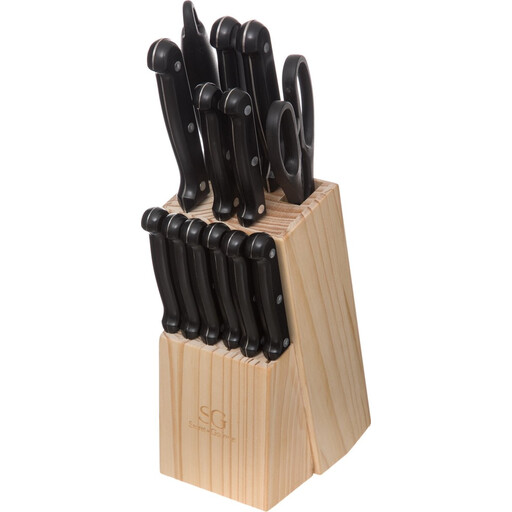
Why it suits this profile: The set includes a chef’s knife, bread knife, six steak knives, kitchen scissors, a knife sharpener and a wooden block. This gives beginners several options for everyday cooking straight away.
The contents are clearly specified, so you do not have to rely solely on the number of knives included. According to the product information, the set is not dishwasher-safe.
A selection of commonly used knife types, a storage block and a sharpener in one package; the material information lists stainless steel and polypropylene.
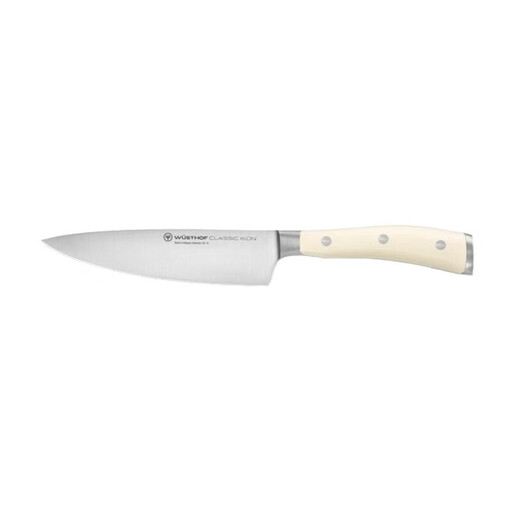
Why it suits this profile: This compact chef’s knife is designed for everyday precision when preparing vegetables, herbs, meat and poultry. Its synthetic handle and cream colour give the model a distinctive look.
The product description specifies a blade made from a single piece of steel, a full-tang construction and hand washing for maintenance. This makes the construction and care requirements clear.
16 cm blade; forged construction according to the product information; ergonomic synthetic handle and finger guard.
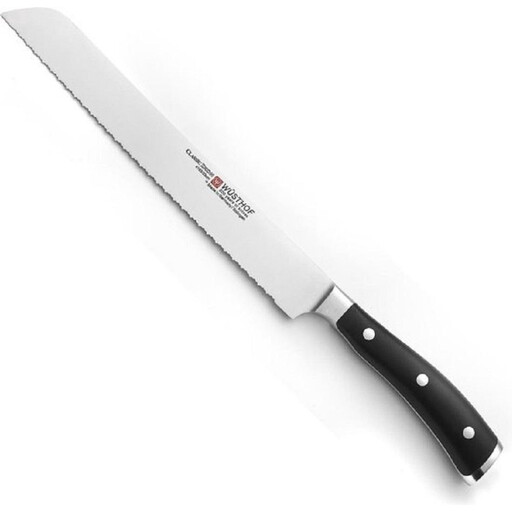
Why it suits this profile: If you cut bread, cake or soft foods every day, a suitable bread knife is more useful than another smooth-edged chef’s knife.
According to the product description, the double-serrated blade is specifically designed to make clean cuts through different types of bread. Hand washing and dry storage remain essential.
23 cm blade; double serration; made from X50CrMoV15 steel according to the product information; suitable for left- and right-handed use.
We have compiled a complete, up-to-date list of products that fully meet these strict selection criteria and the applicable European safety regulations.
A knife with a smooth blade can usually be sharpened again. This is more difficult with a bread knife or another serrated knife. That is a practical reason to consider not only price when buying, but also the type of use and the maintenance tools available to you.
For most households, a chef’s knife, a bread knife and a small utility knife are sufficient. Add a santoku knife if you often prepare vegetables, herbs and fish. A steak knife is mainly needed for serving food at the table.
This depends on how you use them, the steel, chopping board and technique. A honing steel can help maintain the edge between sharpenings. Sharpening is only necessary when the knife no longer moves smoothly through ingredients despite being used correctly. Avoid hard surfaces and the dishwasher if the manufacturer recommends hand washing.
Not always. A more expensive knife may offer better balance, finish or construction, but a cheaper model may be perfectly adequate for occasional use. Compare the blade length, type of steel, handle, maintenance instructions and set contents. That way, you pay for features that suit your kitchen.
