
Vandaag of morgen in huis

Kwaliteit gegarandeerd

Welkomstaanbiedingen ontgrendelen: GRATIS bezorging | Tot 80% korting | Gratis 30 dagen JoyPlus-proefperiode
Download de app
A good kitchen knife makes chopping and slicing easier, but you often do not notice a poor purchase until after a few weeks. The handle does not feel comfortable, the blade is too short for large ingredients or the knife quickly loses its sharpness. If you focus only on a low price, an eye-catching pattern or the phrase “extra sharp”, you risk spending money on a knife that does not suit the way you use it.
A chef’s knife or santoku knife can handle many everyday tasks, but it is not automatically suitable for bread, bones or peeling fruit. A smooth blade works differently from a serrated bread knife. Hard bones also require a cleaver with a strong, thick blade.
Stainless steel is practical because it is less prone to rust and easy to clean. However, material names alone do not tell you everything. Also check the blade length, the shape of the edge, the weight and the care instructions. For example, a high-carbon stainless steel kitchen knife can be sharpened to a fine edge, but hand washing may still be recommended.
Terms such as “razor-sharp” or “20% sharper” are not directly comparable between brands. According to Wüsthof’s product description, the Classic Ikon Santoku Knife is sharpened using laser-guided technology and has a 14-degree edge on each side. This is a verifiable product specification, but its practical service life also depends on the chopping board, usage and maintenance.
Choose your knife based on the ingredients you prepare most often:
A stainless steel kitchen knife is generally easy to clean and suitable for everyday use. High-carbon stainless steel, such as X50CrMoV15 in certain Wüsthof models, combines hardness with corrosion resistance according to the product specifications.
Also consider the construction. A knife made from a single piece of steel or featuring a full-tang construction can provide a strong connection between the blade and handle. However, this is not the only factor affecting comfort: the shape of the handle, the balance and the overall weight determine how comfortable the knife really is to use.
Dishwasher suitability varies from model to model. The Wüsthof Classic Ikon Santoku and Wüsthof Classic Chef’s Knife are preferably hand-washed according to the product information. The Wüsthof Gourmet Chef’s Knife and various 5five models are described as dishwasher-safe, although hand washing can help extend their service life.
For every kitchen knife, use:
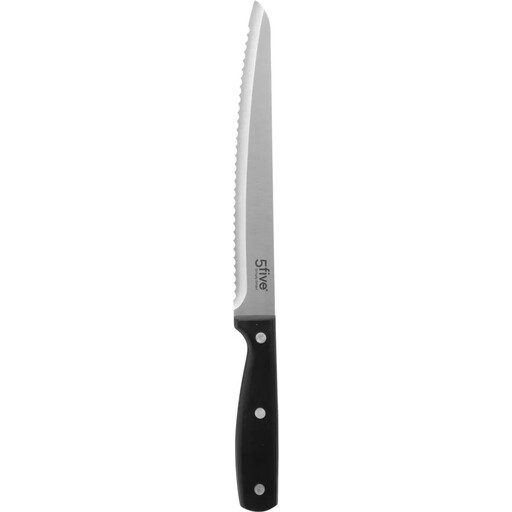
Why it suits this profile: An affordable addition for anyone who mainly slices bread, baguettes and soft baked goods at home and does not yet need an extensive kitchen knife set.
The serrated edge is clearly designed for bread, so you do not need to use a smooth chef’s knife for this task. The 33 cm length provides plenty of reach when slicing larger loaves.
Stainless steel blade, ABS handle and, according to the product information, dishwasher-safe.

Why it suits this profile: For home cooks looking for one refined santoku knife for vegetables, herbs, fish and meat.
The specifications state that it is made from X50CrMoV15 high-carbon stainless steel, with a 17 cm blade and a hand-sharpened 14-degree edge. This makes the material and size clear before you buy.
Synthetic POM handle, approximately 170 grams and suitable for left- and right-handed use according to the product information. Hand washing is recommended.
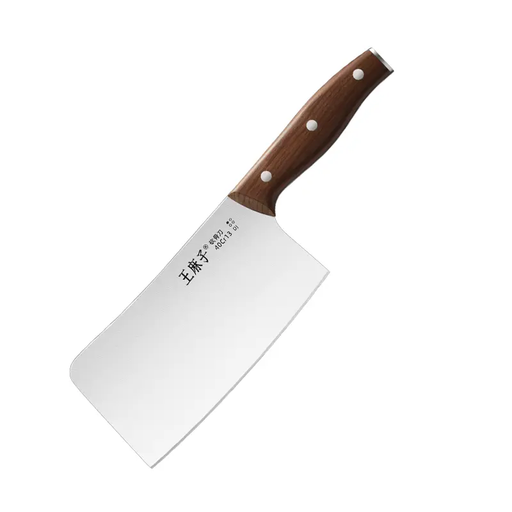
Why it suits this profile: For anyone who regularly portions chicken, ribs or other firm ingredients and needs a cleaver for the job.
The product is specifically described as a bone cleaver for bones, ribs and poultry. This prevents you from using a thin vegetable or chef’s knife for heavy-duty tasks.
According to the product description, the knife has a forged design, high-carbon steel and a non-slip handle. Use it only on a suitable, sturdy chopping board.
We have put together a complete, up-to-date list of products that fully meet these strict selection criteria and the applicable European safety regulations.
A 16 to 20 cm chef’s knife or a santoku knife of around 17 cm is suitable for many everyday tasks. Pay particular attention to the balance, the handle and the ingredients you usually cut. A separate knife is more practical for bread, bones and peeling.
That depends on how you use it, the steel, the chopping board and the care it receives. A knife will generally stay usable for longer if you avoid glass and stone, wash it by hand when recommended and maintain the edge regularly. Sharpening removes material, so do not do it more often than necessary.
Some models are sold as dishwasher-safe, including certain 5five and Wüsthof Gourmet products. Always check the specific product page. Hand washing with mild washing-up liquid is often the gentlest option, particularly for knives whose manufacturer recommends it.
