
Vandaag of morgen in huis

Kwaliteit gegarandeerd

Welkomstaanbiedingen ontgrendelen: GRATIS bezorging | Tot 80% korting | Gratis 30 dagen JoyPlus-proefperiode
Download de app
A sharp kitchen knife makes cutting vegetables, fruit, meat, fish and bread easier. Yet many households choose a knife based on one attention-grabbing claim, attractive appearance or a low price. This can result in a blunt edge, an uncomfortable handle or a knife set containing pieces that are hardly ever used.
In this buying guide from the Joybuy Product Recommendation Officer, you’ll focus on verifiable features: steel type, blade length, cutting angle, handle and care. That way, you can find kitchen knives suited to your cooking style and kitchen routine.
The term “extra sharp” says little without information about the steel, sharpening angle and care. A knife with a thin edge may be pleasant to use, but it often requires a suitable chopping board and regular honing or sharpening.
So check whether the product description provides information about:
A 13-piece knife set can be convenient, but it may consist of several knives for specific tasks. If you mainly cut vegetables and meat, you may get more use from a chef’s knife and a small kitchen knife than from six steak knives.
Also check the contents of the box. Make sure the set really includes a bread knife, chef’s knife, steak knives, kitchen scissors, knife sharpener and knife block, and check whether the knives are dishwasher-safe.
A santoku knife or chef’s knife is designed for cutting and chopping standard ingredients. A bone cleaver has a heavier design and is intended for different tasks. Do not use a thin kitchen knife for bones, frozen food or hard materials. This can damage the edge and reduce your control.
A stainless steel kitchen knife is practical for everyday use because it is less susceptible to corrosion than many carbon-steel varieties. That does not mean you should leave the knife wet. Dry it after washing and avoid soaking it for long periods.
According to the product information, the Wüsthof Classic Ikon Santoku Knife uses X50CrMoV15 high-carbon stainless steel. This is a type of steel mentioned in the product specifications; its actual lifespan also depends on use, the chopping board and maintenance.
The right length depends on your worktop, hand size and ingredients:
A chef’s knife generally has a curved edge for those who cut with a rocking motion. A santoku knife often has a straighter edge and is suitable for fine cutting, vegetables and fish. A bread knife with a serrated blade cuts through crusts without pressing the bread down too much.
A handle should be firmly attached and provide enough control. A plastic handle is generally easy to clean. A wooden handle often requires more care and should not always be left wet for long periods.
Also check whether the knife is made from a single piece of steel, whether the handle joins smoothly and how the centre of gravity feels. A knife that sits comfortably in your hand does not have to be the heaviest knife.
It is best to wash kitchen knives by hand unless the manufacturer explicitly states that they are dishwasher-safe. Use a wooden or plastic chopping board and store the knife in a knife block, protective sheath or drawer insert. Glass, metal and stone can put more strain on the edge.
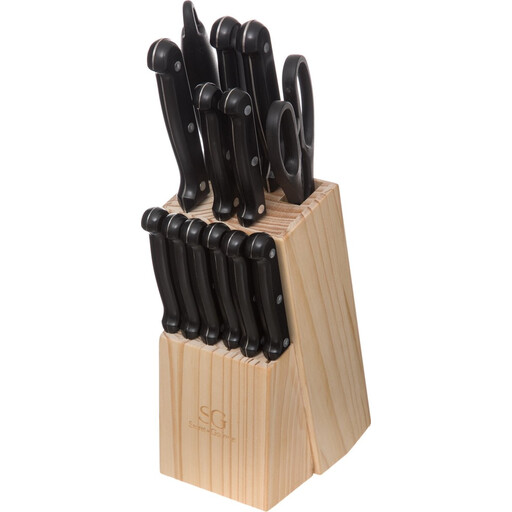
Why it suits this profile: According to the product information, this set contains a chef’s knife, bread knife, three other kitchen knives, six steak knives, scissors, a knife sharpener and a knife block. That provides a comprehensive starting point for a household handling a range of tasks.
The contents of the knife set are clearly specified. Bear in mind that, according to the specifications, the set is not dishwasher-safe.
13-piece selection, stainless steel knives and a knife block for tidy storage.

Why it suits this profile: This Wüsthof kitchen knife is a focused choice for anyone looking for one versatile santoku knife for herbs, vegetables, fruit, fish and meat.
The product information states that it has X50CrMoV15 steel, a 17 cm blade and hand washing as the care recommendation. The brand’s claim of 20% extra sharpness comes from Wüsthof’s product description and is not a general guarantee.
17 cm blade, synthetic POM handle and an edge sharpened to 14 degrees according to the description.
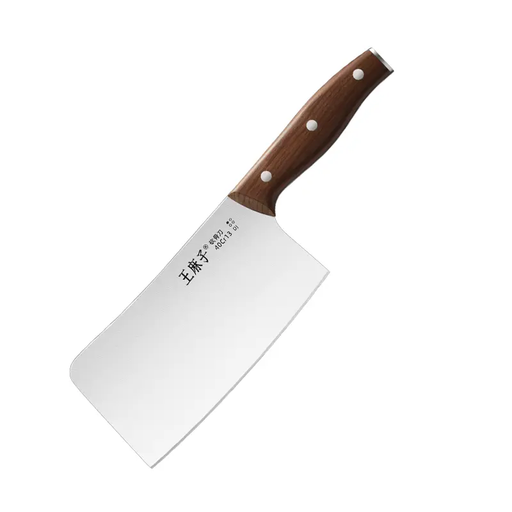
Why it suits this profile: If you regularly prepare poultry, ribs or other demanding cuts, you need a cleaver described for this purpose rather than a standard chef’s knife.
According to the description, the product is specifically offered as a cleaver for bones, ribs and poultry. Do not use it as a replacement for a fine chef’s knife.
Forged construction, high-carbon steel according to the product description and a non-slip handle.
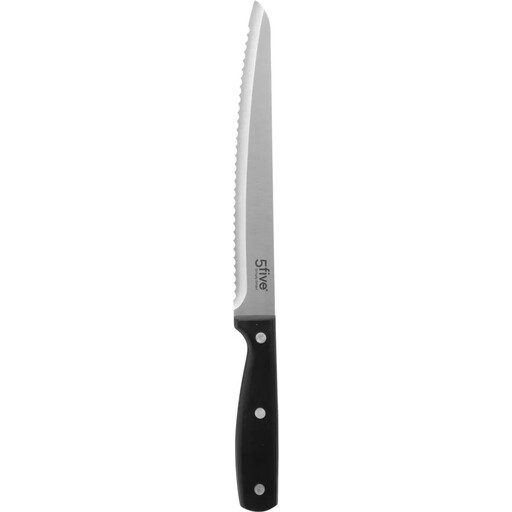
Why it suits this profile: This 33 cm bread knife is a practical addition if you often slice sourdough, baguettes or soft types of bread.
The longer blade and dedicated bread knife design make it clear what this knife is intended for. It does not replace a chef’s knife or steak knife.
Stainless steel blade, ABS plastic handle and a length of 33 cm according to the product specifications.
We’ve put together a complete, up-to-date list of products that fully meet these strict selection criteria and the applicable European safety regulations.
A professional kitchen knife is not automatically suitable for every home cook. First consider your everyday use, available storage space and cooking methods. One well-suited knife may be more practical than a large set containing unused pieces.
Wash the knife immediately after use with warm water and mild washing-up liquid. Dry it completely before storing it. Use a whetstone or honing steel according to the manufacturer’s instructions, and do not cut on glass, stone or metal surfaces.
Keep sharp kitchen knives out of children’s reach. Before buying, also check the warranty information and the details of the manufacturer or responsible economic operator within the EU. In any event, products are covered by the statutory consumer rights applicable to the purchase.
For most households, a chef’s knife, small paring knife and bread knife make up a practical basic selection. Add steak knives or a cleaver if you regularly carry out those tasks. A knife set is particularly useful when you need several knives and a dedicated storage solution.
That depends on the product. Some models are sold as dishwasher-safe, while others explicitly require hand washing. Washing by hand and drying the knife immediately will generally help keep the handle, surface and edge in good condition for longer.
This depends on how you use the knife and the type of chopping board. If the knife starts slipping more often or no longer moves smoothly through ingredients, it needs attention. A honing steel can help with regular maintenance; for a blunt edge, a whetstone or professional sharpening service is more suitable.
