
Vandaag of morgen in huis

Kwaliteit gegarandeerd

Welkomstaanbiedingen ontgrendelen: GRATIS bezorging | Tot 80% korting | Gratis 30 dagen JoyPlus-proefperiode
Download de app
A good kitchen knife does not have to be expensive or part of an extensive set. Even so, many consumers buy a knife set based on the number of pieces, eye-catching design or promises of long-lasting sharpness. This can result in knives that do not feel comfortable in the hand, are difficult to maintain or remain unused in the knife block.
This guide from the Joybuy Product Recommendation Officer helps you compare kitchen knives based on verifiable features. That way, you can make a more informed choice between an individual chef’s knife, santoku knife, bread knife, paring knife, steak knives or a complete kitchen knife set.
A knife set with a block may seem appealing because of the large number of pieces. In practice, you will usually use a chef’s knife, bread knife and paring knife most often. So check what the set actually contains. A 13-piece set, for example, may also include several steak knives, a pair of kitchen scissors and a sharpener.
Marketing copy often uses terms such as razor-sharp or professional without specifying a sharpening angle, type of steel or maintenance advice. According to information provided by some brands, certain sharpening techniques may improve sharpness, but this is a brand claim rather than a universal guarantee. Focus on the available product specifications, such as X50CrMoV15 stainless steel, blade length and recommended cleaning method.
Some kitchen knives are described as dishwasher-safe. For other knives, hand washing is recommended to help keep the edge and handle in good condition for longer. Check this for each product. Placing a knife loose in the cutlery basket can also result in contact with hard metal, damage and a greater risk of accidents.
For everyday slicing, chopping and dicing, a 16 to 20 cm chef’s knife is practical for many home cooks. A 20 cm blade provides a larger cutting surface, but may feel less comfortable if you have a small kitchen worktop or smaller hands. A 16 cm chef’s knife is often easier to manoeuvre.
A santoku knife generally has a wider, relatively straight blade and is suitable for vegetables, herbs, fish and meat. A bread knife with a long serrated blade cuts through bread without significantly compressing the soft interior. A paring knife of around 8 to 10 cm is useful for small, precise tasks.
Stainless steel is popular because it resists rust during normal use and is easy to clean. Also pay attention to the construction:
A hardness rating such as 58 HRC, along with a stated sharpening angle, provides more information than simply calling a knife a “professional kitchen knife”. An angle of 14 degrees per side indicates a fine edge, but it also requires careful use and suitable maintenance.
An ergonomic handle should be firmly attached and feel comfortable during repeated cutting. A plastic handle is practical and easy to clean; a wooden handle may feel different and usually requires more care when cleaning. Use a wooden or plastic chopping board and avoid glass, stone and metal. These hard surfaces can damage the edge more quickly.
Wash knives by hand if recommended by the manufacturer, dry them immediately and store them in a knife block, protective sheath or drawer insert. A honing steel helps realign the edge between sharpenings; genuinely blunt knives require a suitable sharpener or whetstone.
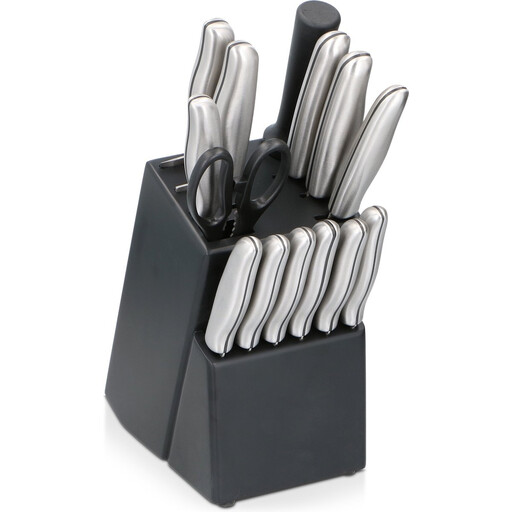
Why it suits this profile: A beginner cook gets a range of knives for everyday cooking in one purchase, including a block and kitchen scissors.
The contents are clearly specified: 13 knives, a block and a pair of scissors. This allows you to assess the composition rather than simply choosing based on the total number of pieces.
Includes a chef’s knife, bread knife, paring knife, steak knives and santoku knife; the black knife block keeps the set organised.
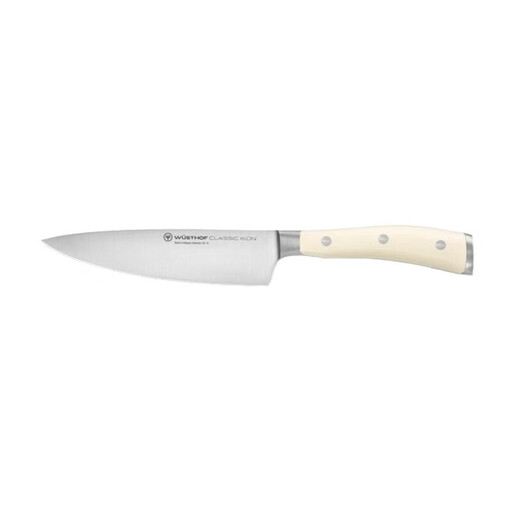
Why it suits this profile: This compact chef’s knife is designed for users who value balance, finish and a specific branded product from Solingen.
The specifications state a 16 cm blade, stainless steel, a plastic handle and a full-tang construction. This makes it clear what you are buying.
The 16 cm length is manoeuvrable for vegetables, herbs and meat; the seamlessly connected handle and three rivets are listed as product features.
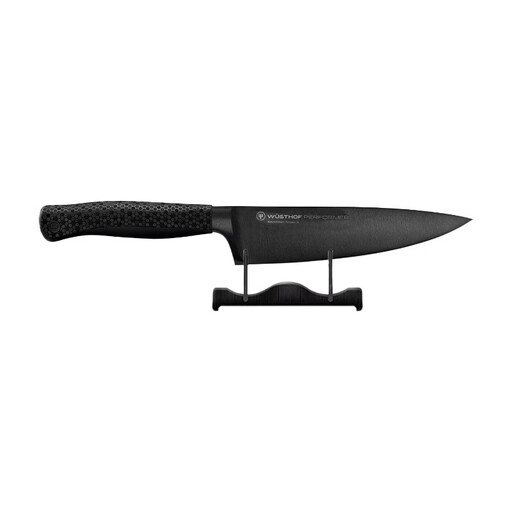
Why it suits this profile: A home cook or chef who does a lot of cutting may prefer a longer chef’s knife with a distinctive grip and coating.
The choice is based on concrete details: a 20 cm blade, X50CrMoV15 steel and a hexagonal grip. The benefits of the DLC coating are stated in Wüsthof’s product description.
20 cm blade for larger ingredients; non-slip honeycomb pattern on the handle and an entirely black finish.
We have put together a complete, up-to-date list of products that fully meet these strict selection criteria and the applicable European safety regulations.
An individual chef’s knife makes sense if you already have a bread knife, paring knife or steak knives. You then pay only for the type you actually need. A kitchen knife set is more convenient when you are starting from scratch, moving house or want to cover several cutting tasks with one purchase.
A small set of three knives, such as a chef’s knife, bread knife and utility knife, often prevents unused knives from taking up space. If you mainly prepare Asian dishes, you could choose a santoku knife as an additional option. When buying a knife set with a block, check the block’s dimensions and the amount of available space on your worktop.
For most everyday tasks, a 16 to 20 cm chef’s knife is a practical starting point. Add a bread knife and paring knife afterwards if you regularly carry out those tasks.
How long an edge lasts depends on the steel, sharpening angle, chopping board, frequency of use and maintenance. Do not use glass or stone as a chopping board, wash the knife according to the product instructions and sharpen or hone it in good time. A manufacturer may make claims about edge retention, so always check the specific product details and maintenance instructions.
This varies by model. According to the product information, some Wüsthof knives are recommended for hand washing, while other models are described as dishwasher-safe. Check the product page and dry the knife immediately after cleaning.
