
Vandaag of morgen in huis

Kwaliteit gegarandeerd

Welkomstaanbiedingen ontgrendelen: GRATIS bezorging | Tot 80% korting | Gratis 30 dagen JoyPlus-proefperiode
Download de app
A good kitchen knife makes cooking easier and more enjoyable. A bad one leads to frustration and can even be dangerous. But the market for kitchen knives is saturated with marketing claims and sets that overpromise and underdeliver. So, how do you choose the right knife without falling into common traps?
As a Joybuy Product Recommendation Officer, I'm here to help you cut through the noise. We'll focus on what truly matters, enabling you to make an informed decision that suits your kitchen.
Before we explore the options, it's helpful to recognise the most common purchasing mistakes. This will save you money and disappointment.
To avoid a bad purchase, focus on a few objective characteristics. These specifications determine a knife's performance and durability.
The type of steel is crucial for how sharp a knife is and how long it stays sharp. Standard stainless steel is fine, but knives made from high-carbon steel (like German 50Cr15MoV steel) offer a better balance of sharpness, durability, and rust resistance. This type of steel is harder, allowing the edge to retain its shape for longer.
Knives are made in two ways: forged or stamped.
For daily and intensive use, a forged knife often provides more control and a longer lifespan.
The handle determines how the knife feels in your hand. An ergonomic handle reduces fatigue and increases safety. Look for a seamless transition between the blade and the handle; this is more hygienic as no food particles can get trapped in crevices. Materials range from synthetic polymers and wood to stainless steel, each with its own pros and cons regarding grip and maintenance.
Based on these criteria, we have selected a few products that suit different needs and budgets.
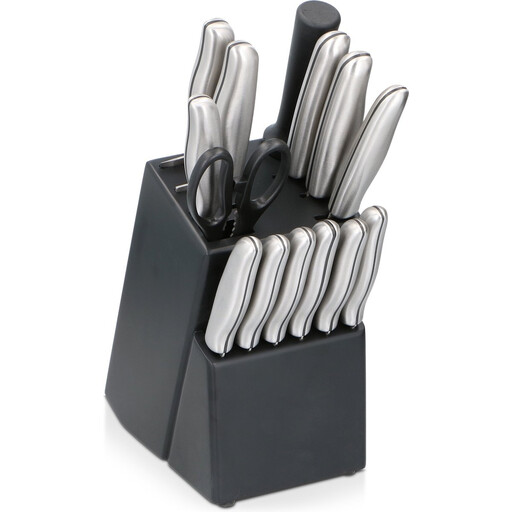
Why This Fits Their Persona: Ideal for those seeking a complete starter kit without a major investment. This set provides all the essential knives, including steak knives and shears, neatly stored in a knife block.
This is an organised starting point, not just a random collection of cheap knives. The knife block ensures safe storage and prevents the blades from dulling in a drawer.
A complete 15-piece set for various cutting tasks. The knives are made of stainless steel, and the ergonomic handles offer a comfortable grip.
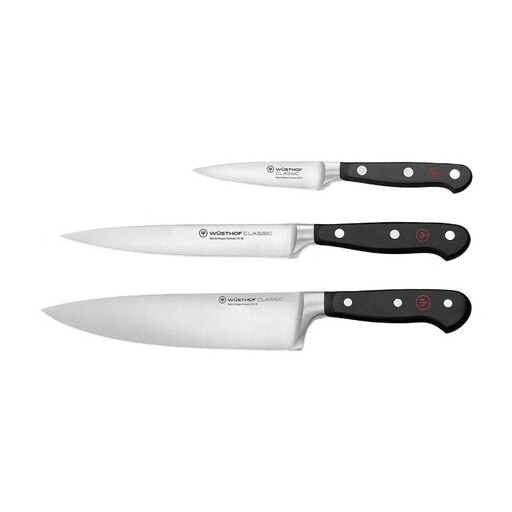
Why This Fits Their Persona: For those who invest in durability and performance. Wüsthof knives are renowned for their German craftsmanship. This set includes the three most essential knives for any serious home cook.
This set avoids the "quantity over quality" pitfall. You get three excellent, forged knives that can handle 90% of all cutting tasks, instead of a block full of mediocre ones.
Precision-forged from high-carbon steel for long-lasting sharpness. The full-tang construction ensures optimal balance and control.
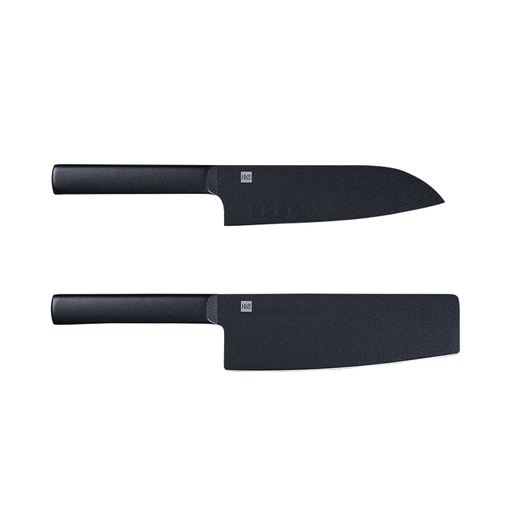
Why This Fits Their Persona: Perfect for the cook looking for a specific knife, like a santoku, featuring modern technology. This knife is designed for precision and easy maintenance.
This knife avoids the vague "stainless steel" promise by specifying its 50Cr15MoV high-carbon steel. The nano non-stick layer is a functional feature, not just a marketing gimmick.
The hard steel provides excellent sharpness and durability. According to the manufacturer, the nano-coating helps prevent food from sticking and makes the knife easy to rinse clean.
We have compiled a complete, up-to-date list of products that fully meet these strict selection criteria and local regulations.
Proper maintenance is essential. Preferably, wash your knives by hand and dry them immediately. The harsh detergents and high temperatures in a dishwasher can damage the steel and the handle. Store them in a knife block, on a magnetic strip, or with blade guards to avoid contact with other hard objects. Use a honing steel regularly to keep the edge aligned.
Not always. For most home cooks, a good chef's knife (around 20 cm / 8 inches), a paring knife (small peeling knife), and perhaps a bread knife are sufficient to handle almost all tasks. It's often a better investment to start with a few high-quality knives than with an extensive but mediocre knife set.
While both are all-rounders, the difference lies in their shape and cutting technique.
