
Vandaag of morgen in huis

Kwaliteit gegarandeerd

Welkomstaanbiedingen ontgrendelen: GRATIS bezorging | Tot 80% korting | Gratis 30 dagen JoyPlus-proefperiode
Download de app
A good kitchen knife makes everyday food preparation easier. But it can be difficult to tell online which knife suits the way you cook. Product titles often use terms such as “extra sharp”, “professional” or “stainless”, while important details about the type of steel, finish and care are sometimes missing.
So focus on specifications you can verify. A kitchen knife set with lots of pieces isn’t automatically more useful than a few individual knives. And a shiny coating tells you little about cutting performance or durability.
A knife set with a block can look appealing because it contains so many pieces. In practice, you’ll probably use a chef’s knife, bread knife and paring knife most often. Steak knives, a santoku knife or a cleaver are useful if you’ll actually use them regularly.
When choosing a set, check:
According to the product information, the Alpina 15-piece set contains 13 knives, a knife block and a pair of scissors. The knives listed include a chef’s knife, bread knife, paring knife, steak knives and a santoku knife.
Stainless steel is practical, but that doesn’t mean you can leave knives wet in the sink. Salt, acids and prolonged exposure to moisture can damage the surface. Dishwasher cycles can also wear down handles, cutting edges and finishes more quickly.
Some product descriptions say that a knife is dishwasher-safe. That’s a manufacturer’s product specification, not a guarantee that it will stay sharp for years. To help your knife last longer, hand-wash it and dry it straight away.
A sharp edge is a pleasure to use, but balance and grip also affect how comfortable a knife feels. A handle that gets slippery when your hands are wet, a knife that’s too heavy or an awkward blade length can make cooking less comfortable.
As well as sharpness, consider:
Always use a sharp knife with care. Keep it out of reach of children and use a suitable chopping board.
Many kitchen knives are made from stainless steel. It’s suitable for everyday use and relatively easy to clean. However, the exact type of steel, hardness and sharpening angle aren’t listed for every product. So don’t buy based solely on terms such as “high carbon” or “professional”.
According to the product information, the blades on various 5five models are made from stainless steel. The 5five Paring Knife also has an ABS plastic handle. Stainless steel is also specified for the Alpina set. These details can be checked; claims such as “always stays sharp” should be treated with caution.
The right shape depends on the task:
According to its specifications, the 5five Santoku Knife has an overall length of 29 cm and a blade length of 17 cm. The 5five Forged Stainless Steel Santoku Knife is 32 cm long, with an 18 cm blade. Compare these measurements with the space you have available and your own chopping style.
An ergonomic handle is especially useful if you cook often. Check that the handle is firmly attached to the blade and that its shape feels comfortable in your hand. A knife block keeps loose knives organised, but remember to consider how much worktop space it will take up.
A block won’t automatically prevent damage. Put knives away clean and dry, and avoid scraping the blade against hard edges. For individual knives, a protective cover or separate knife holder may be more practical.
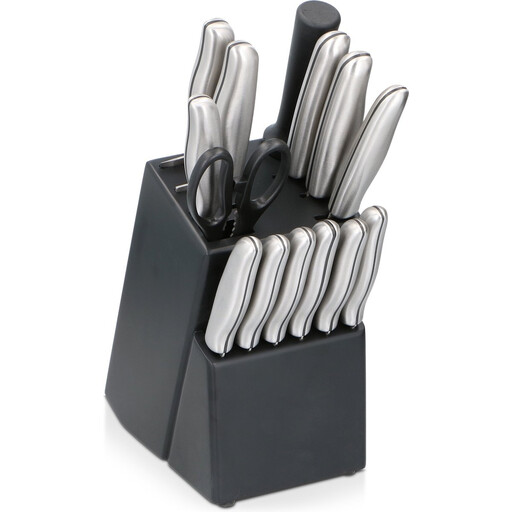
Why it suits this profile: This set offers several knife shapes for households looking for a complete starter collection without having to choose individual kitchen knives.
The contents are clearly listed: 13 knives, a knife block and a pair of scissors. This means you can check exactly what you’ll receive before buying.
Stainless steel knives, a range of knife shapes and a black knife block for tidy storage.
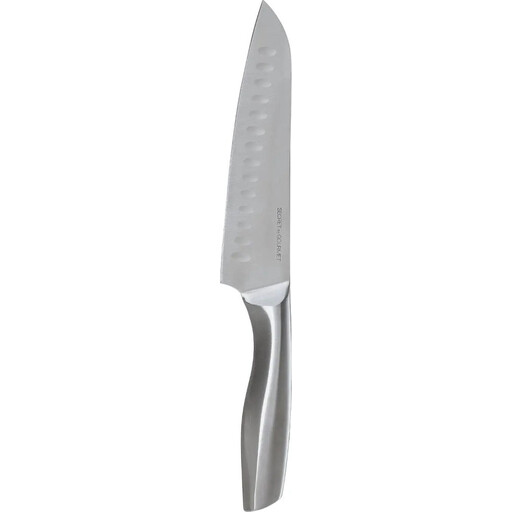
Why it suits this profile: This individual santoku knife is a good choice for home cooks who would rather choose one specific knife than pay for pieces they won’t use.
The dimensions are listed: 32 cm overall, an 18 cm blade and a weight of 180 g. This lets you compare the size and weight before buying.
Stainless steel construction, a forged design according to the product information, and a handle described as sturdy.
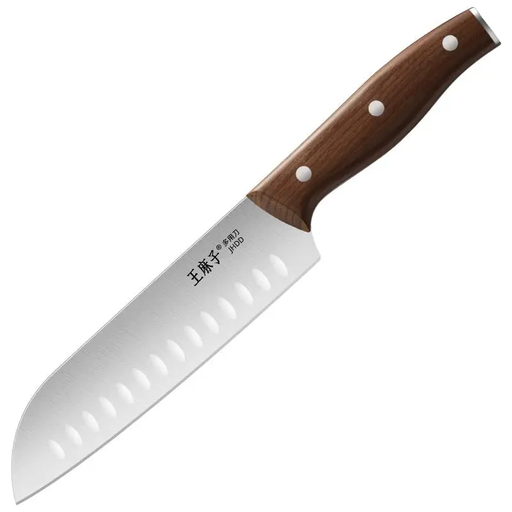
Why it suits this profile: This cleaver is designed for slicing, shredding, chopping and certain meat-preparation tasks. It’s a specialised addition for frequent use.
The product name and description make its intended use clear. That means you’re choosing this knife for a specific purpose, rather than relying on general claims about sharpness.
A wide cleaver for specific cutting tasks, with a product description that states it’s designed for household use.
We’ve put together a complete, up-to-date list of products that meet these strict selection criteria and the applicable European safety regulations.
A knife’s lifespan doesn’t depend on the steel alone. Use a stable chopping board, don’t cut through bones with a standard chef’s knife, and don’t use the blade as a lever. Wash knives according to the product instructions and dry them straight away.
A honing steel can help realign the cutting edge regularly, but it doesn’t replace sharpening. Check whether the product description says that a knife is dishwasher-safe. Even if the manufacturer says it is, hand-washing can help protect the finish and sharpness.
For most households, a chef’s knife, bread knife and paring knife are enough. Add a santoku knife if you often prepare vegetables, fish or meat. A cleaver or carving knives are mainly useful for specific preparation tasks.
That depends on what’s included. A set is practical if the knives suit your cooking routine and the block is safe and stable. Always compare the number of knives with the pieces you’ll actually use, not just the total number of items.
Wash them carefully, dry them straight away and use a suitable chopping board. Store them in a knife block, on a magnetic strip with enough space, or in protective covers. Don’t leave them to soak for long periods, and regularly check whether the cutting edge needs attention.
